Remembering Mississauga Connections
/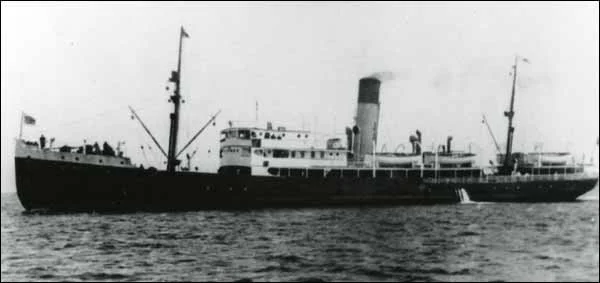
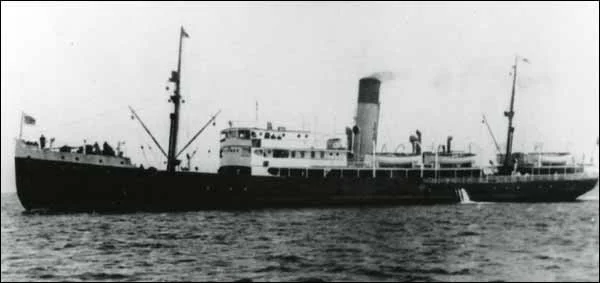
SS Caribou
The SS Caribou was a ferry that ran in the Cabot Strait between Port aux Basques, Newfoundland and North Sydney, Nova Scotia. On October 14, 1942, the Caribou was torpedoed by a German submarine U-69, which resulted in the worst loss of life in Canadian waters during the Second World War.
On the evening of October 13, 1942, the Caribou left North Sydney for the eight-hour, 178-kilometre crossing to Newfoundland, accompanied by minesweeper HMCS Grandmère. Travelling on the Caribou were 118 military service personnel, 73 civilian passengers, and 46 crew. Because German submarines were known to be active in the Gulf of St. Lawrence the Caribou sailed with lights out and sailed a zig-zag course following wartime regulations, with the Grandmère shadowing the Caribou from astern.
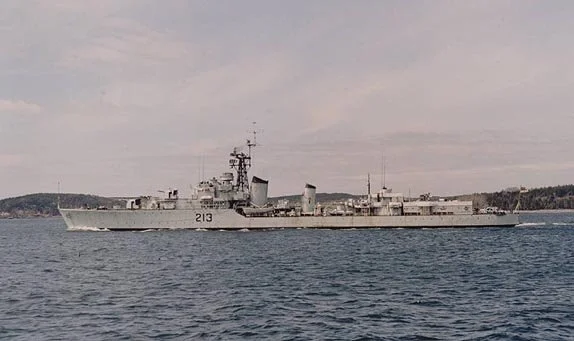
HMCS Nootka
At 3:21 am, U-69 fired a torpedo at a range of 650 metres; it struck Caribou’s starboard side amidship, resulting in catastrophic damage. Frantic passengers tried to find loved ones and make their way to the deck through incoming water and darkened corridors. The Caribou sank in less than 5 minutes, and those that survived the initial sinking faced a long, dark, frigid ordeal in the water.
The Grandmère attempted to engage U-69 without success, and the submarine escaped. At 5:20 am the Grandmère returned to pick up survivors. 103 people were brought on board, with other local vessels also assisting in the rescue. In total, 31 crew and 136 passengers, including women and children, were lost in the sinking.
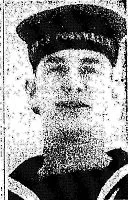
Leon Armand Gauthier.
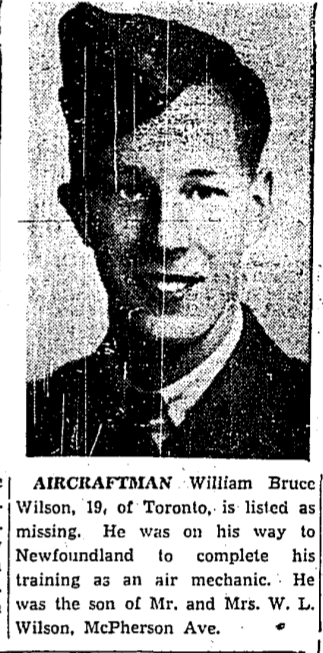
Among those lost in the sinking was Aircraftman Second Class (AC2) William Bruce Wilson. He was the son of Mabel Victoria (nee Taylor) and William Lawrence Wilson. The Taylor family had ties to the Cooksville area of historic Mississauga. William Bruce Wilson was born and raised in Toronto, and in January of 1942, he attended the Aircraft Mechanics Training School in Galt, Ontario. This program was part of the War Emergency Training Plan. In April of 1942 he spent time at the Number 1 Elementary Flying Training School at Malton (in historic Mississauga) as part of the British Commonwealth Air Training Plan. In the fall of 1942 AC2 Wilson was on his way to Newfoundland to complete his air mechanic training. He lost his life in the sinking of the SS Caribou. He has no known grave.
Another person lost to the sea from historic Mississauga was Leon Armand Gauthier. He was the son of Herman Joseph and Edna Gauthier of Lakeview. The family also consisted of siblings John, Donald, Lawrence and Robert. In 1949 Leon Gauthier enlisted with the Royal Canadian Navy and was aboard the HMCS Nootka when she departed Halifax in November of 1950 for service in the Korean War. Ordinary Seaman Gauthier was lost at sea on January 11, 1951. He was buried in the United Nations Memorial Cemetery, in Busan, South Korea. He is remembered at the Koran War Memorial at the Naval Museum of Alberta, in the Korean War Book of Remembrance, and at the Korean War Memorial Wall at the Meadowvale Cemetery in Brampton.
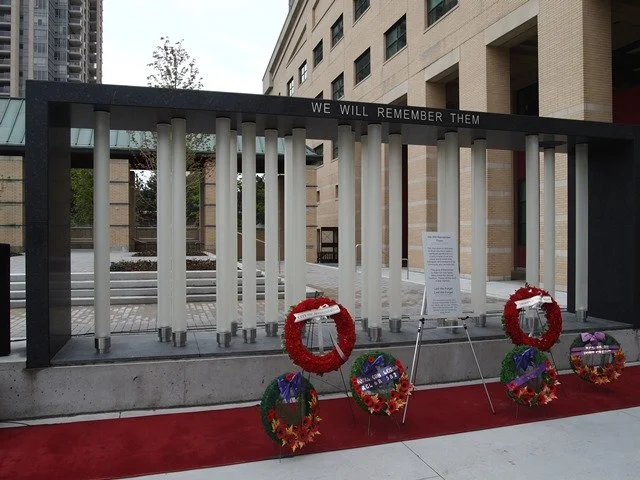
We will remember.