A Path to Mississauga, Part 1: Tracing the Origins of Japanese Internment in Canada and Mississauga
/This is the first of a four-part article series that explores Japanese Canadian internment and connections to historic Mississauga during the Second World War. This series was researched and written by UTM graduate Darrion Singh as part of the Historical Studies Internship program through the University of Toronto Mississauga.
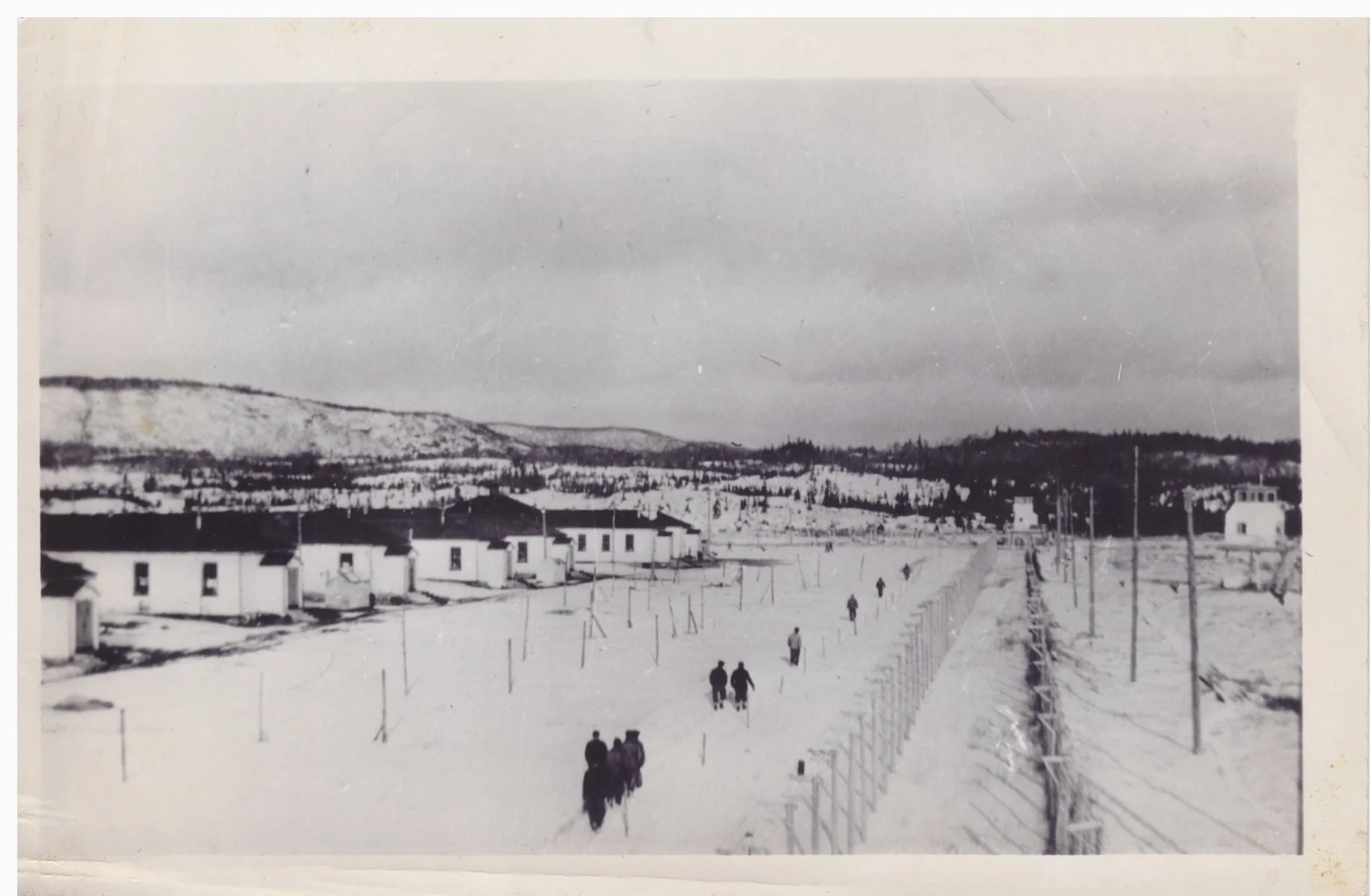
Internment Camp, Angler, Ontario, 1942, from the Nabeta family.
On December 7, 1941, Canada declared war on Japan in response to the bombing of Hawaii’s Pearl Harbor. Over the next few months, the federal government issued a series of Orders-in-Council [OIC] targeting Canada’s Japanese diaspora, many born on Canadian soil, designating them as “enemy aliens.” By February, fears of the Japanese presence in Canada culminated with the government invoking the War Measures Act, and by the 26th, Minister of Justice Louis St. Laurent authorized the start of Japanese expulsion from British Columbia.
This article is the first of four documenting my internship with Heritage Mississauga. From September 2025 to March 2026, I worked on a project tracing historic Mississauga’s connection to Japanese internment. The series is titled “A Path to Mississauga,” and the four articles touch on the numerous challenges and successes encountered in my project. Through the series, I’ve also set out to focus on how Japanese Canadians remember their history, and there are numerous resources hyperlinked in various places.
Of course, this internship would not be possible without the academic and professional support received, and I would like to thank Matthew Wilkinson and Madeleine Henry at Heritage Mississauga for their advice and guidance throughout the process. Additionally, I’d like to thank Professor Mairi Cowan and Shivani Mistry at the University of Toronto Mississauga, who were the academic and logistical coordinators behind the internship course.
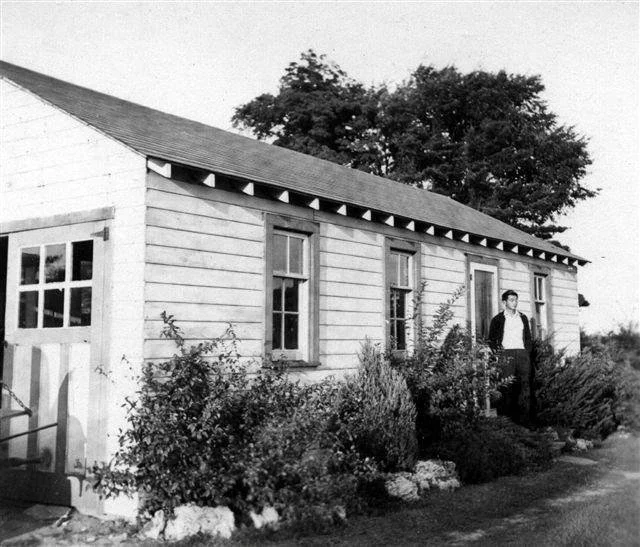
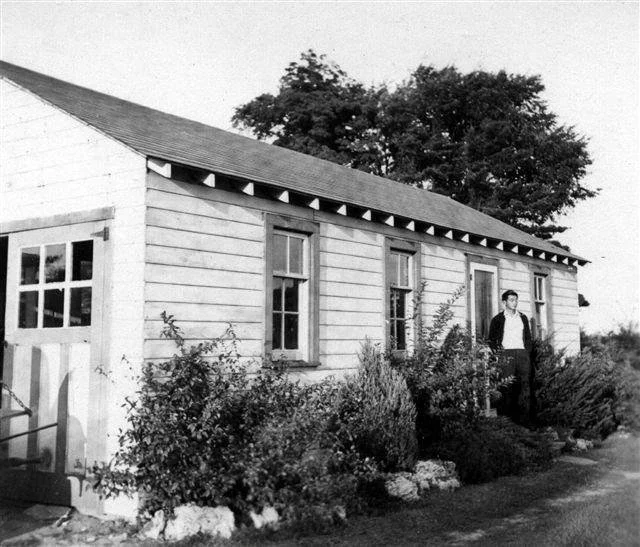
Ko Sagawa outside bunkhouse, Hancock Woodlands.
Now, how do we explore Mississauga’s connection to a forced relocation thousands of kilometers west? A good starting point is to understand how Louis St. Laurent targeted BC’s Japanese community, and how removal evolved toward internment. His mandate came from a set of Orders-in-Council, directives from the Privy Council not discussed with parliament, and which are in themselves hard to find in a digitized form. Regardless, several sources summarize their contents, and I’ll be drawing from the descriptions provided by the Japanese Canadian History Reference Timeline to establish some important context.
While there are numerous OICs worth mentioning, I’ll focus on three issued after the war declaration that dealt with Japanese mobility:
Order-in-Council P.C. 9591 was issued the same day as the Pearl Harbor attack. Under the provisions of the 1914 War Measures Act, its prerogative stated that “all Japanese nationals and those naturalized after 1922 are required to register with the Registrar of Enemy Aliens.” A second OIC on December 16th, P.C. 9760, extended the requirement to “all persons of Japanese origin, regardless of citizenship.”
Order-in-Council P.C. 365, issued on January 16th, 1942, created a “protected area” including “100 miles inland from the west coast.” A digital version exists from The Canada Gazette, outlining how enemy aliens were to interact with the area. The OIC required enemy aliens to leave and prohibited their entry and exit. Detention was also authorized for “any enemy aliens ordinarily resident or actually present in such area,” along with anyone beyond the Japanese community “acting in any manner prejudicial to the public safety or the safety of the State.”
Finally, Order-in-Council P.C. 1486, issued on February 24th, enabled St. Laurent “to control the movements of all persons of Japanese origin in the protected area.” Much like OIC P.C. 365, a digital version from The Canada Gazette can be found. OIC P.C. 1486 advanced restrictions on various aspects of daily life, in regard to “their employment or business, their movements or places of residence, their associations or communications with other persons, their activities in relation to the dissemination of news or the propagation of opinions, or otherwise with respect to the conduct of any such [enemy aliens].” In the OIC’s fourth provision, residents were required to surrender any possessions as specified by the RCMP, oftentimes meaning their fishing boats or radios, among other items, were forfeited.

Notice To All Persons of Japanese Racial Origin, February 1942, Sunahara Collection, Nikkei Museum.
These are not the only OICs, but they offer a good snapshot into the decisions made by the Privy Council. The goals were to identify the Japanese diaspora as enemy aliens, and the registration requirement is telling about the government’s interest in surveilling their activities; to remove the diaspora from the west coast, especially around the Greater Vancouver area; and to dispossess them from their properties, businesses, and liberties, even if they were naturalized or birthright Canadian citizens.
On a national scale, Japanese internment appears to centre on British Columbia. So how does Mississauga fit into the story? While most of the 22,000 interned Japanese Canadians remained in British Columbia, a smaller number moved eastward. Mississauga’s connection is more subtle, and admittedly, one that was hard to uncover. While searching for internees, I often found results for Cooksville, Erindale, or Clarkson, and so some attention to Mississauga’s historic neighbourhoods guided my research.
Arriving in Mississauga was also not immediate. Among the internees, several had stints elsewhere in BC. Take the Aihoshi family, who we’ll revisit in an upcoming article, as one example. Originally from Vancouver, the Aihoshis were interned (though, their RCMP documents say “evacuated”) in New Denver, BC, on May 17th, 1942. In September 1946, the documents state that they were relocated to lot 289 on Kenmuir Avenue, in Port Credit, though it is unclear when they arrived. What I can say is that the Aihoshis’ story represents a theme among Mississauga’s Japanese internees: it is a history involving ambiguity, fractured documents, and a timeline that does not always make sense.
There are a few takeaways that will guide this history further. The first is the locations that were known to house Japanese internees, such as the Hancock Woodlands on Camilla Road, Sheridan Nurseries in Clarkson, and the Oughtred farm in Erindale. But extending beyond these locations took me to the Leaverleigh farm, which once operated near Dixie. The families themselves are perhaps the most important part of this story. Across the four locations, I’ve found at least six families, whether it be siblings or parents and their children. Sheridan Nurseries had numerous single men as well. While accessing information has been a struggle throughout the research process, finding Mississauga’s internees would have been much harder without the Landscapes of Injustice digital archive. The database, which helped me go from my leads to case files, has been an essential part of this project: www.landscapesofinjustice.com
In the next article, we’ll think more about the people interned across Mississauga, tracking their relocation through the RCMP’s custodian files, and whatever exists of their time in the city. Thinking beyond the people, we’ll also investigate what became of their belongings in British Columbia, and what remains of these new homes and workplaces in Mississauga.