Making Mississauga Connections in Niagara
/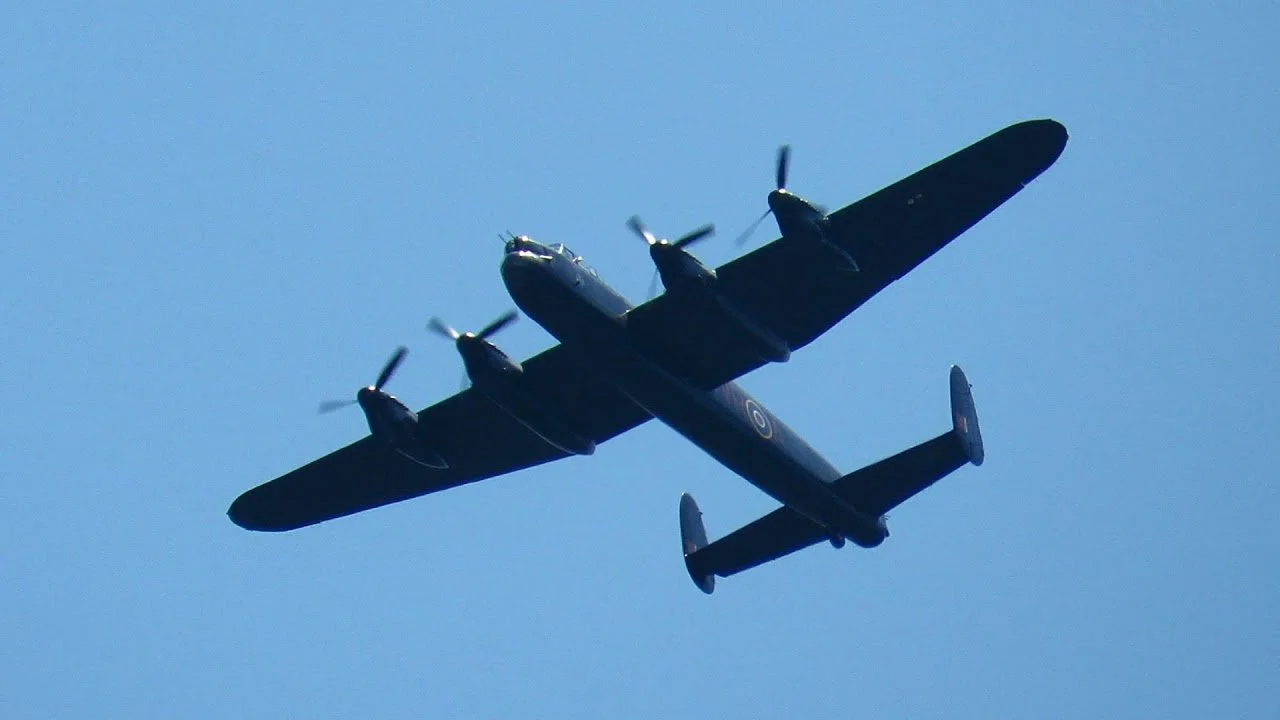
Lancaster Bomber in flight,
I recently took a camping trip over the long weekend in Niagara – and we weathered to torrential rain ok, perhaps just a bit muddier for the experience. Whenever I spend some time in a place away from home, my thoughts and eyes are always drawn to the history of the area that I am now visiting. Old buildings, road names, heritage markers, interpretive signs, museums and the like always capture my interest and curiosity, and in that process of relaxed exploration, I am drawn to seeing if I can find connections back to Mississauga.
The link to home came out of nowhere. While spending some idle time in the campground, there was a distant rumble, almost imperceptible at first, but over the next few minutes, the volume of the rumble grew steadily louder. We started looking around, and then up, as the sound grew louder and louder. Then suddenly, there it was, flying majestically overhead and at a relatively low altitude – so low that we could clearly see the marking and propellers – it was a Lancaster Bomber! Seeing the plane that I know well through story and history in flight (it was only my second time seeing it in flight), was quite something to behold. My own family stopped to watch as well, and we reflected on its role in the war effort during the Second World War. While there are only two flying Lancasters left in the world today – one in Canada and one in England – 430 Lancaster Bombers were built by Victory Aircraft in Malton (now within Mississauga).
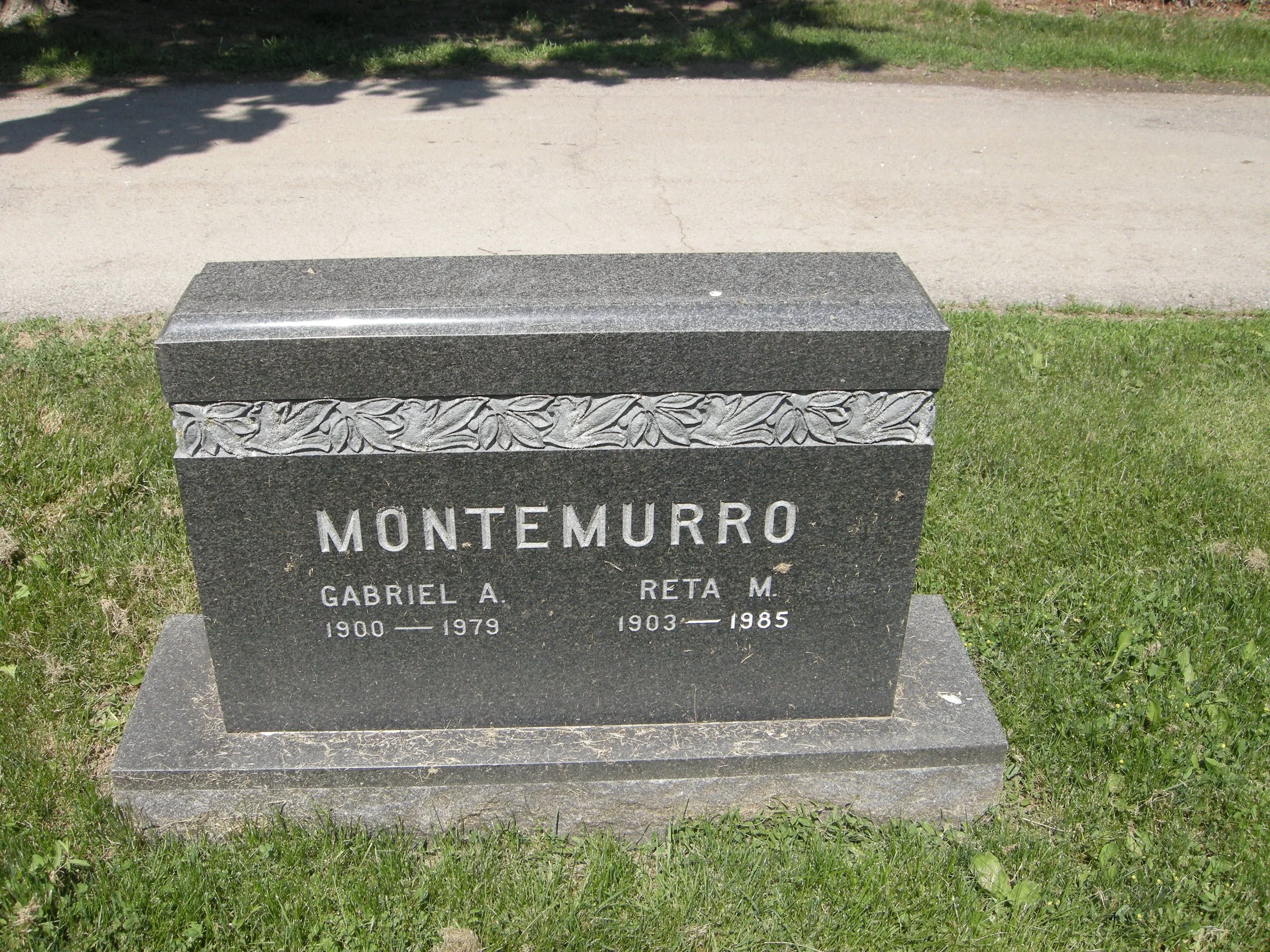
Dr Gabriel Montemurro Gravestone, Streetsville Public Cemetery.
The Lancaster Bomber (Avro Lancaster Mk. X, RCAF FM213) that we saw overhead is from the Canadian Warplane Heritage Museum in Mount Hope, Ontario. The plane was originally built at Victory Aircraft, rolling off the assembly line in July of 1945, and was retired in 1963. After being acquired by the Museum in 1977, it was restored, and flew again in 1988. From the Museum’s description:
The Lancaster is dedicated to the memory of P/O Andrew Mynarski and is referred to as the Mynarski Memorial Lancaster. It is painted in the colours of his aircraft KB726 – VR-A, which flew with RCAF No. 419 "Moose" Squadron. Andrew Mynarski won the Victoria Cross, the Commonwealth’s highest award for gallantry, on June 13, 1944, when his Lancaster was shot down in flames, by a German night fighter. As the bomber fell, he attempted to free the tail gunner trapped in the rear turret of the blazing and out of control aircraft. The tail gunner miraculously survived the crash and lived to tell the story, but sadly Andrew Mynarski died from his severe burns.
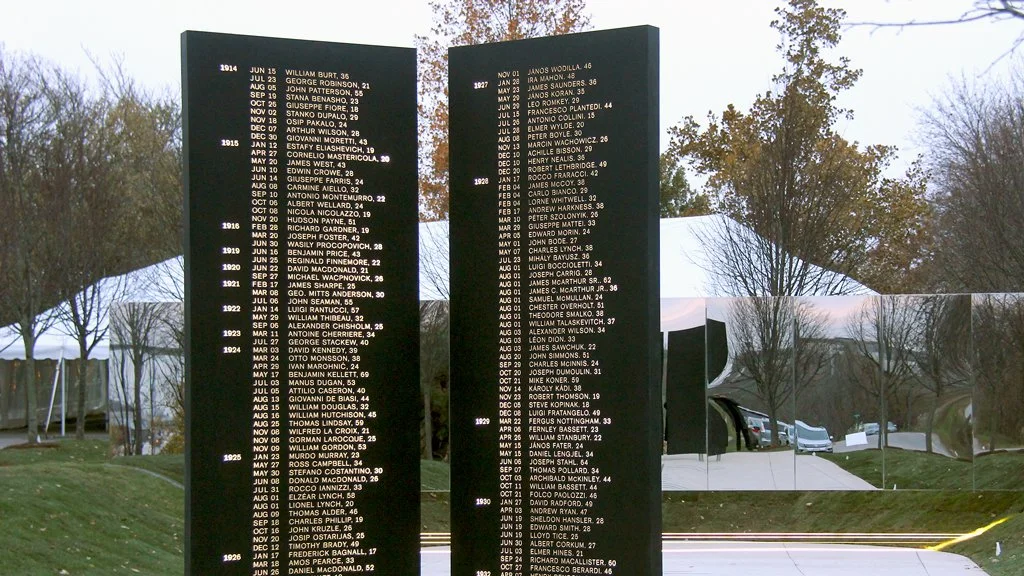
Welland Canal Fallen Workers Memorial.
While exploring the Niagara area and visiting some wonderful roadside farm shops, we stumbled across the Welland Canals Centre in St. Catharines – and highly recommend the visit, and in particularly watching a Great Lakes freighter lock through – but it brought to memory some of the histories of the Welland Canal that I have read over the years. Looking at the names on the list of the Fallen Workers Memorial, one name jumped out at me: Antonio Montemurro (1893-1915). He was born in Calabria, Italy and came to Canada in 1913. Long-time Streetsville residents might remember Dr. Gabriel Montemurro (1900-1979). Dr. “Monty’s” father, Diego Montemurro, and Antonio’s father, Vincenzo Montemurro, were brothers. Antonio was electrocuted working on the Welland Canal, and was buried in Lakeview Cemetery in St. Catharines.

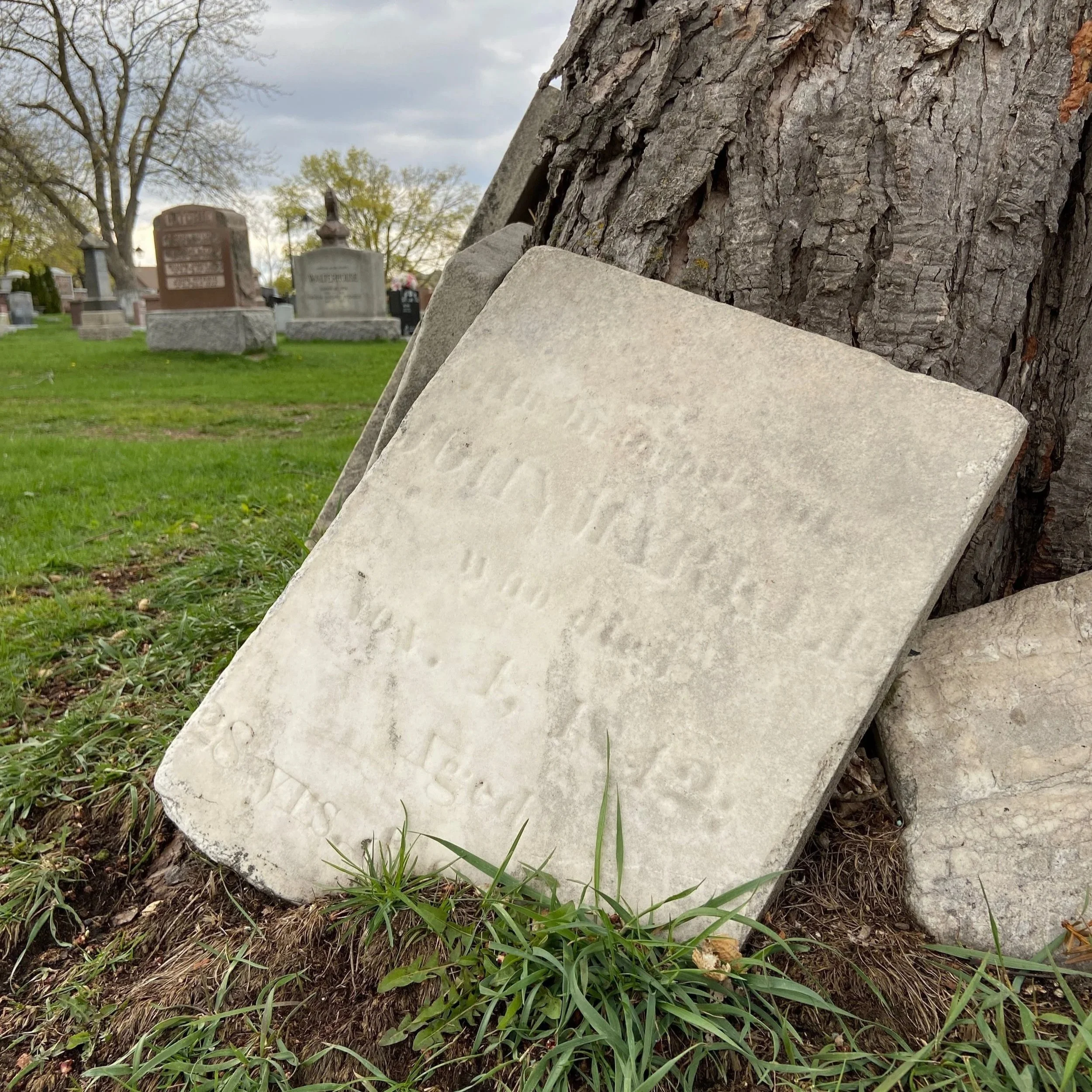
William Harnett Gravestone, St Peter's Roman Catholic Cemetery, Ninth Line, Mississauga.
Looking at the list of fallen workers, all are connected to the building of the current Welland Canal (which is the fourth iteration of the canal, with construction dating 1913–1932). This had me thinking of earlier canal construction, and references we came across in relation to the “lost village” of Diamond (also known as the Catholic Swamp and Nunan’s Corners), near the intersection on Ninth Line and Britannia Road today. Stories from some family histories in the area talked about how young men were lured away from the community by the promise of a good wage to work on the Welland Canal. One story, that of William Hartnett (1850-1874), referenced how his death, by drowning, took place near Thorold – which immediately raises the possibility that he died while working on the third route of the Welland Canal.
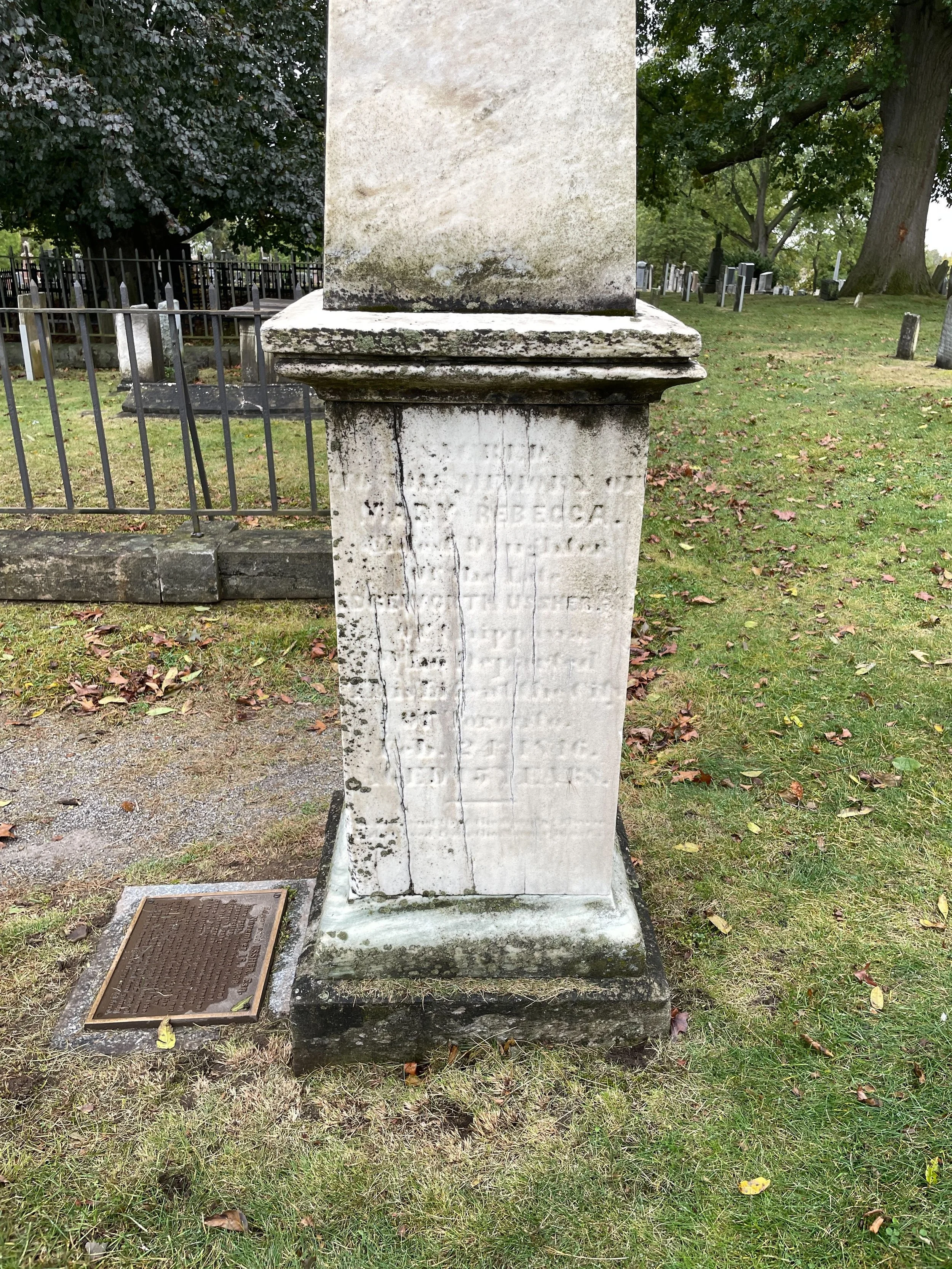
Edgeworth Ussher Gravestone, Drummond Hill Cemetery, Lundy's Lane.
One last history link to Mississauga, at least for this article, came along Lundy’s Lane in Niagara Falls. While chatting about the history of the War of 1812, I pointed out the gravesite of Laura Secord in the Drummond Hill Cemetery. A short distance away from where Laura Second is buried is the gravestone of Edgeworth Ussher (1806-1838). The inscription on his gravestone reads:
“Here rests in the hope of a joyful resurrection the mortal remains of Edgeworth Ussher, Esq., whose devotion to his sovereign and exertions in the cause of his county at a critical period in the history of Canada, marked him out as an object of the vengeance of the enemies of peace and good order, by whom he was cruelly assassinated on the night of the 16th Nov. 1838, in his own house near Chippawa, at the early age of 34 years, leaving a wife and four children to mourn their irreparable loss.”
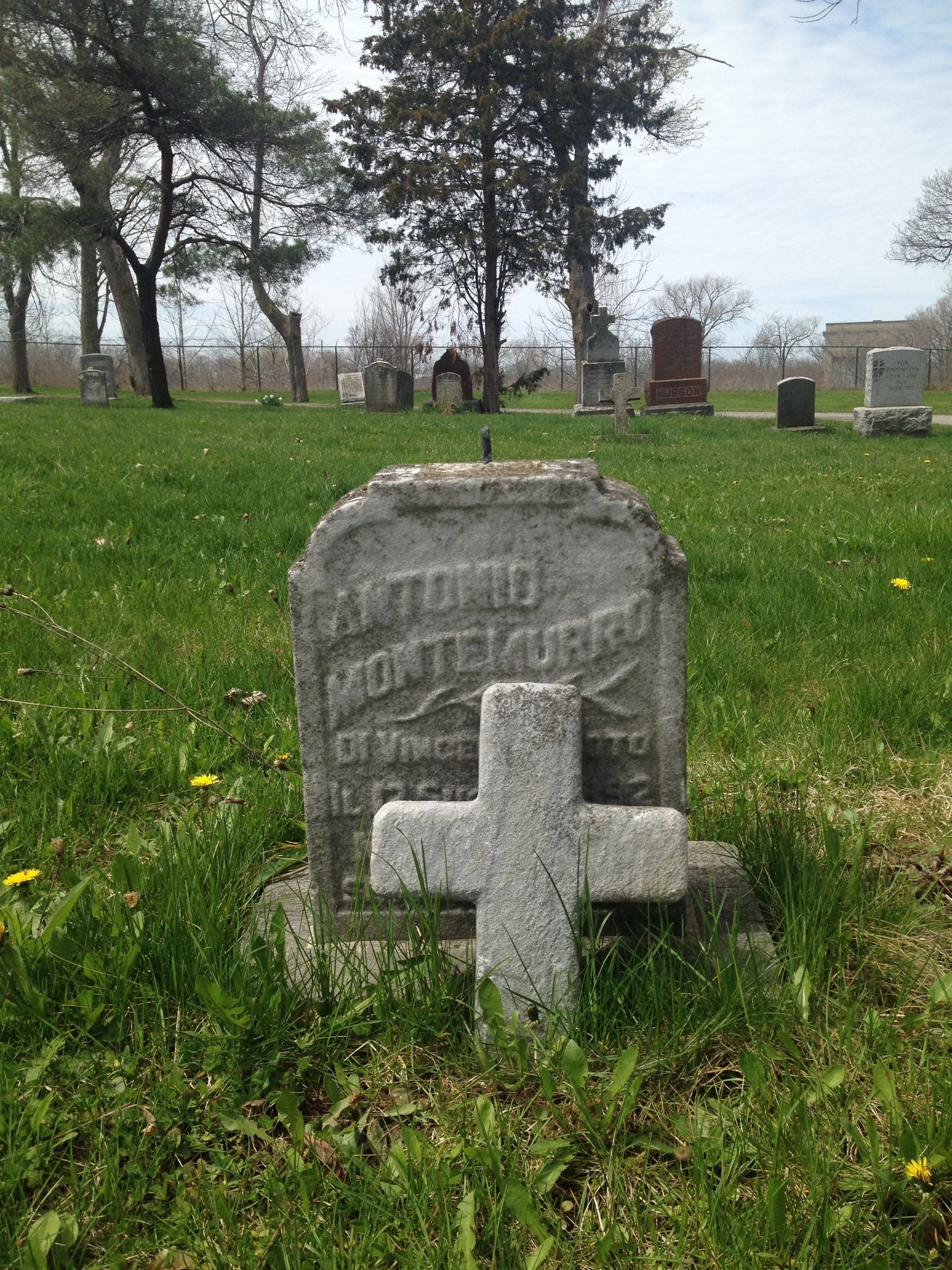
Antonio Montemurro Gravestone, Lakeview Cemetery, St Cathartines.
The link between Edgeworth and historic Mississauga comes through his wife, Sarah Thompson (1800-1880). Sarah was the daughter of Cornelius and Rebecca Thomspon, and the younger sister of William Thompson (1786-1860). Thompson Street in Erindale Village is named for William. He served as a captain with the 2nd York militia during the War of 1812, and later as Reeve of Toronto Township (historic Mississauga) and a warden of St. Peter’s Anglican Church in Erindale.
It is always fascinating to make connections back home to Mississauga, while far from home!