When Auto Polo came to Mississauga
/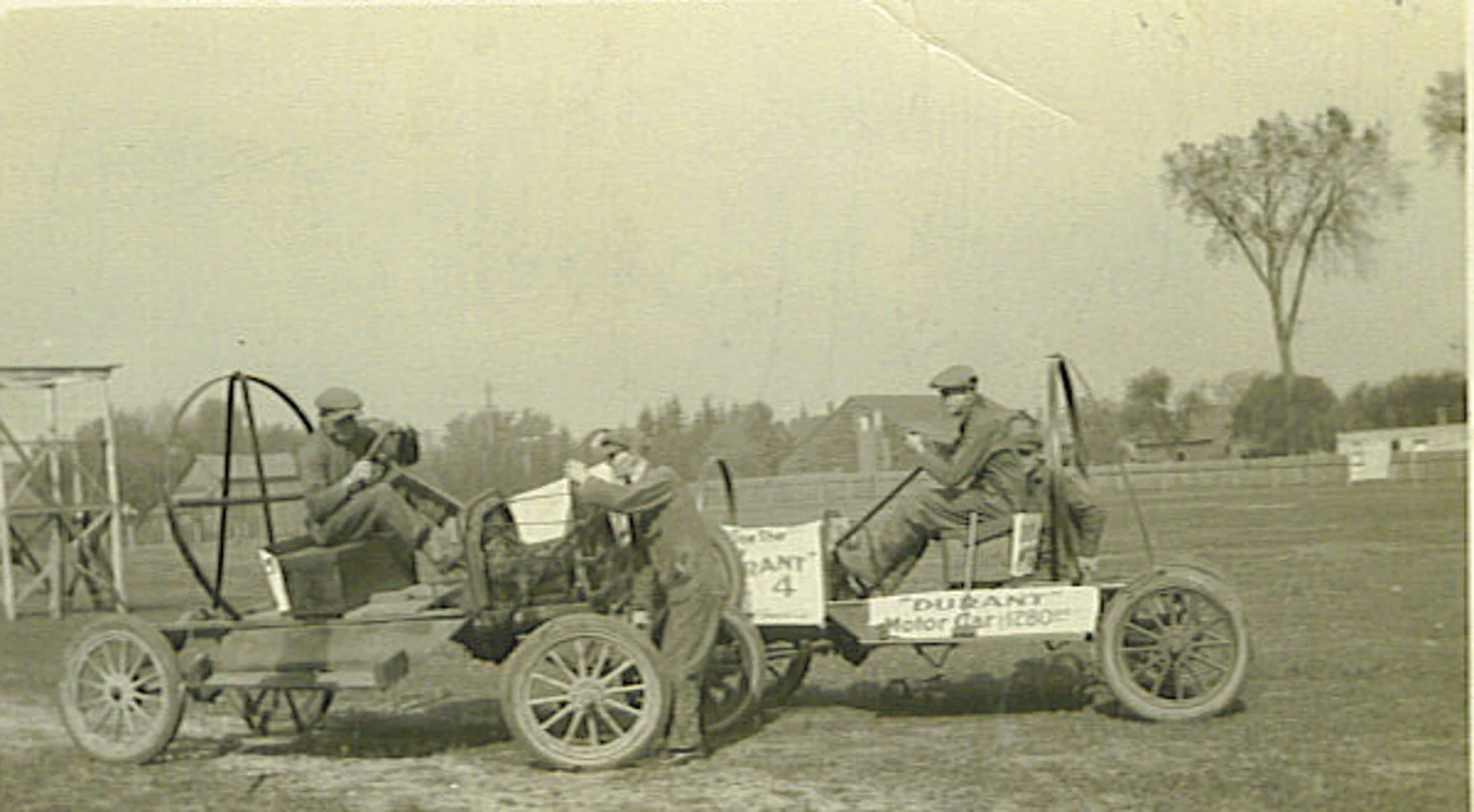
Auto Polo at the Cooksville Fair, c1922.
Sometimes the story ideas for this article seemingly come out of the ether …
I was watching a tv program last night that explored the early 1920s phenomenon of “Auto Polo”. I had a laugh recalling the historic pictures we have of auto polo from the Cooksville Agricultural Fair in the 1920s. Then today, responding to an inquiry, I inadvertently opened a book to a chapter of the Cooksville Fair where it highlighted a story about the “Auto Polo Contest” in 1922. Think of a combination of polo, car racing, and a demolition derby!
What finally convinced me we should write about it was another inquiry asking about early sporting endeavours in historic Mississauga – and I just had to include a note about auto polo! So here we go!
Automobile Polo, or Auto Polo, first took shape in the United States around 1911-12 as a creative way to boost sales of the 1911 Model T Ford. The earliest recorded match happened in Wichita, Kansas, on July 20, 1912, though a few games had already been played as early as 1908 in New York City’s regimental armory. By late 1912, official rules were established, and a major tournament was held in Washington, D.C. The sport quickly gained traction, with clubs forming especially in New York City and Chicago by the early 1920s.
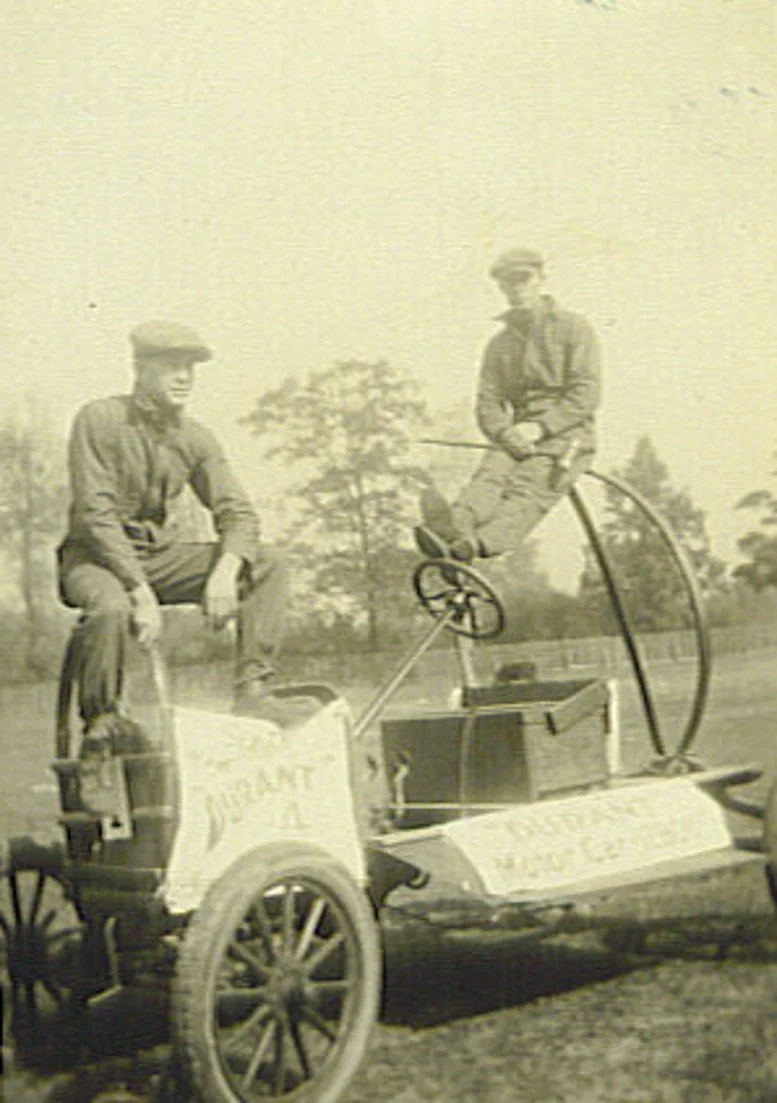
Auto Polo team at the Cooksville Fair, c1922.
Auto Polo spread overseas in 1913 when U.S. teams toured Europe and Great Britain, but it received a mixed reaction. A British motoring magazine called it both “very impressive” and a “lunatic game.” The sport also appeared at the Canadian National Exhibition in Toronto in 1913, returning occasionally in the following decade. Its popularity peaked in the early 1920s before fading away by the late 1920s.
The game was played in two halves (called “chukkars”) and each team had two cars and four men in play on the field at a given time. The first auto polo cars used were unmodified, light steam-powered Mobile Runabouts that seated only one person. As the sport progressed, auto polo cars resembled stripped down Model Ts and usually did not have tops, doors or windshields, with later incarnations sometimes outfitted with rollbars to protect the occupants. Cars typically had a seat-belted driver and a malletman that held on to the side of the car and would attempt to hit a regulation-sized basketball toward the goal of the opposing team with the cars reaching a top speed of 40 miles per hour (64 km/h) and while making hairpin turns. The mallets were shaped like croquet mallets but had a three-pound head to prevent “backfire” when striking the ball at high speeds.
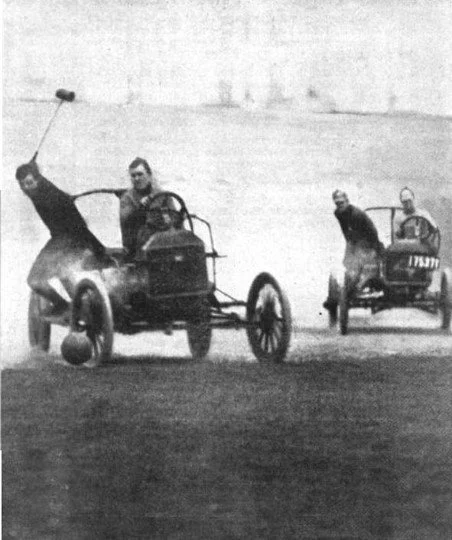
Photo of early auto polo game by Collier's.
For historic Mississauga, auto polo was first recorded as being at the Cooksville Agricultural Fair in 1922. It is unclear how often they returned to the annual fall fair, but there are references to auto polo in 1923, 1925 and 1927. The pictures show an automobile body labelled “Durant Motor Car” and “Durant 4”, which likely means that they were stripped down and heavily modified Durant model A-22s.
The nature of auto polo meant frequent crashes, with players often thrown from their vehicles. Roll cages helped reduce injuries, but cuts and broken bones were common, though fatalities were rare. Cars were usually wrecked by the end of each match, making it costly and difficult to insure players or vehicles. Despite its short-lived run, auto polo remains a fascinating, if short-lived chapter, in the history of motorsports ... and odd sporting endeavours in general!