Mississauga's Meadowvale Village Turns 190
/
2026 marks the 190th anniversary for Meadowvale Village … maybe.
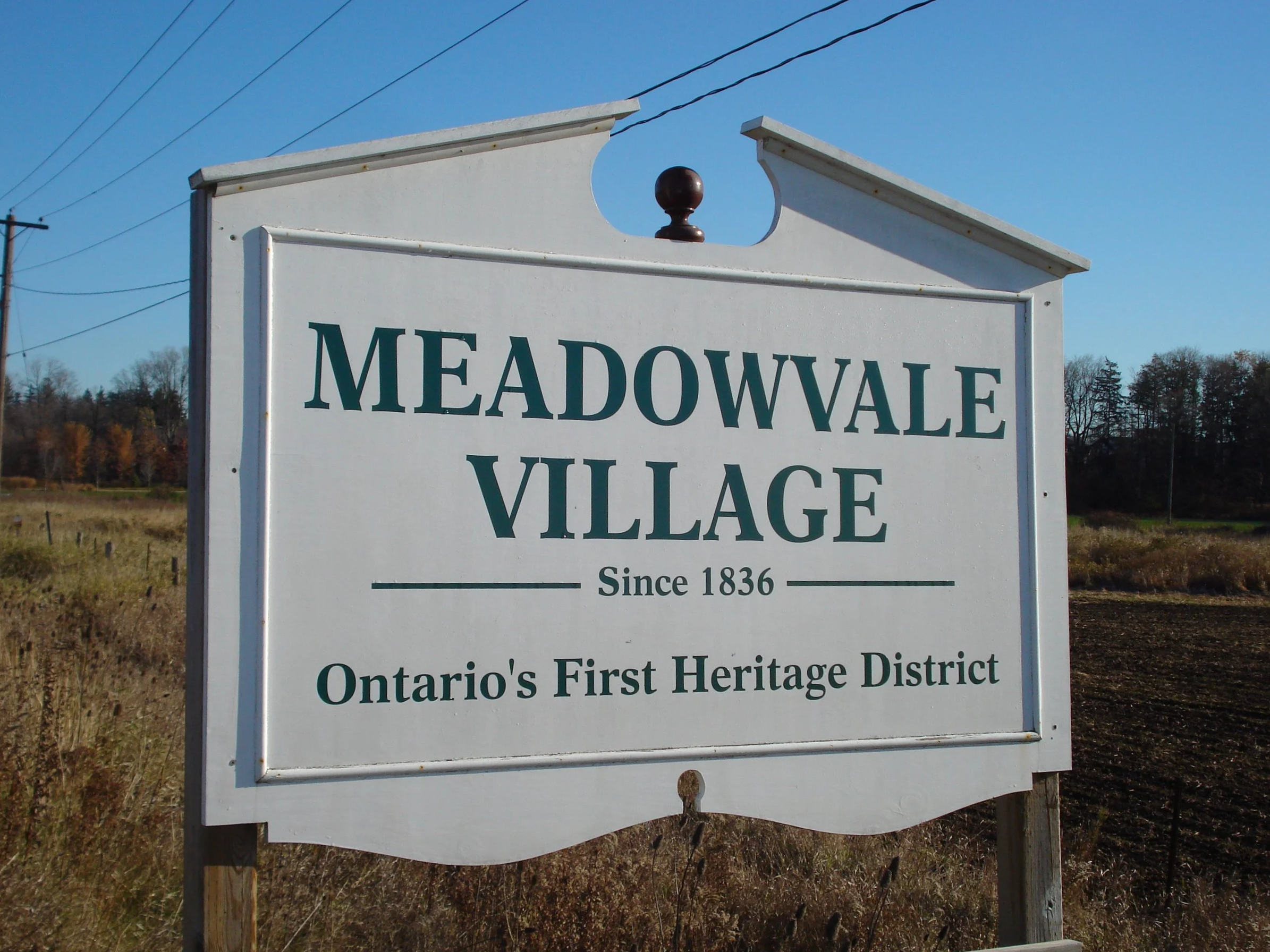
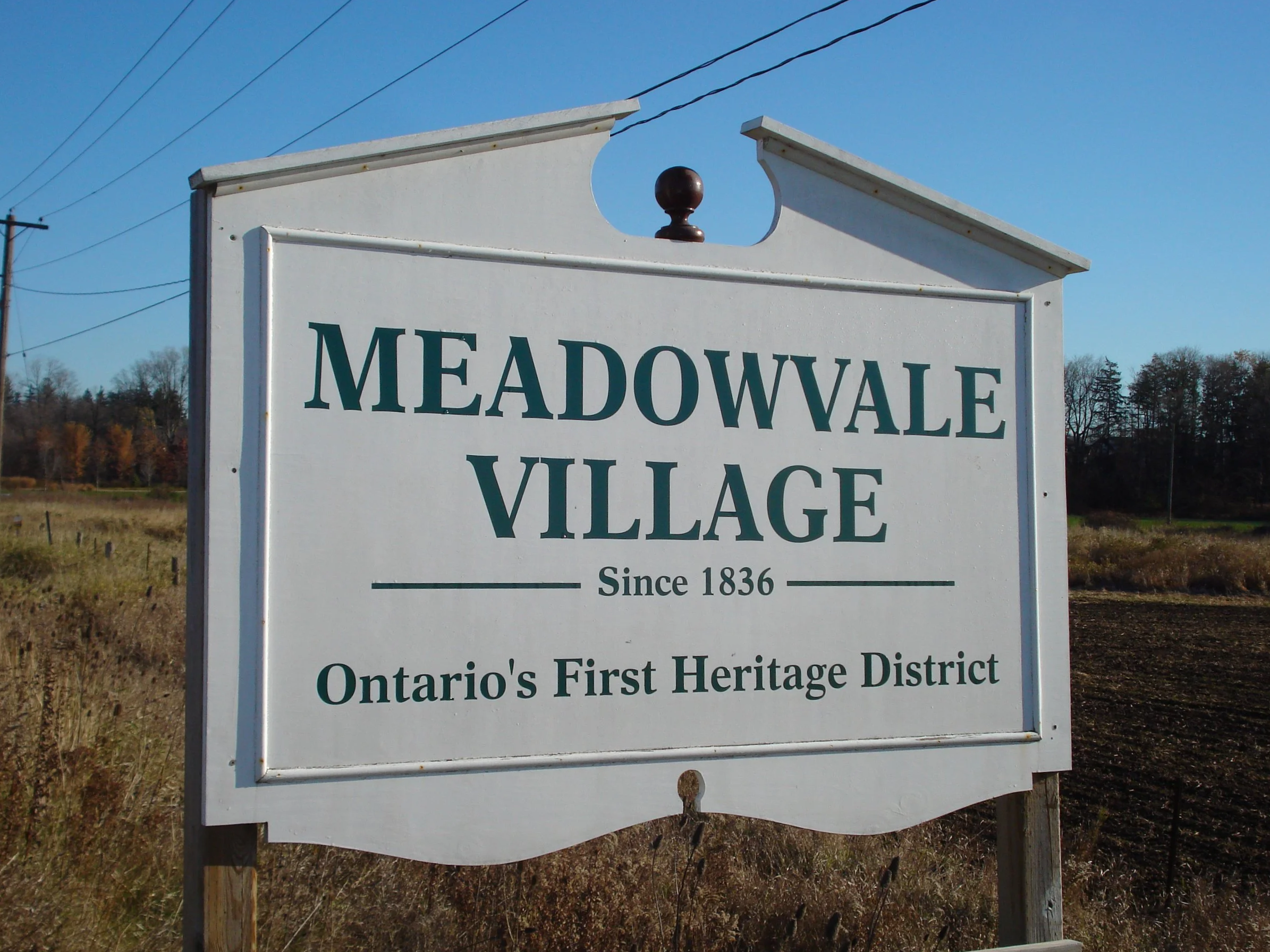
The Meadowvale Village Heritage Conservation District is a special place within our city where the treasured heritage landscape is preserved within the wider city that has grown around it. The signs along Old Derry Road proudly announce when you’ve crossed into the historic community and proclaim, “since 1836”.
Many stories and published articles on the history of Meadowvale Village provide the establishment date for the village as 1836. The date can be found in the 1904 publication entitled A Souvenir of the Village of Meadowvale-on-the-Credit by Harry Spiers. Another publication, written in 1922 for the Meadowvale Old Home Rally by the Meadowvale Women’s Institute, also references the 1836 founding date. However, neither clarifies its singular importance.
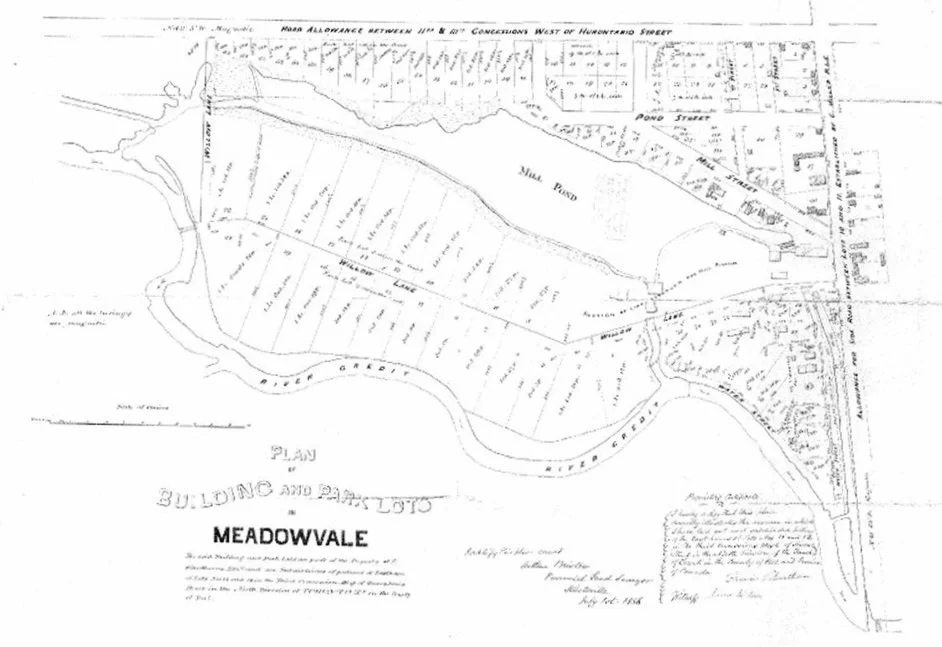
Meadowvale Village - 1856 Bristow Survey.
The story of Meadowvale Village begins earlier, shortly following the signing of Treaty 19 between the Indigenous Mississauga and the Crown in 1818. Settlement in the northern area of historic Mississauga, north of what is now Eglinton Avenue, began in earnest after the 1819 survey. At the same time, a group of people living in New York were anxiously looking for a new home in Upper Canada following the War of 1812. Many had grown weary of anti-British sentiment in the years following the war, and no longer felt safe in the United States of America.
John Beatty and Joseph Carter, representing the interests of a like-minded group of families, made several trips to York (Toronto) in 1818 and early 1819, seeking suitable land for their group. A petition for land was presented to Lieutenant-Governor Sir Peregrine Maitland on April 22, 1819, on behalf of the group. The “Beatty Caravan” of 26 (or 29) left New York for Upper Canada on May 1, 1819. The terrain was treacherous at times, with few roads and rutted trails to follow, and rivers to cross. Near the end of May the caravan arrived at the Credit River. On May 28, 1819, the caravan reached York to obtain their location tickets for land, before heading inland. One group, led by John Beatty, settled in and around what is now the Meadowvale and Churchville areas.
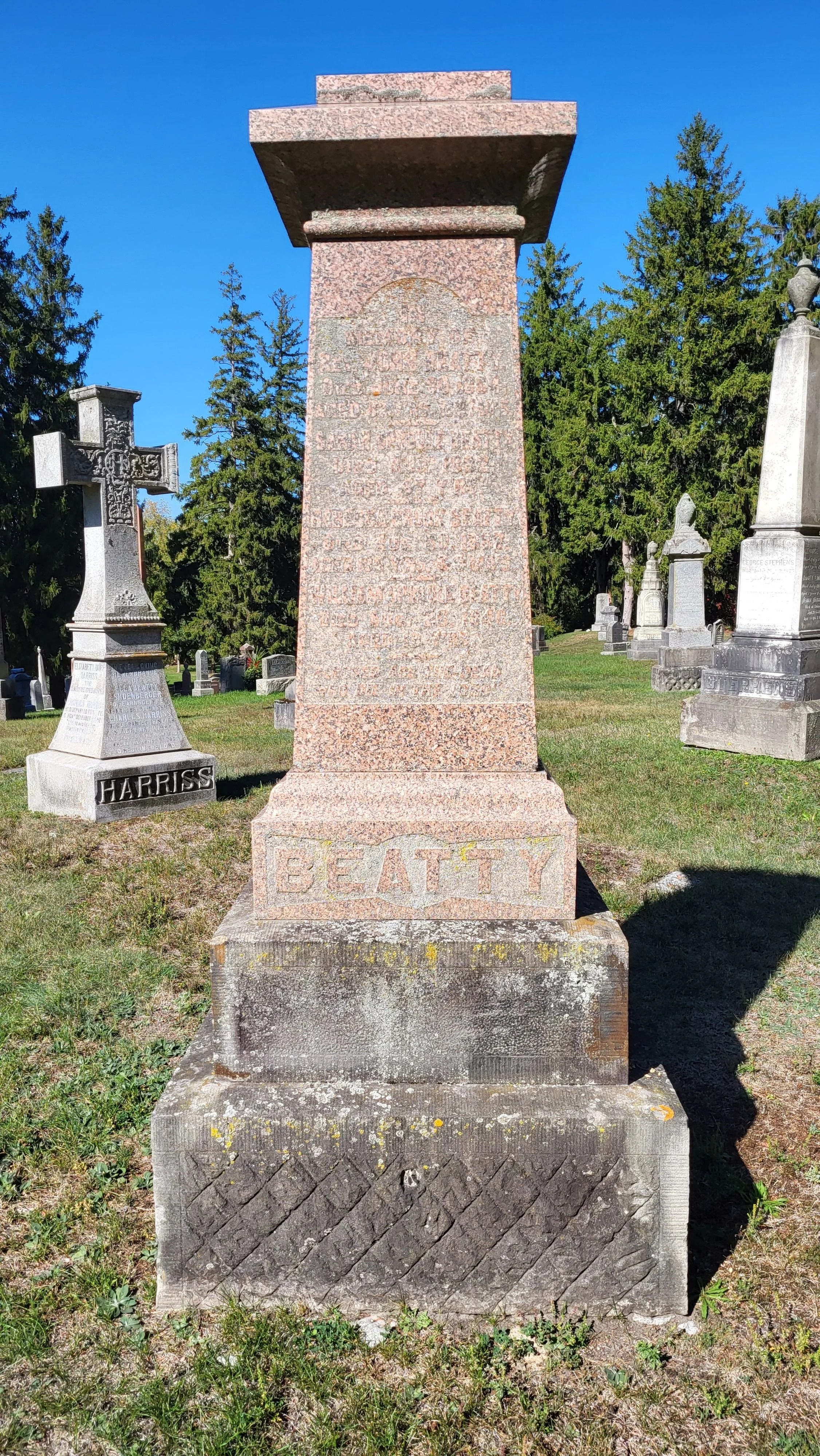
John Beatty gravestone, Cobourg Union Cemetery.
Between 1833 and 1841, “Squire” John Beatty’s large land holdings were purchased by James Crawford, who in turn sold these properties to Aaron and Francis Silverthorn between 1845 and 1852. It was Crawford, followed by Silverthorn, who established the strong milling traditions of Meadowvale Village, and laid the framework for the village that would begin to emerge after 1836.
Most stories of Meadowvale list the “founders” of Meadowvale Village to be John Beatty (1782-1864), James Crawford (c. 1808-1882), John Simpson (1803-1878) and Francis Silverthorn (1815-1894), with Simpson often being referred to in local narratives as the “father” of the village proper as he was not only a prominent land owner and mill-owner, but he also donated land for the Methodist Church and schoolhouse.
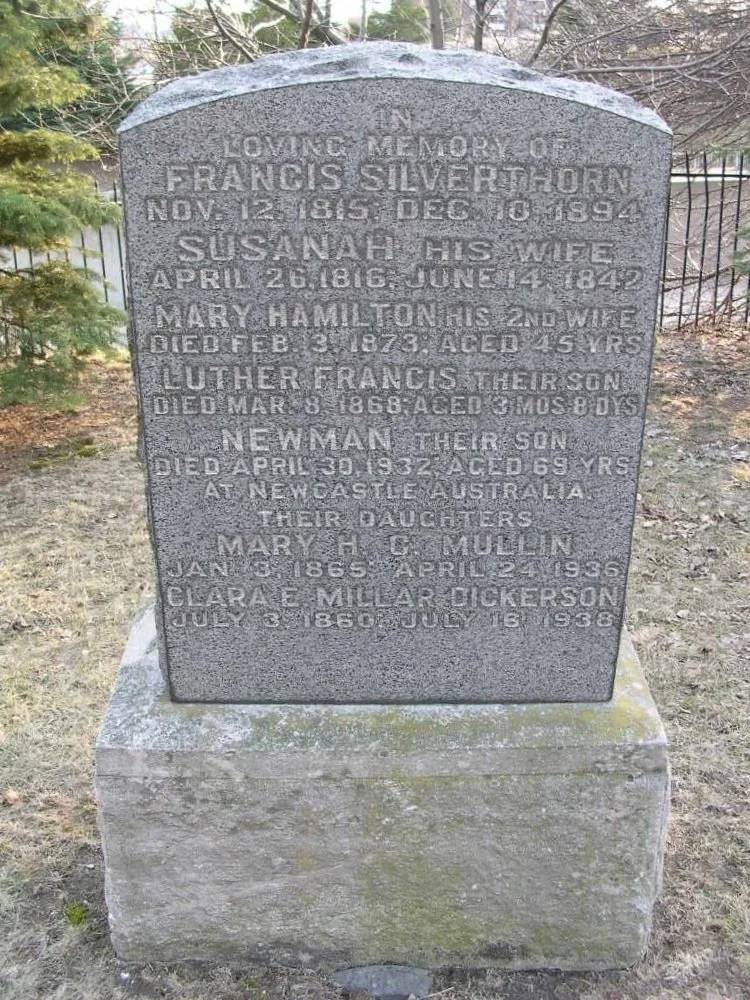
Francis Silverthorn gravestone, Dixie Union Cemetery, Mississauga.
The village streets and lots were surveyed in the 1856 Bristow plan, and in this sense, 1856 marks the physical establishment of the village proper with residential building lots. However, there are surviving houses in the village that predate the 1856 village survey, with the earliest surviving dwelling believed to have been built by Beatty circa 1825. Several other buildings are believed to date to the early 1840s, supporting the understanding that a village was in process of establishment prior to the 1856 survey.
If we turn to John Simpson, who by local records seems to have had one of the most individual influences on the early development of Meadowvale Village, he purchased 200 acres on the south side of Old Derry Road on December 1, 1837 (Lot 10, Concession 3, WHS) from the Matthew Dawson estate. A 1975 publication entitled Meadowvale & Churchville by William Cook, which also gives the founding date for the village as 1836, states that John Simpson “obtained possession” of his property in 1836, before purchasing it in 1837. Although this is certainly possible, we have also not found any evidence to support the 1836 reference. This is perhaps a moot point though, as certainly other people were living in the immediate area by 1836.
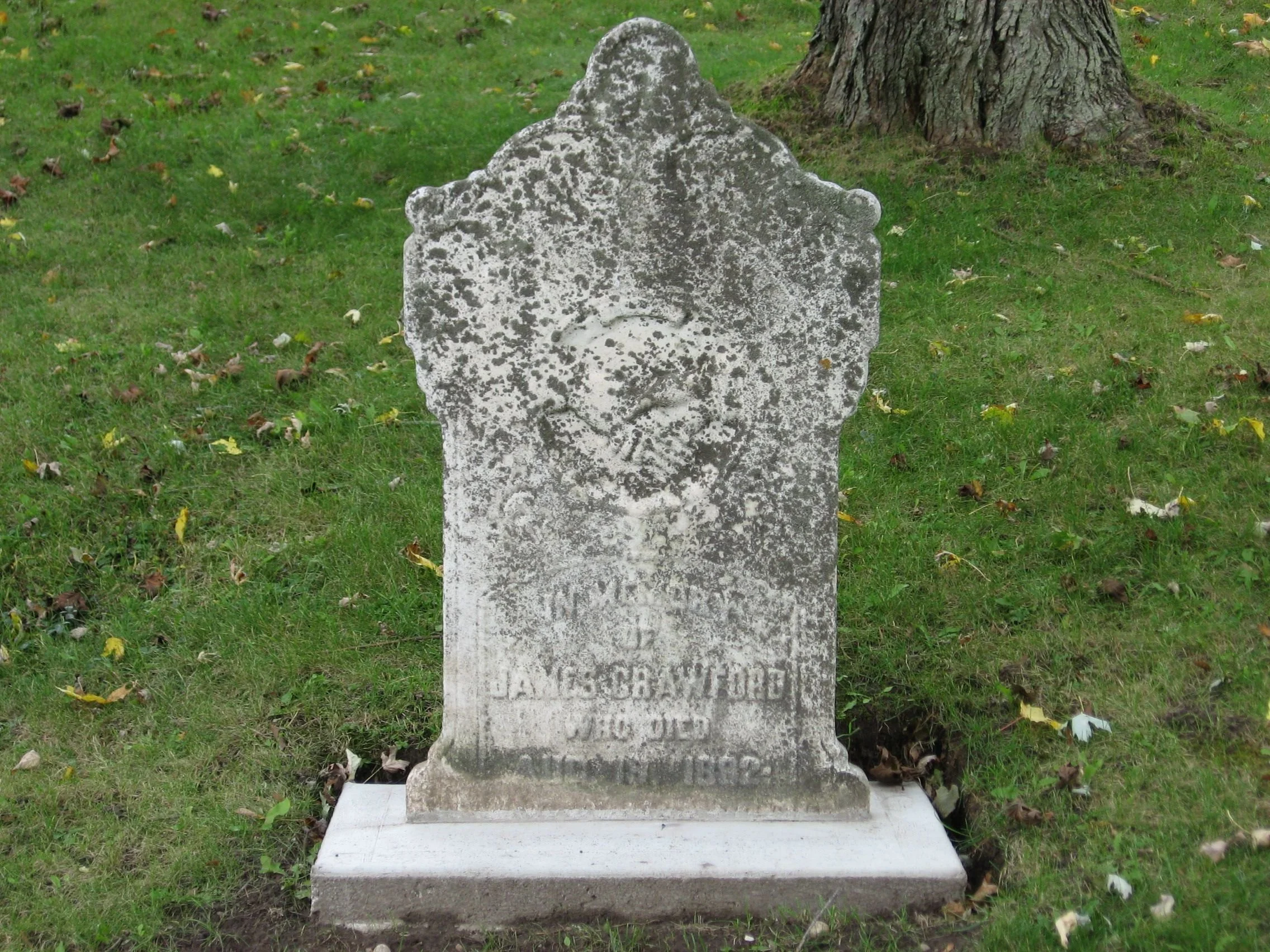
James Crawford gravestone, St Johns Cemetery, Dufferin County.
By the mid-1840s it is estimated that around 250 people lived within the bounds of the village. Milling continued as the lifeblood of the community for many years, and the burgeoning village’s prosperity was directly linked to the success of the mills. Meadowvale also began to add other essential colonial settlement services. In 1848, James Johnson opened a blacksmith and wagon shop while a Mr. Robinson is credited with building the first general store in the village. The village soon added a second store, operated by James Ward. Ward later sold his store to another early and prominent resident of the community, Matthew Laidlaw. In 1852 Hugh and Horatio Johnson built a small foundry in the village for making farm implements. This foundry is believed to have been the first of its kind in Ontario. Meadowvale’s first post office opened in 1857 in Francis Silverthorn’s store, where Luther Cheyne became the first postmaster. James Gooderham became postmaster in 1862, followed by his brother, C.H. (“Holly”) Gooderham, in 1865. He was followed by Charles Switzer in 1882 and J.H. Whitlam in 1890. The old store and post office burned in 1907, and the position of postmaster was taken over by William Lambe.
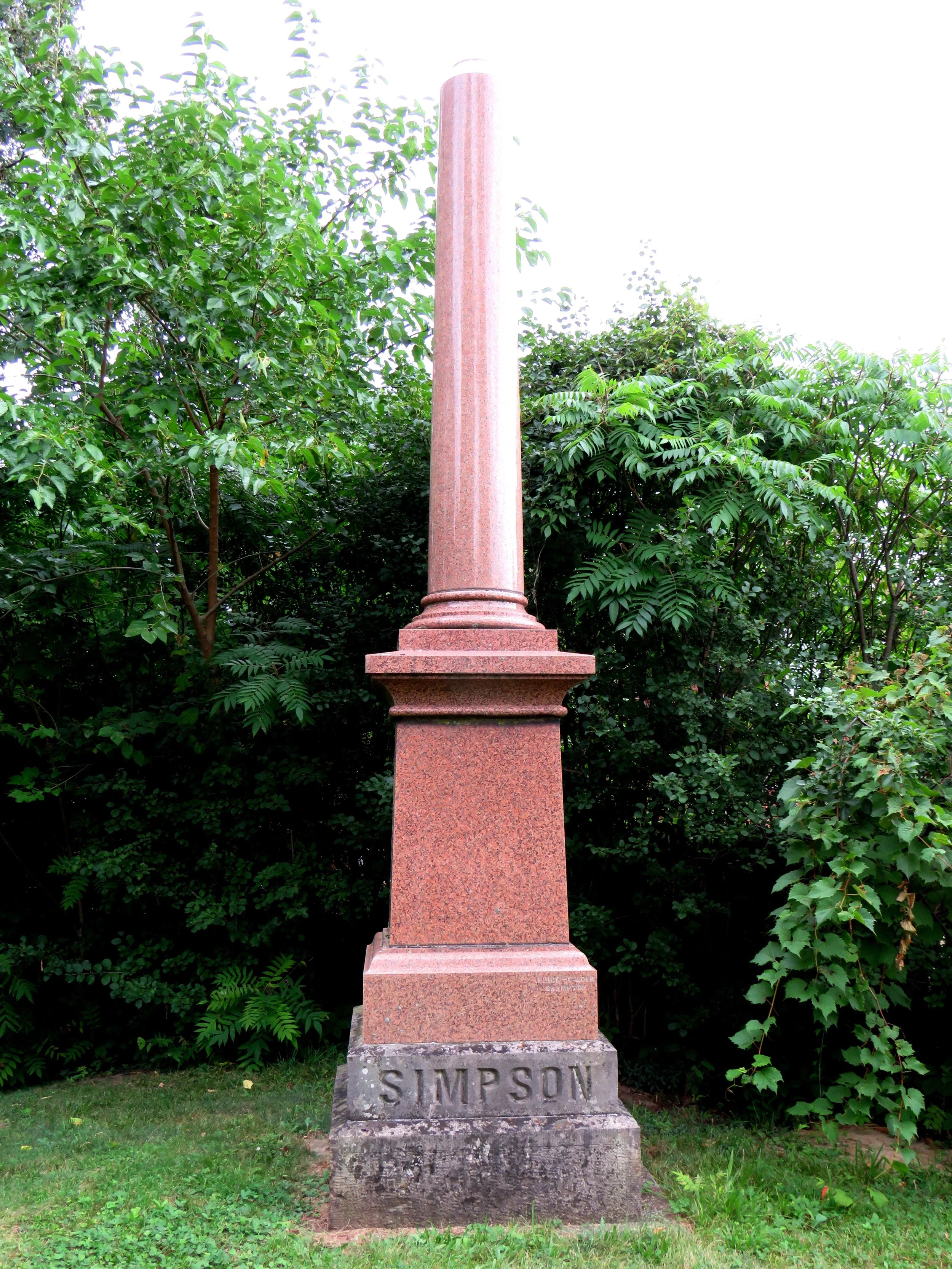
John Simpson gravestone, Churchville Cemetery.
By the 1860s, Meadowvale boasted a shoemaker, two blacksmiths, a carriage and harness maker, wagon shop, cooperage, carpenter, minister, postmaster, Methodist church, a school and schoolmaster, two sawmills, a chopping mill, and the large grist mill. Meadowvale was also home to a famed musical band and, for many years, to an annual Meadowvale Band Garden Party, featuring classical music of Caruso and poetry of Tennyson. The village also became known for its literary and debating society. Known as “The Fortnightly Club”, they edited a small community paper called the “Meadowvale Mirror”. The first hotel in Meadowvale was established by a local blacksmith, George Bell, in 1844. Matthew Laidlaw added a second hotel in 1852. Both buildings survive today. Meadowvale Village also became a haven for artists, including members of the Group of Seven, George Chavignaud, Clara Harris and Fred Haines, amongst many others. Happy 190th (or so) anniversary to Meadowvale Village!