Exploring Local Mississauga Connections to the Black Donnelly Tragedy
/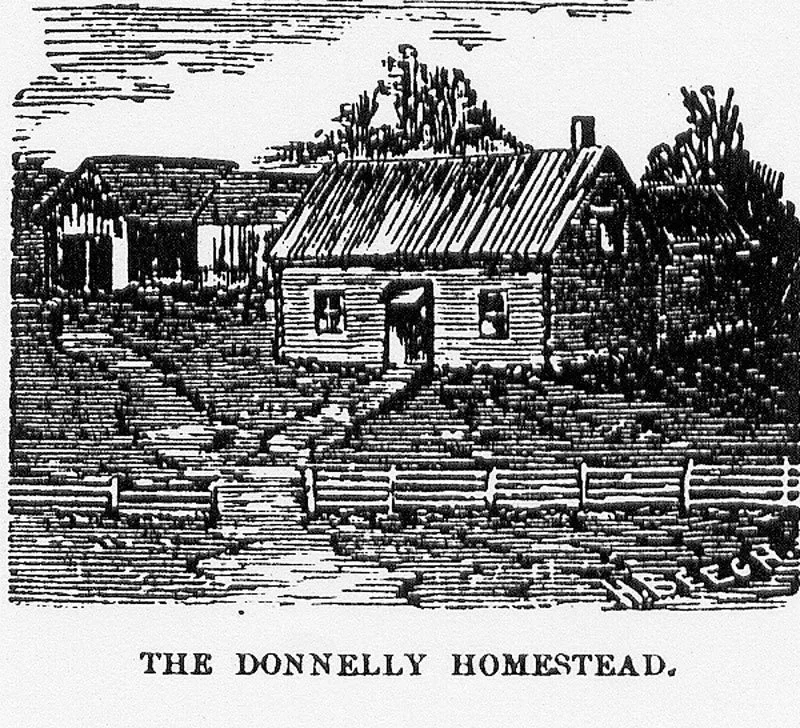
Artist sketch of the Donnelly Homestead.
Darkness and violence came in the early morning hours of February 4, 1880 (146 years ago). What befell one family continues to ring down through the years. References such as the Biddulph Tragedy, the Black Donnellys, the Lucan Horror and the Roman Line Massacre evoke a dark chapter of Canadian history. And for many, those words alone will stir a memory.
There are many resources that explore the Donnelly story in detail, but that is not the intent here. In brief, long-simmering feuds dating back hundreds of years to Ireland, rivalries, conflicting business interests, and inflamed tensions during the so-called “reign of terror” in the 1870s, eventually boiled over and culminated in a coordinated attack on the Donnelly family. Long-standing feuds between Irish Catholic groups such as the so-called “White Shirts” and “Blackfeet” led to violence in Canada. In time, the Donnelly family became the scapegoats for any transgressions in the Biddulph and surrounding areas – barn burnings, robberies, assaults, thefts, etc., and spurned on by the local Catholic minister, a large portion of the community turned on the Donnelly clan (or at least turned a blind eye towards what happened on that February night.)
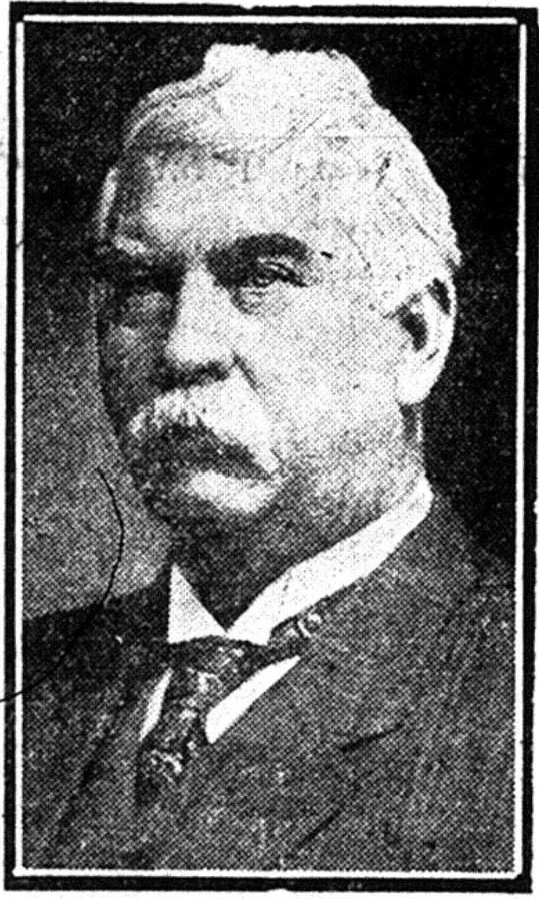
Dr Marshall Sutton.
But first, a little history: James Donnelly Sr. came from Tipperary, Ireland in 1844, followed by his wife Johannah, and their eldest son James Jr. By 1847 the family had settled along the Roman Line in Biddulph Township near modern Lucan, Ontario. They did not own the land – they squatted on property they did not own, but the family did make improvements, building a house and clearing and farming the property. The family grew with six more sons and one daughter: William, John, Patrick, Michael, Robert, Thomas and Jennie.
James Donnelly Sr. got into an altercation at a barn raising with one Patrick Farrell in 1857, which ended with Farrell succumbing to his injuries. Donnelly fled and went into hiding for most of the next year, but eventually surrendered himself and went on trial, which brings us to our first local connection to historic Mississauga. The trial for James Donnelly Sr. was presided over by John Beverley Robinson, Chief Justice of the Court of Queen’s Bench for Canada West. While some witnesses asserted that Donnelly had struck Farrell in self-defense, James was found guilty of murder and sentenced to hang. Through the persistent efforts of James’ wife Johannah, the sentence was later commuted to seven years for manslaughter, and James was sent to the Kingston Penitentiary. John Beverley Robinson had The Grange built in 1828, now the home of Heritage Mississauga, and nearby Robinson Street in Erindale Village is named for him.
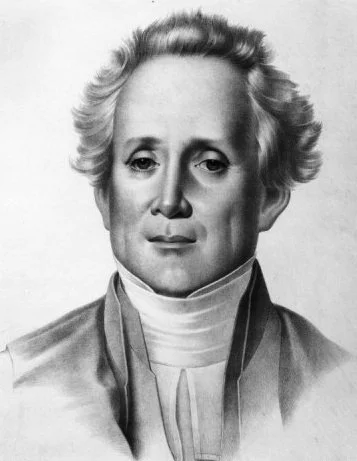
John Beverley Robinson.
But back to the Donnellys. In 1873 the Donnelly brothers started a stagecoach line in 1873, which initially ran between Lucan, Exeter and London, and became a rival of several other stagecoach operations. These rivalries resulted in several accidents, assaults, and arsons – some of which were against the Donnellys, and some of which were blamed on the Donnellys. “The Donnellys were no saints, believe me,” said Ray Fazakas, a Donnelly expert and author who spent more that 40 years researching the family. “They got away with a heck of a lot more than they got caught for”, and the Donnellys became well-known as a force to be reckoned with throughout southern Ontario. There are stories, whether real or imagined, that linked the Donnellys to happenings in Orangeville and Caledon, and fires in the “lost village” of Ballycroy in 1875 and 1878 were blamed on them, with no real evidence that they had been there. But names and blames travelled fast.
Back at home in Biddulph, tensions were increasing amongst the Irish Catholics families along the Roman Line. In June 1879, Father John Connolly of St. Patrick’s Roman Catholic Church used his influence to create a Peace Society in Biddulph Township which sought to end the so-called “Reign of Terror”. People were to consent to having their properties searched for stolen property, and to create “watch” groups to guard against arson and theft. The Donnellys refused to sign the pledge. The Donnellys charged that some of the Peace Society’s members may have been responsible for some of the arsons, property damage, and assault cases in Biddulph. From the Peace Society, a Vigilance Committee was formed, led by Constable James Carroll.
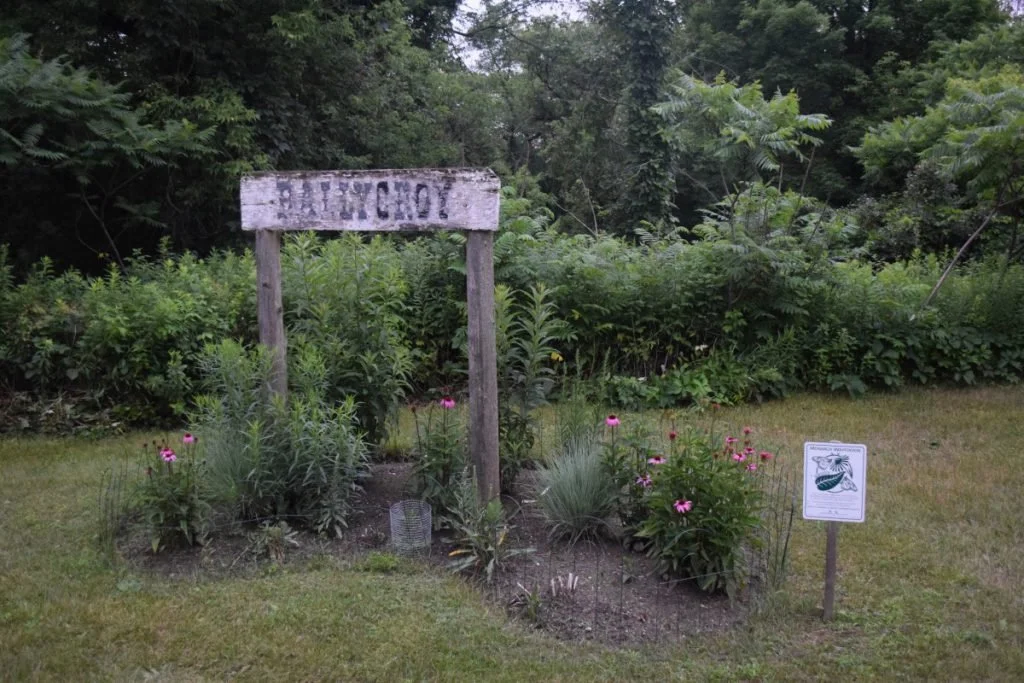
Ballycroy sign.
In the early morning hours of February 4, 1880, a large group of Vigilance Committee members gathered at the Donnelly property. In an act of vengeance, the family was accosted in their own home, attacked, and murdered. Killed on the homestead were James Sr., Johannah, Thomas and a niece, Bridget. The mob then travelled a short distance north to William Donnelly’s house, where John Donnelly was killed (in the darkness, the mob had thought it was William). In a short span of time, 5 members of the Donnelly family were murdered. The local coroner, Dr. James Sutton, oversaw the inquest, which brings us to our second local connection. Doctor Marshall Sutton (1850-1916), who had an established medical practice in Cooksville, was born in Biddulph Township and spent his youth in the Lucan area, during the Donnelly years. Marshall was related to Dr. James Sutton - he may have been either a nephew or a cousin. Two of Dr. Marshall Sutton’s sons, Dr. Arthur Bennett Sutton (1882-1958) and Dr. Harold Chester Sutton (1890-1971), followed in their father’s footsteps and served historic Mississauga for many years. Dr. Marshall Sutton and his son Harold are buried in Dixie Union Cemetery here in Mississauga.
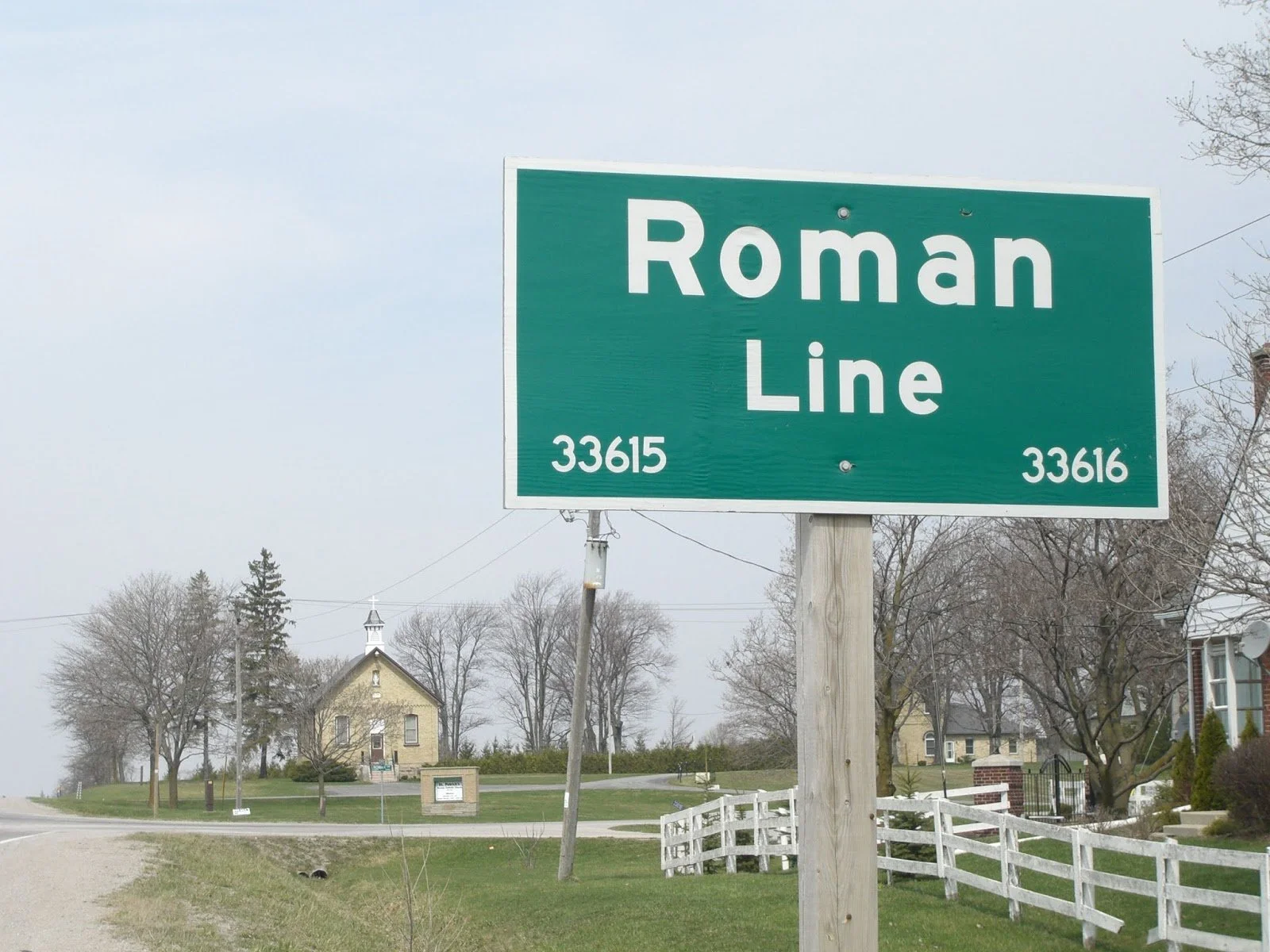
Roman Line road sign, Biddulph Township.
Following the Donnelly murders, thanks in part to a surviving witness, six community members were arrested. But only James Carroll was sent to trial – twice. The first trial ended with a hung jury, and the second trial found Carroll not guilty. The community closed ranks, and people dared not to speak of the Donnelly family or the role of the Vigilance Committee. No one was ever convicted for the crimes, despite surviving family members seeking to keep the tragedy in the minds of people in the area. There was no resolution or justice. As mentioned, there are many books, presentations, lectures, podcasts and programs available that explore this multifaceted story in greater detail.
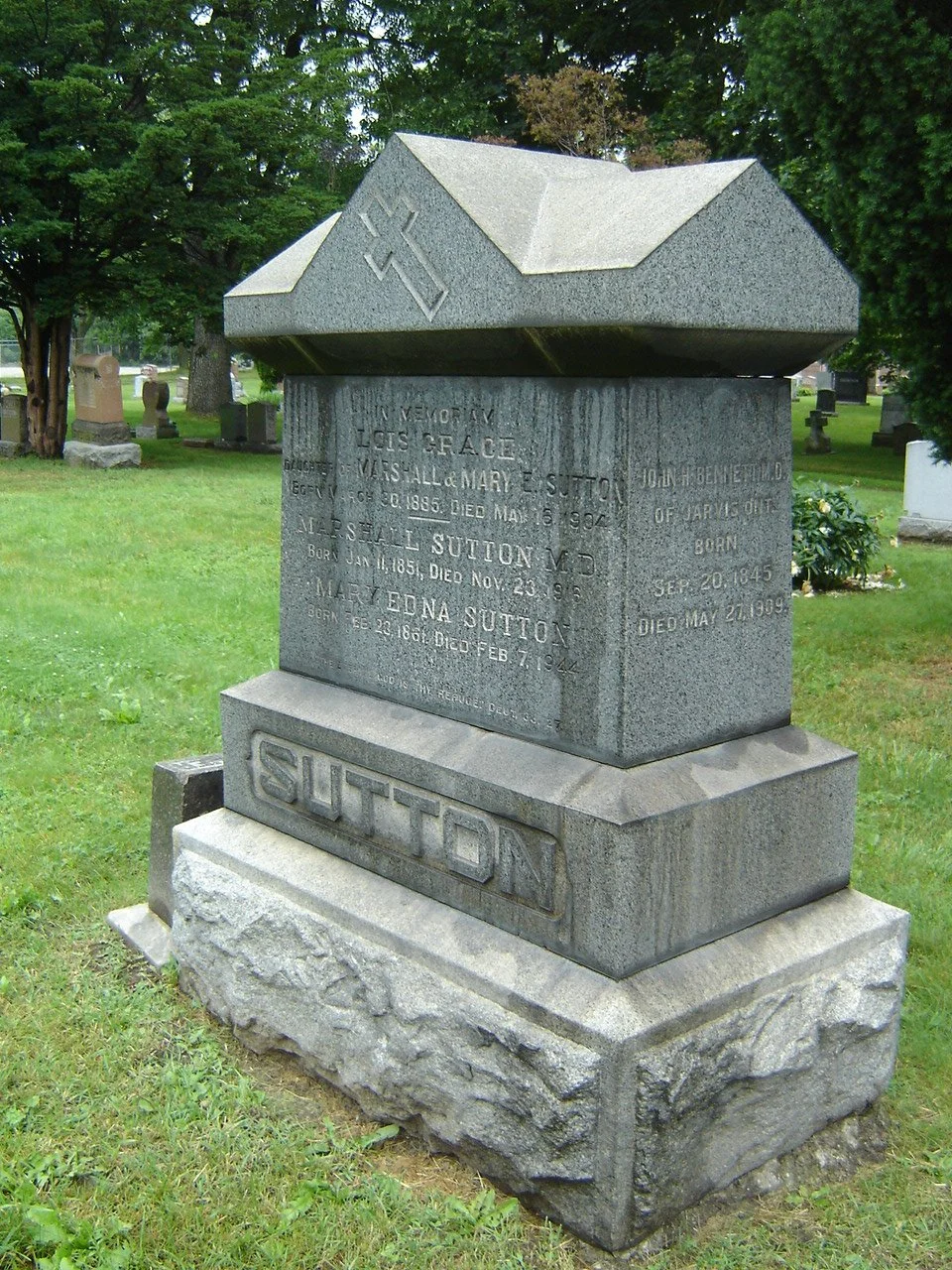
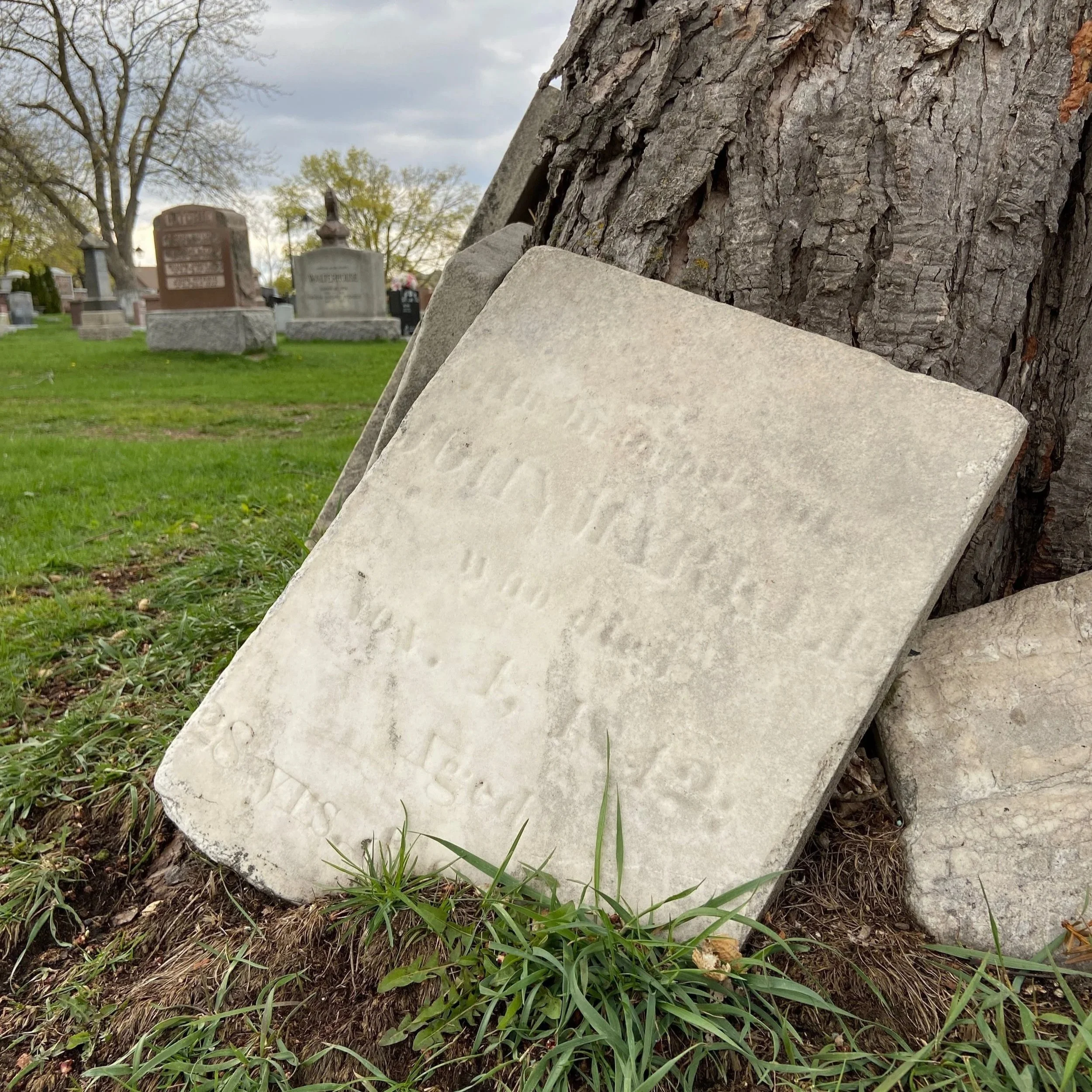
Sutton Gravestone, Dixie Union Cemetery, Mississauga.
The tumultuous years in Biddulph Township and the murders of the Donnelly family were well covered in local news, including The Globe newspaper, and those living in historic Mississauga, even if not directly influenced by what was happening “there”, were certainly aware of the news coming out of Middlesex County and of the Donnelly name.
Although there are not many direct references to the troubling times from Biddulph here in historic Mississauga, one does wonder if the sentiments that resulted in violence might have found their way here as well, although with a presumably different outcome. The crossroads hamlet of Dixie, which took its name in 1864, was previously known as Irishtown, Corktown, Fonthill and Sydenham, amongst other names. At the intersection of Tomken Road and Dundas Street, stood two hotels – one on the north side of Dundas, and one on the south side. On the north side was William Kennedy’s Atlantic Hotel, which opened in 1850. On the south side was Francis McKenny’s Pacific Hotel, which may have opened as early as 1857. Both catered to a largely Irish clientele. A short distance north, near Tomken Road and Burnhamthorpe Road, was John Gilleeces’s rough and tumble Pucky Huddle Tavern, whose slogan was “Bad Whiskey and Good Fellowship” and was said to have had a strong Irish Catholic patronage.
One also wonders about Jacob Cook’s marvelous mail and stagecoach service operating out of Cooksville, that saw service as far as London and Goderich for a time – would that route have crossed paths (and maybe fists) with the Donnellys or their competitors from Biddulph? Another curiosity is the early and predominantly Irish Catholic congregations that were established here in historic Mississauga, such as St. Kevin’s at Elmbank, St Joseph’s at Streetsville, St. Patrick’s at Dixie, St. Peter’s at Diamond and St. Mary Star of the Sea at Port Credit, and what might have been discussed between parishioners when the news relating to the Donnelly murders came to light, particularly since there was a strong connection amongst many of our early Irish Catholics settlers to Borrisokane, Tipperary, Ireland, much like the Donnelly family of Biddulph.
For more information, we recommend visited the Lucan Area Heritage & Donnelly Museum: https://www.donnellymuseum.com/