Mississauga's Leslie Log House Turns 200
/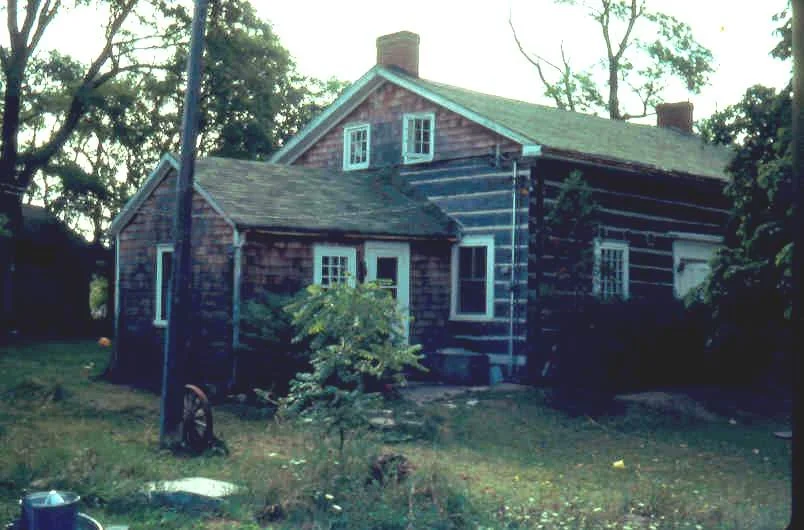
Leslie Log House before relocation, 1980.
How many people have driven by the historic log house on Mississauga Road? Have you stopped in for a visit? Surrounded by a remnant orchard (the former Riviere Fruit Farm), to some people the log house feels oddly placed – oriented at a slight angle to the road, with its “back” turned to the road (it’s front door faces away from Mississauga Road). Long-time residents may remember a time when the log house was not there. It was moved here in 1994. But this venerable old building, now owned by the City of Mississauga and home to the Streetsville Historical Society and Archives, is 200 years old this year! That is a milestone that relatively few buildings reach. An event was hosted on Saturday, August 8 to celebrate this milestone for this significant heritage landmark.
But what is the log house’s back story?
(Editors Note: Wood you like to know the story?)

Leslie family descendants at the 2011 opening of the Leslie Log House.
The Leslie Log House, as we call it today, was built in 1826 by John Leslie (Senior). and his wife, Esther (nee Beatty) Leslie. Esther (1782-1867), who was originally from County Tyrone, Ireland, met her first husband, William Leslie, when he was stationed in Ireland. The couple returned to William’s home in Rogart, Sutherlandshire, Scotland, where they welcomed four sons: William Jr. (1803-1881), George (1804-1893), John (1806-1893) and Robert (1810-1886). In 1816, following William Leslie Sr.’s death around 1813-15 (some stories have William meeting his end as a soldier with the 79th Regiment of Foot in 1813 while in Spain, with other stories recording his death having occurred at the Battle of Waterloo in 1815), Esther married William’s cousin, John Leslie (1785-1872). John (Esther’s second husband) became referred to as John Leslie Sr., while his stepson became John Leslie Jr.
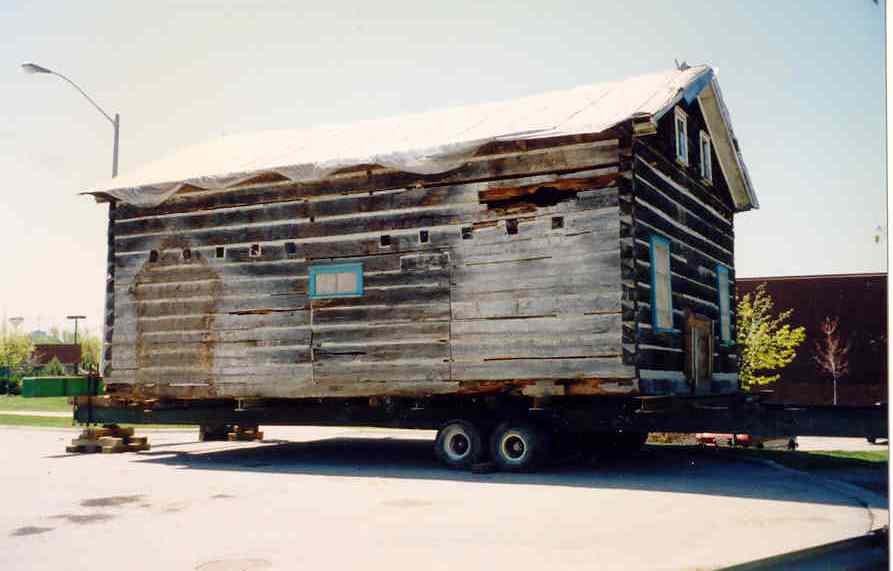
Leslie Log House raised for moving, 1994.
Esther and John Leslie would add to their family with William “Willie” (1817-1884), James (1819-1874), Elizabeth (1821-1912), Esther (1823-?) and George “Geordie” (1823-1909). For those keeping a tally, yes, the blended family, consisting of seven sons and two daughters, had two sons named William and two sons named George. All were born in Scotland.
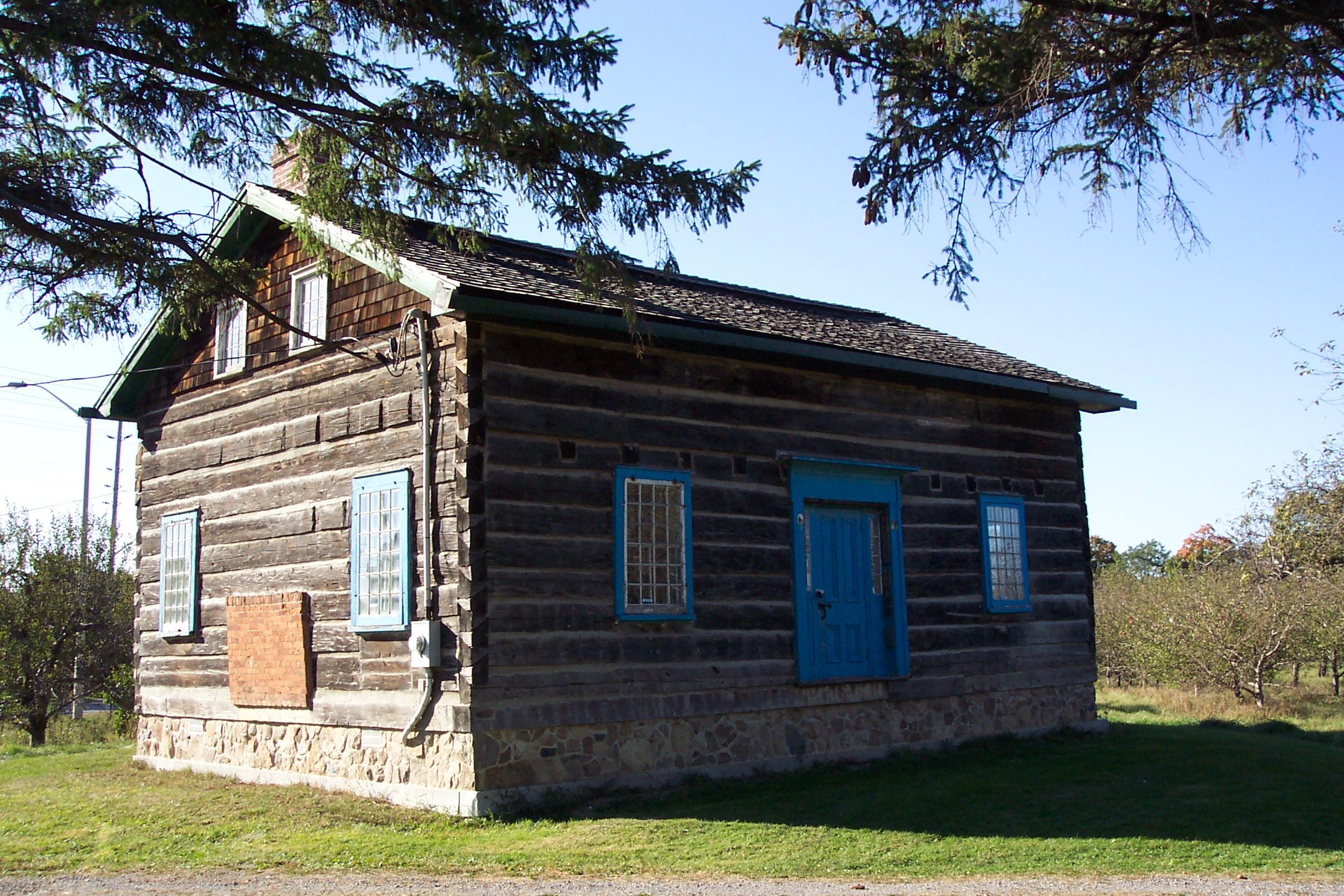
Leslie Log House, 2005.
During the Sutherland Clearances the crofters around Rogart were forced off the land. It is not known if the Leslie family was directly affected during these clearances, but shortly after 1816 the family moved from Rogart to Aberdeen, Scotland. According to family histories, Esther was referred to with great reverence as “The Irish Lady”. It is recorded that Esther was the backbone of the family, keeping her seven sons together in a tightly knit family unit, and pushing both her children and husband to work hard to improve the family situation.
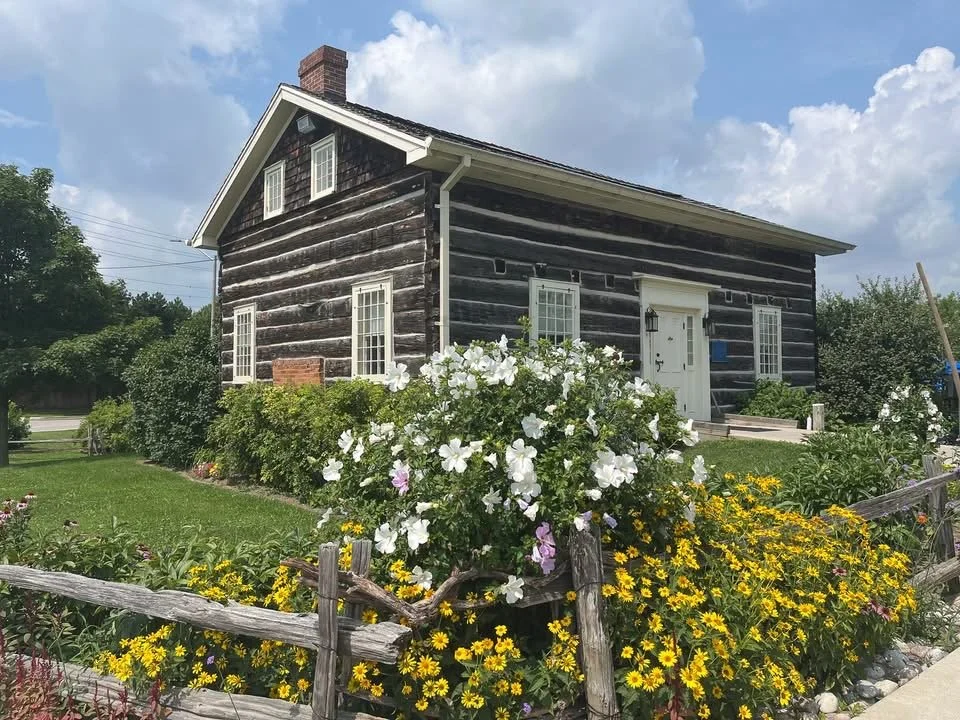
Leslie Log House, 2026.
Esther and John, together with their children, came to Canada in the spring of 1824. The entire journey must have been arduous, as it took two months for the family to travel from Scotland to their new home in Upper Canada. Esther and John Leslie likely followed Esther’s brother, John Beatty, to the Meadowvale area. The Leslie family leased 200 acres of land, located on Lot 12, Concession 5, West of Hurontario Street, for 21 years from King's College before purchasing it on March 31, 1845. John Leslie Sr. purchased the southern 100 acres (which included their log house), while John Leslie Jr. purchased the north half of the lot.
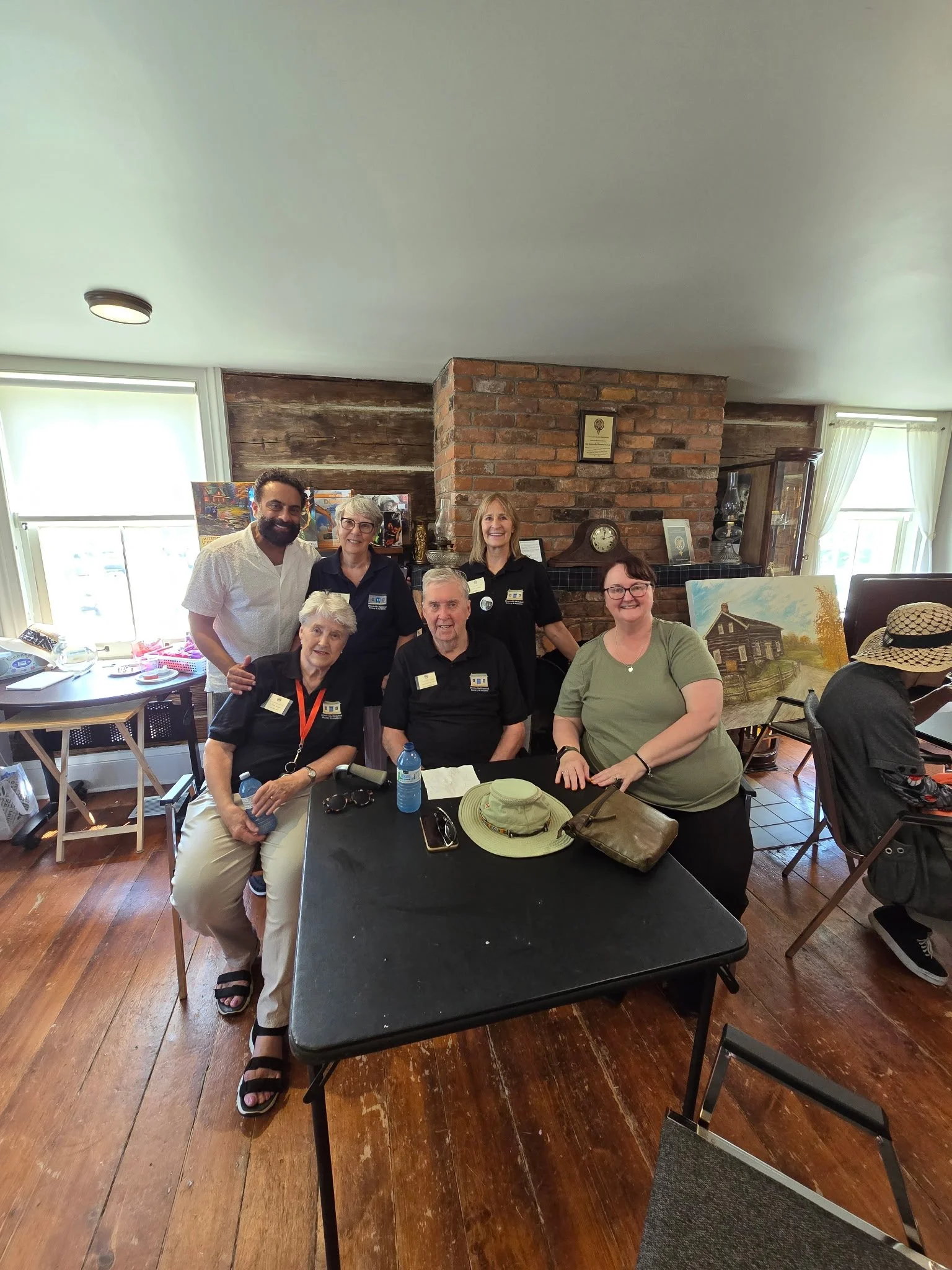
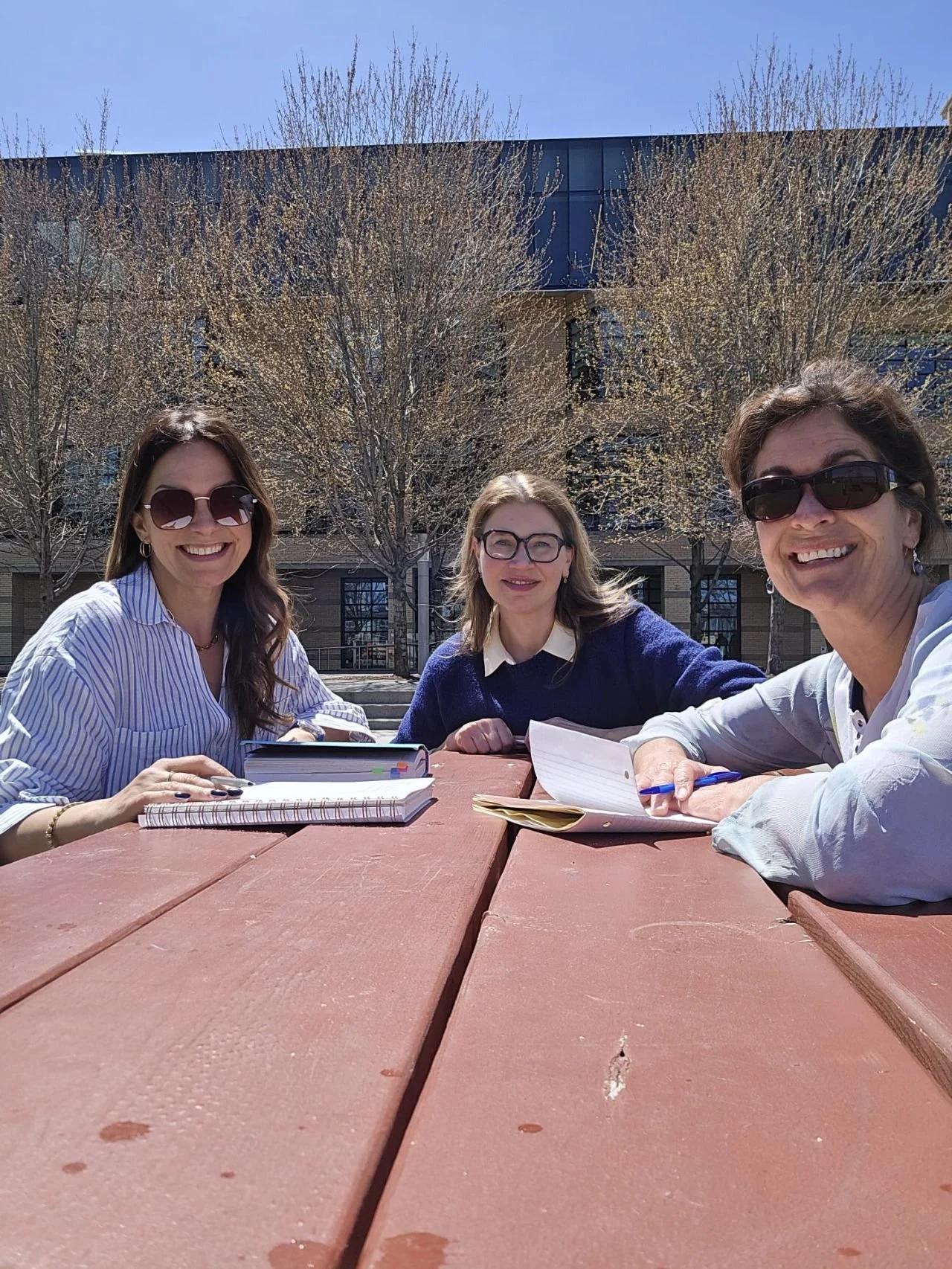
Members of the Streetsville Historical Society and Heritage Mississauga at the 200th Anniversary event.
The Leslie family built a large log house in 1826. The family became established and prospered, with George (the older son) becoming a noted horticulturalist in nearby Toronto, where he married into the prominent Davis family, and established one of the largest nurseries in the Dominion. The community that grew around his nursery became known as Leslieville, and Leslie Street in Toronto is named in his honour. Another son, Robert, became a noted architect and builder, having built several heritage buildings that survive in Mississauga today: Benares in Clarkson (1857), the Barber House near Streetsville (1862), and possibly the Hammond House near Erindale (1866). In later life, Robert was politically active in the Reform party and was said to be a close friend of Reform leader George Brown.
But back to the history of the log house.
In 1884, John Jr. sold the south half, along with the log house, to Christopher Rutledge, and in 1894 the north half of the lot passed to John Leslie Jr.’s son, also named George (1846-1910). The log house briefly returned to the Leslie family in 1924, when it was purchased by George’s son, Wilbert, and his wife Sylvia. They sold it in 1930 to Frederick Reeve, ending the long Leslie family association with the log house and the wider property. In all, the log house was in the Leslie family from 1826 until 1894, and from 1924 until 1930.
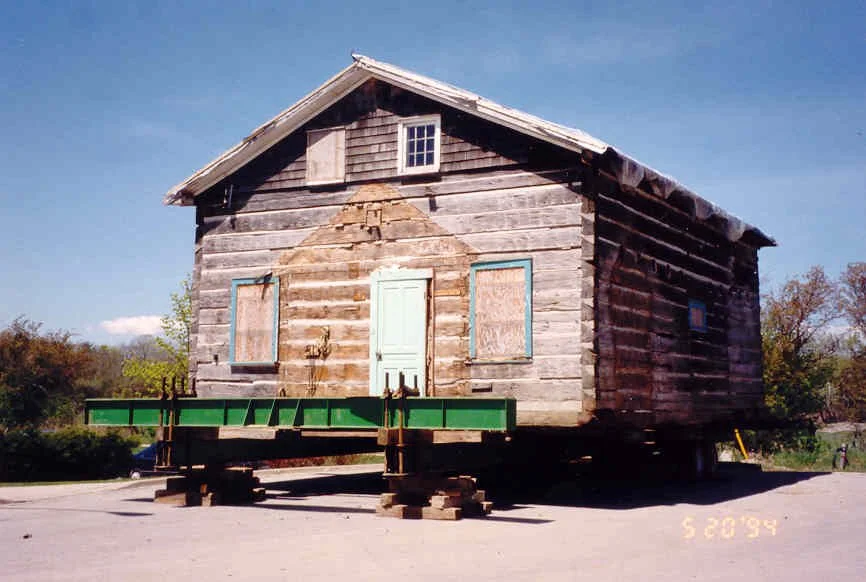
Moving the Leslie Log House, 1994.
In 1948 the property was purchased by Ruth and William Ledden. The house had not been lived in since 1930 and had fallen into a state of disrepair. The Leddens undertook extensive restoration work on the old log house, removing the clapboard siding that had covered the original logs since the 1890s and restoring the historic finishes. In 1956 the surrounding farm property was sold to Mathew Brockman, who in turn sold the property for development the following year. The Leddens retained the house and a small 6-acre parcel until 1968, when that in turn was sold to Markborough Properties Limited.
The City of Mississauga leased the property from Markborough for several years for recreation purposes, before determining that the log house should be preserved. The Leslie Log House was Designated under the terms of the Ontario Heritage Act in 1987 as a rare surviving example of an early nineteenth century log house. The house was originally located north of its current home, in the Meadowvale area near a crossroads hamlet known as Harris’ Corners (just north of Derry Road and Mississauga Road/Erin Mills Parkway). In 1994 the house was moved south down Mississauga Road and placed on a new foundation, enabling the Leslie Log House to be preserved in a compatible setting, rather than the industrial area that had developed around its original location. Following extensive restoration, the Leslie Log House opened as the new home of the Streetsville Historical Society in 2011.

New heritage plaque installed for the 200th Anniversary.
If you are curious about the orientation of the Leslie Log House today, the house was placed in the same orientation as it had been on the original property, although the house originally stood west of Mississauga, whereas today it is on the east side of the road, with its front door facing away from the road in its modern setting.
Happy 200th anniversary to the Leslie Log House, and kudos to its caretakers over its many years.