Remembering Mississauga’s Lost Village of Elmbank
/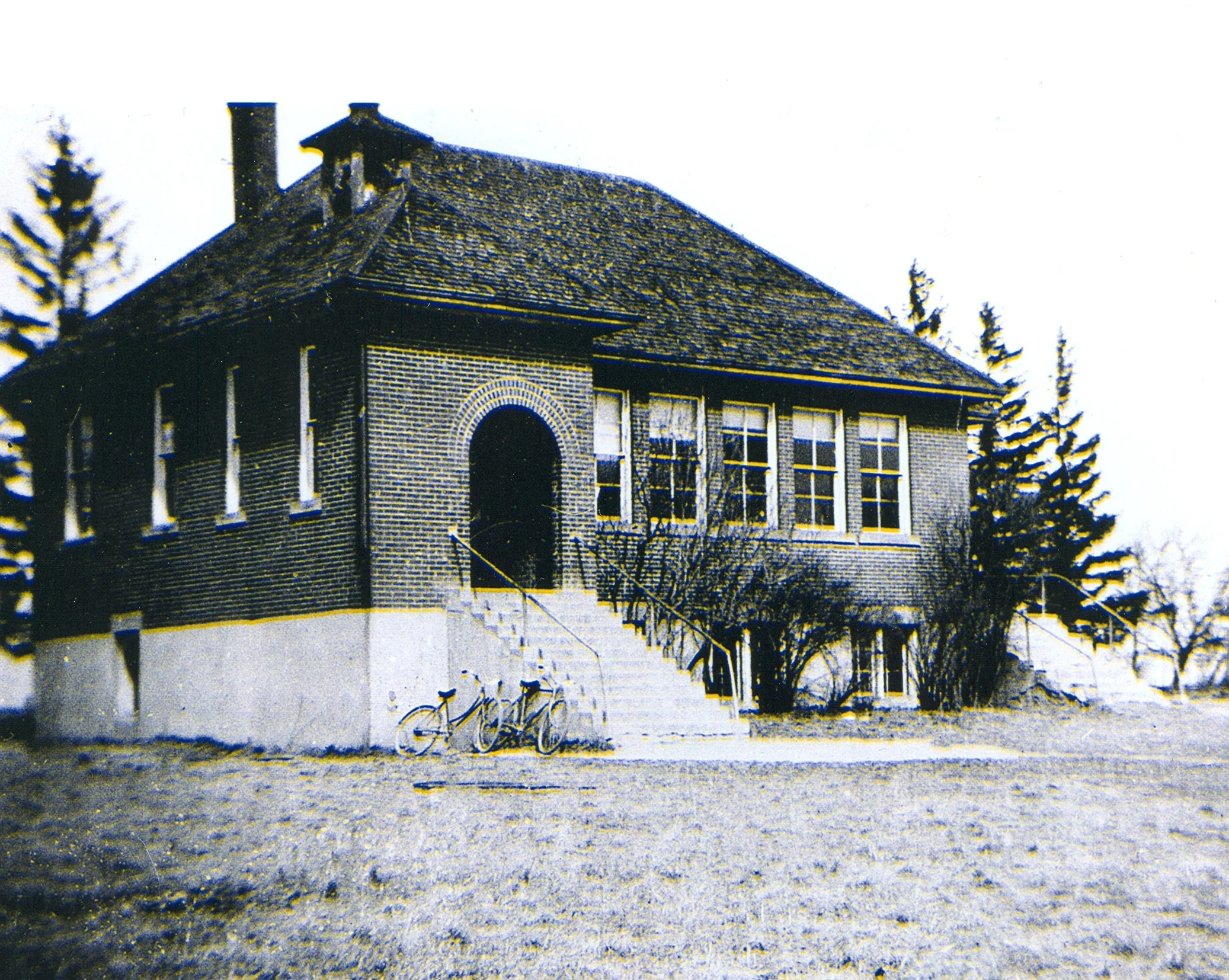
Elmbank - Elmbank Schoolhouse, c1920.
Toronto’s Pearson Airport was built on top of a ghost town. Though it may be difficult to imagine, the land on which Canada’s busiest airport now sits was once a small hamlet inhabited by some of Mississauga’s earliest settlers. The hamlet, known as Elmbank, was similar to many small communities of its time. It had a school, a few businesses, and some churches. One way in which Elmbank stands out is in its connection to early Catholic history in the area. As one of Toronto Township’s earliest Catholic Missions, many of the area’s first Catholic settlers were buried in the Elmbank Catholic Cemetery. Many of these settlers came from Ireland and for this reason, Elmbank and its Catholic cemetery hold special significance to the history of Irish Catholic settlement in Upper Canada. Despite the eventual decline of the hamlet of Elmbank, and the eventual construction of an international airport, the Elmbank Cemetery still exists. The story of this cemetery’s survival gives us an interesting glimpse at two hundred years of Mississauga history.
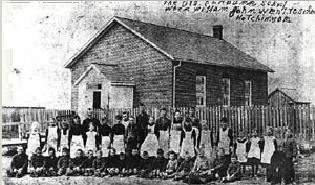
Elmbank - Old Schoolhouse.
In the early 1800s, settlers began moving to Toronto Township (historic Mississauga). Elmbank was located within territory ceded by the Indigenous Mississaugas in 1818 in Treaty 19, and settlers then used the land to establish small farming communities. Elmbank would eventually be established around Lots 5 & 6, Concession 5 & 6, EHS (East of Hurontario Street). One of the first settlers in Concession Five was John Grubb, who emigrated from Scotland in 1831 and built a large home he named “Elmbank.” The small farming community developing near the stately home then adopted the name Elmbank.
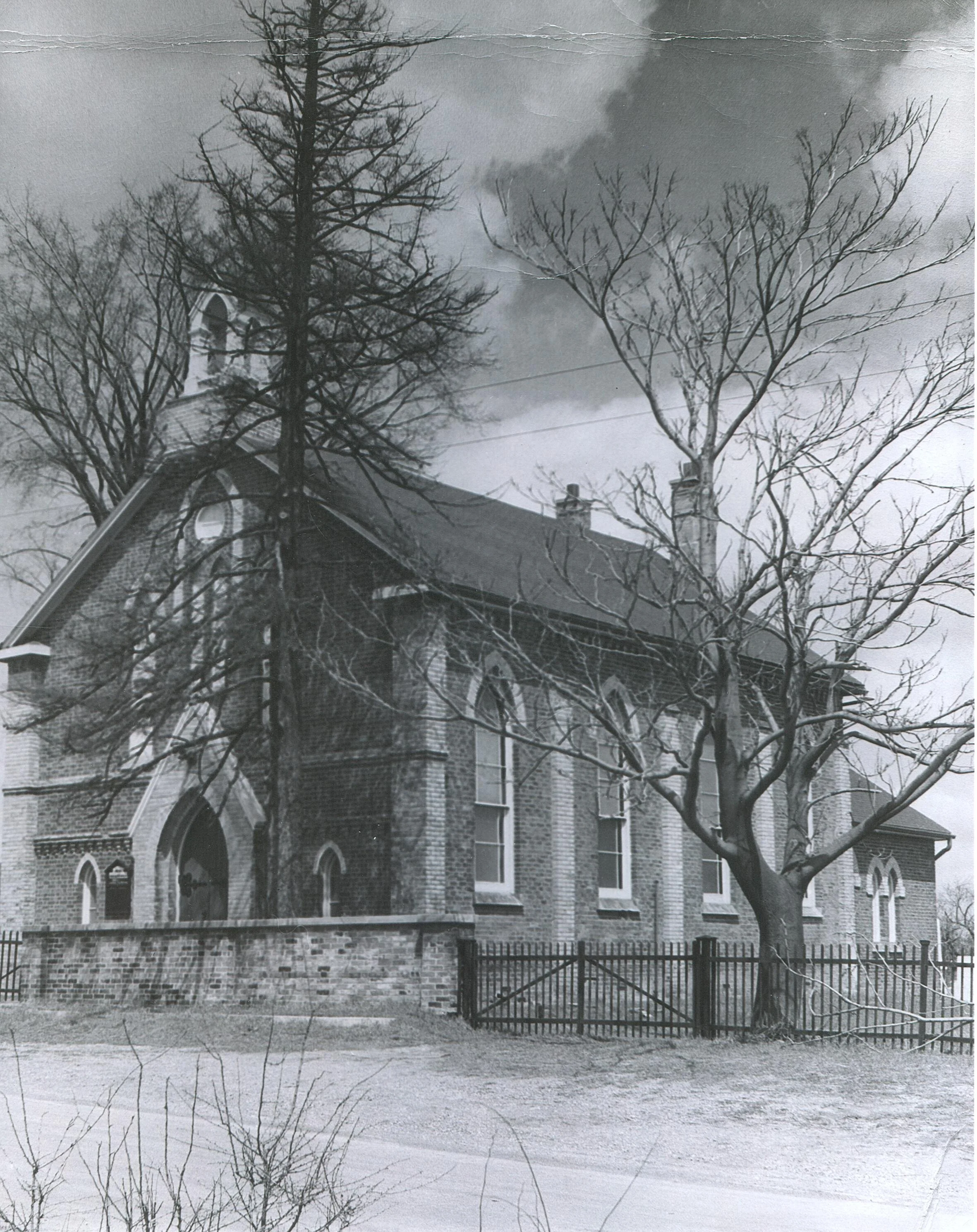
Bethany Wesleyan Methodist Church, Elmbank.JPG
The hamlet of Elmbank was located at the crossroads of what would come to be called Britannia Road and Fifth Line East. The community had a school, a Wesleyan Methodist church, and a Catholic church. The Elmbank school ran from approximately 1846 until 1956. The first schoolhouse was a log building, which was replaced by a brick structure in 1864. The schoolhouse was replaced once again in 1921, when the 1864 building was condemned. The Bethany Wesleyan Church was established in the 1820s and its original wood frame church, known as Shell’s Chapel, was built in 1831. The chapel was replaced in 1862 by a red brick church, and in 1925 became the Bethany United Church. Elmbank also had a few businesses, including a general store owned by William McKay, a blacksmith shop owned by Robert Speer, a carriage factory, an inn, and a cheese factory. In 1873, Elmbank opened its first post-office, which was run out of William McKay’s store. The small community continued to grow, and by 1886 the population of the hamlet had reached 300 inhabitants.
The Elmbank community is closely connected to the history of Mississauga’s Irish Catholic settlers. Elmbank’s Catholic Mission was one of the earliest Missions established in Toronto Township. Over the course of its existence, the church went by several different names: Fifth Line Church, St. Bernardette’s, St. Kevin’s, and Church of the Sacred Heart. The original church was led by Reverend Edward Gordon, who was based at St. Paul’s Church in Toronto, but travelled to the farming communities in the vicinity to serve their Catholic inhabitants. In 1832, the McGuire family donated two acres of their farmland so that a church, a graveyard, and a home for the parish priest could be built. Reverend Gordon oversaw the construction of the small wooden frame church, which was completed in 1833. The year 1833 also marked the church’s first recorded burial. Seventeen-year-old Charles Doherty, who died September 28, 1833, was laid to rest in the cemetery adjacent to the new church.
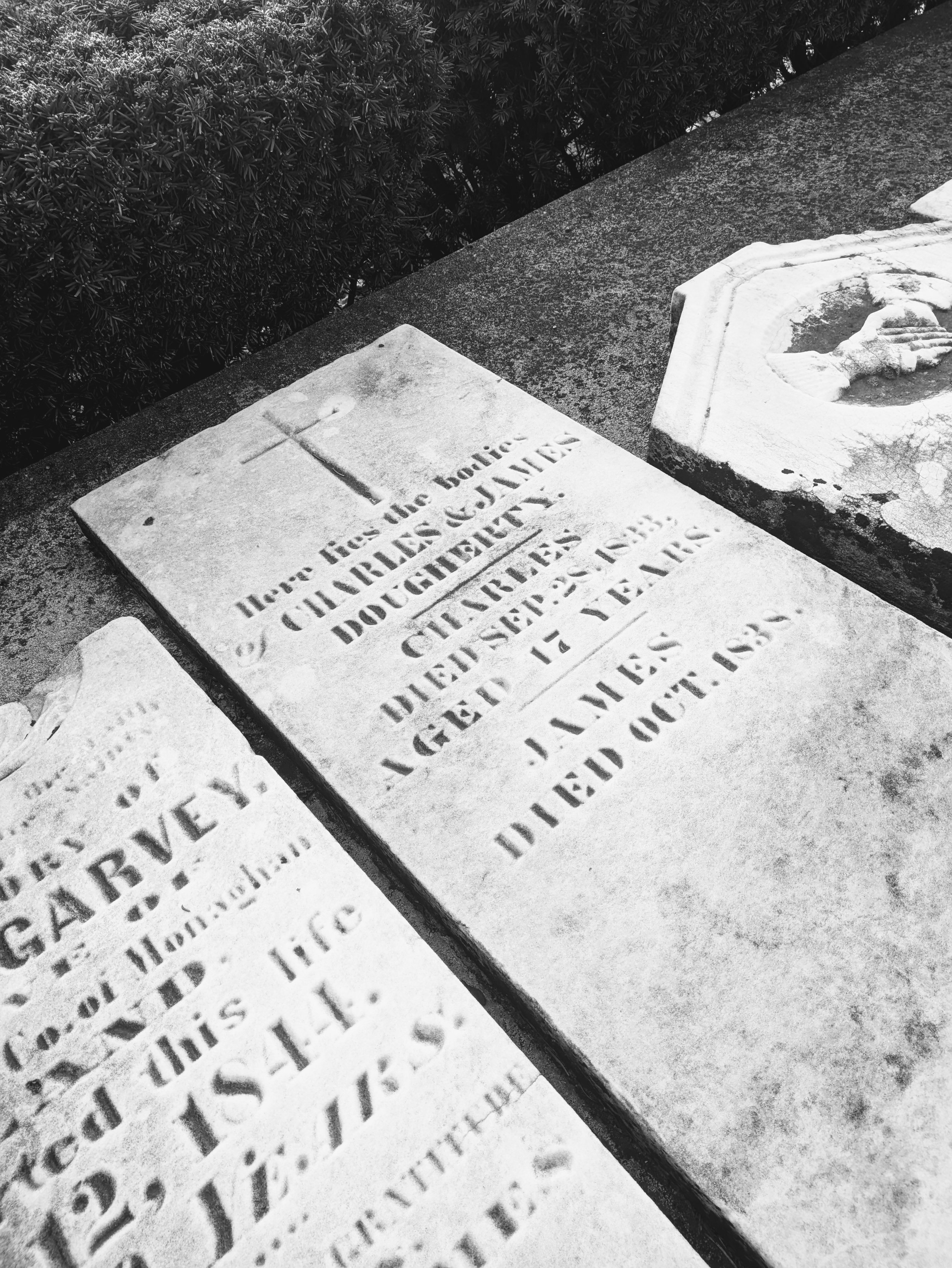
Charles Dougherty gravestone, 2025.
For nearly one hundred years, the Elmbank Mission served the needs of the Catholic community in Toronto Township. Because there were few other Catholic churches in the area, people would travel from as far south as Port Credit, and as far north as Bolton to attend services, baptisms, weddings, and burials. Though the Mission served mainly worshippers of Irish descent, it should be noted that Catholics from other backgrounds were also part of the congregation: burials in the Elmbank Cemetery include people of Austrian, German, and Anglo-Irish descent. By the 1850s, the Elmbank Mission was very active, with as many as four hundred worshippers attending Mass. In 1885, the small wooden church was replaced with a red brick structure.
As time passed, the hamlet of Elmbank began to decline. Residents of the community began to move away, often to larger cities offering more opportunities. By 1926, only thirty inhabitants remained in Elmbank. As the hamlet declined, so too did the Elmbank Catholic Mission’s congregation. Research conducted by Archeological Services Inc. could not pinpoint an exact date of closure for the Mission, however no records of Mass being observed at Elmbank exist past 1915. At some point in the 1920s, the Elmbank Catholic Church congregation merged with the parish of St. Patrick’s in Dixie. In 1932, Elmbank’s red brick church building was demolished. Use of the Elmbank Cemetery, however, continued up until 1937.

Elmbank - Crop from the 1877 Historical Atlas of Peel County.
The fate of the declining Elmbank hamlet was sealed when the Toronto Harbour Commission selected Malton as the site for its new airport. The Commission purchased thirteen farms (roughly 1400 acres), and by 1939 had completed the construction of the Malton Airport. When it first opened, the airport consisted of two runways and an air terminal building that had been converted from an old farmhouse. As aircraft technology improved, longer runways were needed. In the 1950s, the hamlet of Elmbank was levelled to make way for a major expansion of the airport. Two of the casualties of this expansion were the Elmbank School, and the Bethany United Church. The Methodist church held its last service on June 3, 1956, and its cemetery was relocated in 1959 to the Riverside Cemetery in Etobicoke. The only Elmbank landmark spared during the expansion was the Catholic cemetery. Two runways were built on either side of the cemetery, which was sadly neglected for many years.
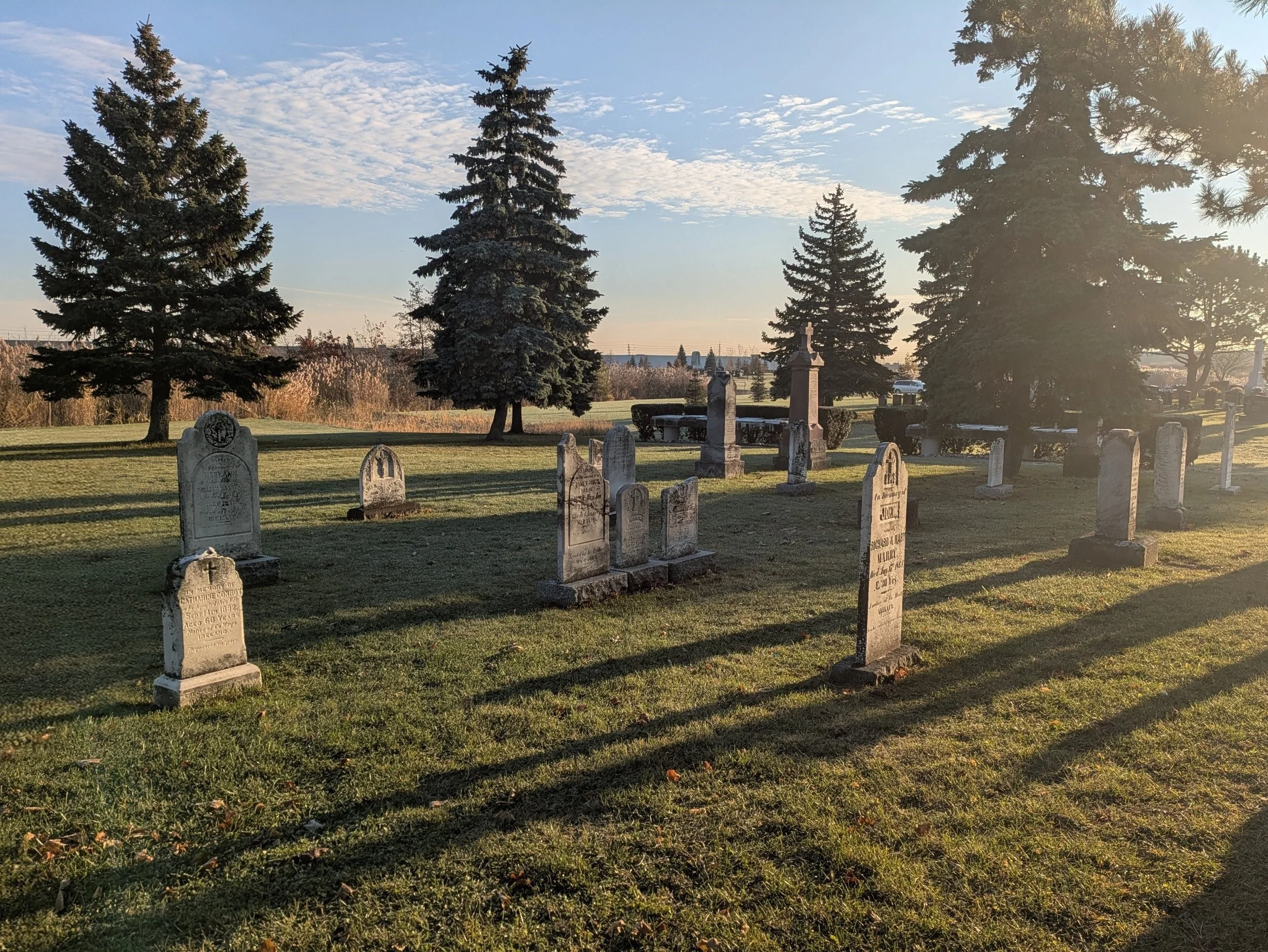
Elmbank Cemetery at Assumption Cemetery, 2025.
In the 1960s, airfield maintenance workers were removing scrub bush from airport property when they uncovered the Elmbank cemetery. Damage from Hurricane Hazel and years of neglect had left Elmbank Cemetery in poor condition, with many headstones badly damaged and no longer in their original locations. After the cemetery was uncovered, Frank Jessett, the superintendent of airfield maintenance, instructed his workers to do their best to tidy up the area and maintain it during the summer months.
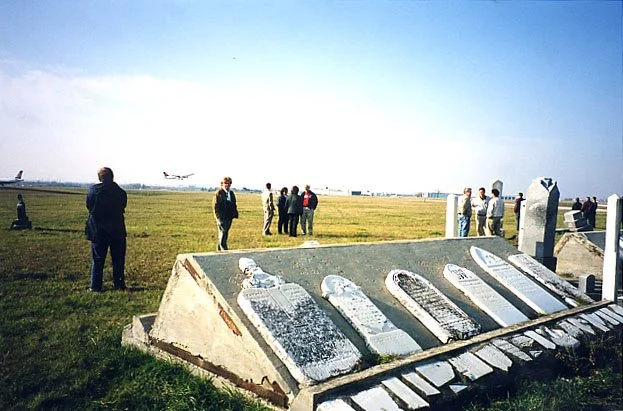
Elmbank Cemetery before relocation, c2000.
Descendants of those interred in the Elmbank Cemetery occasionally wished to visit and pay respects to their pioneer ancestors. Visiting a cemetery located between two runways at Canada’s busiest airport, however, is slightly more complicated than visiting your local graveyard. Visitors first had to contact the airport administration and book an appointment to visit the cemetery. If the request was approved, the visitors had to be escorted to the site by an airport employee. A Toronto Star article from September 20, 1975, explains that the cemetery was located about one mile from Terminal One, and that “runways must be crossed to reach the site.” For this reason, visitors were taken to Elmbank Cemetery by an official airport vehicle, with flashing lights, and communication with the control tower.
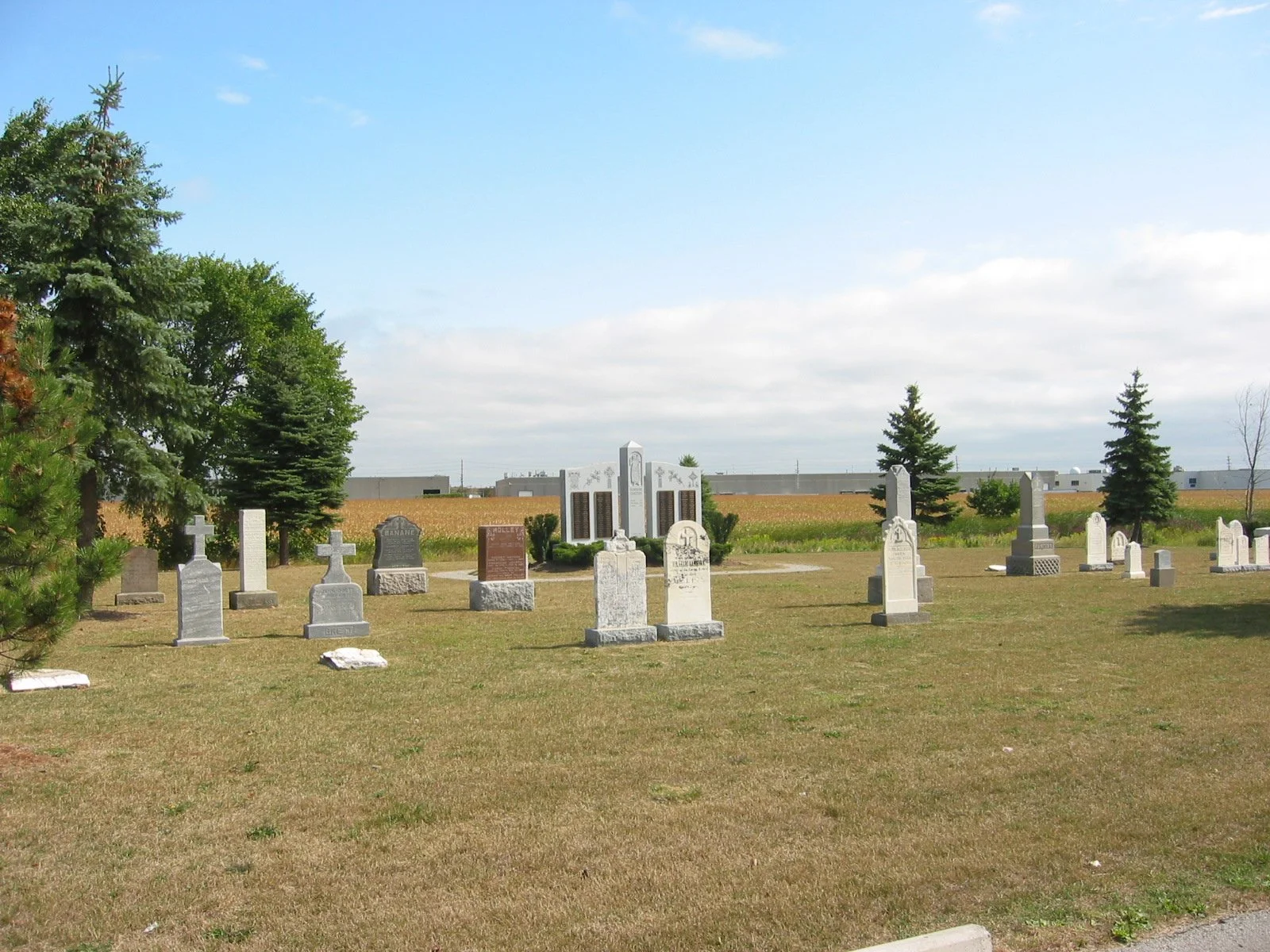
Relocated Elmbank Cemetery at Assumption Cemetery.
Meanwhile the airport, now known as Toronto Pearson International Airport, required another expansion. In 1991, Transport Canada made recommendations in its Environmental Impact Statement to expand the airport by building an additional runway and de-icing facility. The land needed to build these expansions included the land where the Elmbank Cemetery was located. In August of 2000, the Archdiocese of Toronto approved the airport’s expansion plans, and it was announced that those interred in the Elmbank Cemetery would be moved to the Assumption Roman Catholic Cemetery in Mississauga.
A special service, organized by the History Committee of St. Patrick’s Catholic Church, was held on August 27th, 2000, at the Elmbank Cemetery. Descendants and guests were driven to the graveyard by airport authorities, and a commemorative Mass was held to honor the Irish Catholic settlers laid to rest in the Elmbank Cemetery. In September of 2000, Archeological Services Inc. (ASI) was hired to assist with the relocation of Elmbank cemetery. Though it was originally thought that Elmbank contained the remains of approximately 300 people, a total of 622 individuals were exhumed by the ASI team. The remains and gravestones were relocated to the Assumption Roman Catholic Cemetery. At the time it was the largest relocation of a historic cemetery in Canada.
The story of Elmbank and its Catholic Cemetery is an interesting example about how places can still exist long after we have abandoned or built over them. While the hamlet of Elmbank is now no more than a ghost town, the memories of Elmbank’s inhabitants have been passed on to descendants and preserved though stories, photographs, and historical records. Though the Elmbank Catholic Church disappeared nearly a hundred years ago, salvaged pews, stained glass windows, and bricks were reused by neighboring churches that exist to this day. As for the Elmbank Cemetery, descendants and members of the public can now visit and pay respects to the 622 deceased settlers in a much quieter setting at the nearby Assumption Catholic Cemetery, no airport escort required.