Food Truck Season Is Almost Back—But Standing Out Isn’t Easy
/
Food Truck Season Is Almost Back—But Standing Out Isn’t Easy
Food truck season has a way of announcing itself.
As the weather shifts, familiar scenes start to return across Mississauga and the GTA—clusters of trucks at community events, lunchtime crowds near office hubs, people walking through parks with food in hand. It feels easy, almost automatic. Show up, serve good food, and the crowd will come.
But spend even a few minutes watching closely, and a different pattern appears.
One truck has a steady line. The one beside it doesn’t.
It’s rarely random.
In busy, fast-moving environments, people make quick decisions. They scan, they assess, and they choose—often in seconds. And more often than not, what drives that choice has less to do with deep menu knowledge and more to do with what feels immediate, clear, and worth stopping for.
Standing out during food truck season isn’t about one big move. It’s about a series of small, visible signals that work together.
Where the Competition Becomes Real
If you want to see how competitive food truck season has become, you don’t have to look far.
Events like the Toronto Food Truck Festival bring together dozens of trucks in one place, all competing for the same attention over a single weekend. Held at Woodbine Park from July 31st to August 3rd, 2026, the festival draws large crowds with free admission, live entertainment, and a wide range of food options—all in one setting.
For customers, it’s a great experience. For operators, it’s a different reality.
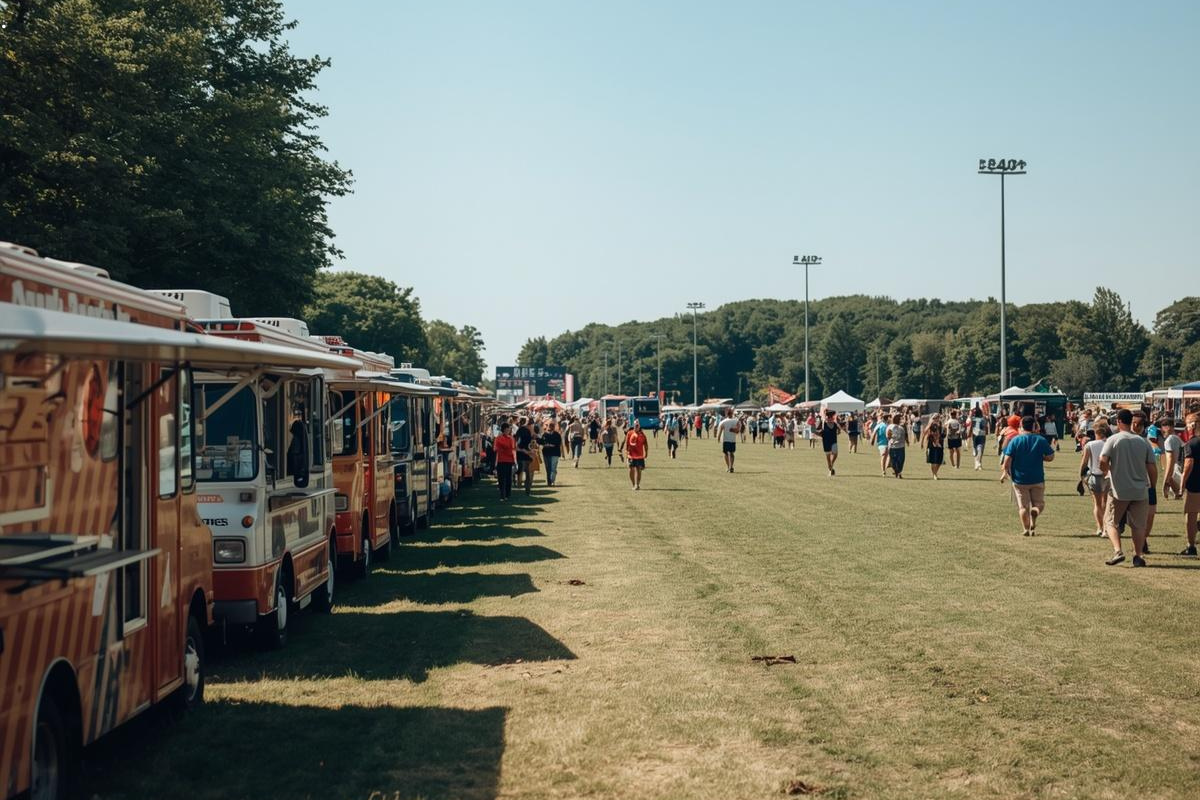
When 30 or more trucks are lined up side by side, the difference between having a line and being overlooked becomes much more visible. People walk the full stretch before deciding. They compare. They hesitate. And then, suddenly, they commit—often to just one or two options.
In that kind of environment, standing out isn’t about being present. It’s about being chosen.
And that decision usually happens long before the first bite.
It Starts Before the Food
Long before anyone tastes anything, they’ve already made a decision.
From a distance, people are scanning. They’re looking for cues that tell them where to go, what’s being offered, and how long it might take. If any part of that feels unclear, they keep walking.
Approachability matters more than most people think. A truck that feels easy to engage with—clear ordering point, visible pickup area, staff who acknowledge customers—has an advantage before the first order is even placed. There’s no friction. No guesswork.
Menus play a bigger role here than they often get credit for. In a fast-paced setting, people aren’t standing still to read paragraphs. They’re glancing. If the menu is easy to read, clearly structured, and quick to understand, it lowers the barrier to stopping. If it’s cluttered or hard to process, it slows people down in the wrong way.
Speed, or at least the perception of it, is just as important. A line can attract attention, but only if it looks like it’s moving. If things appear disorganized or slow, most people won’t wait to find out why.
These aren’t big changes. But in a crowded environment, they’re often the difference between being noticed and being passed by.
The Crowd Starts With What People See
Food quality still matters. It always will.
But in a setting where customers are choosing quickly, visibility often comes first.
People notice what others are holding. They see trays being handed over, meals being unwrapped, drinks being carried away. That becomes the first proof point. It answers a simple question: does this look worth trying?
Food that translates well outside of a plated environment has an advantage. Colour, presentation, and how it’s held all play a role. Something that looks appealing from a few steps away has a better chance of drawing attention than something that’s harder to recognize or visually understated.
It’s not about making food more complicated. It’s about understanding that, in this environment, appearance carries part of the decision-making weight.
The first “bite” often happens with the eyes—and not always from the person ordering.
Every Order Becomes Part of the Scene
At most food truck events, people don’t sit down and stay put. They move.
They walk through crowds, stand in groups, head toward the next stop. And in doing so, they carry their food with them.
That’s where packaging quietly becomes part of the experience.
A cup, a wrap, a tray, or a bag doesn’t just serve a function—it becomes visible. It moves through the space, seen by people who haven’t made a decision yet. In many ways, it extends the presence of the truck beyond its physical footprint.
But visibility only works if there’s a connection.
If something looks good but there’s no clear indication of where it came from, that moment is lost. People notice the food, but not the brand behind it.
This is where simple, consistent branding makes a difference. It doesn’t need to be elaborate. In fact, it often works better when it isn’t.
A clean label. A recognizable mark. A consistent look across cups, wraps, or containers. These small details help tie the experience back to the truck in a way that’s easy to understand.
And importantly, it doesn’t have to be expensive to be effective.
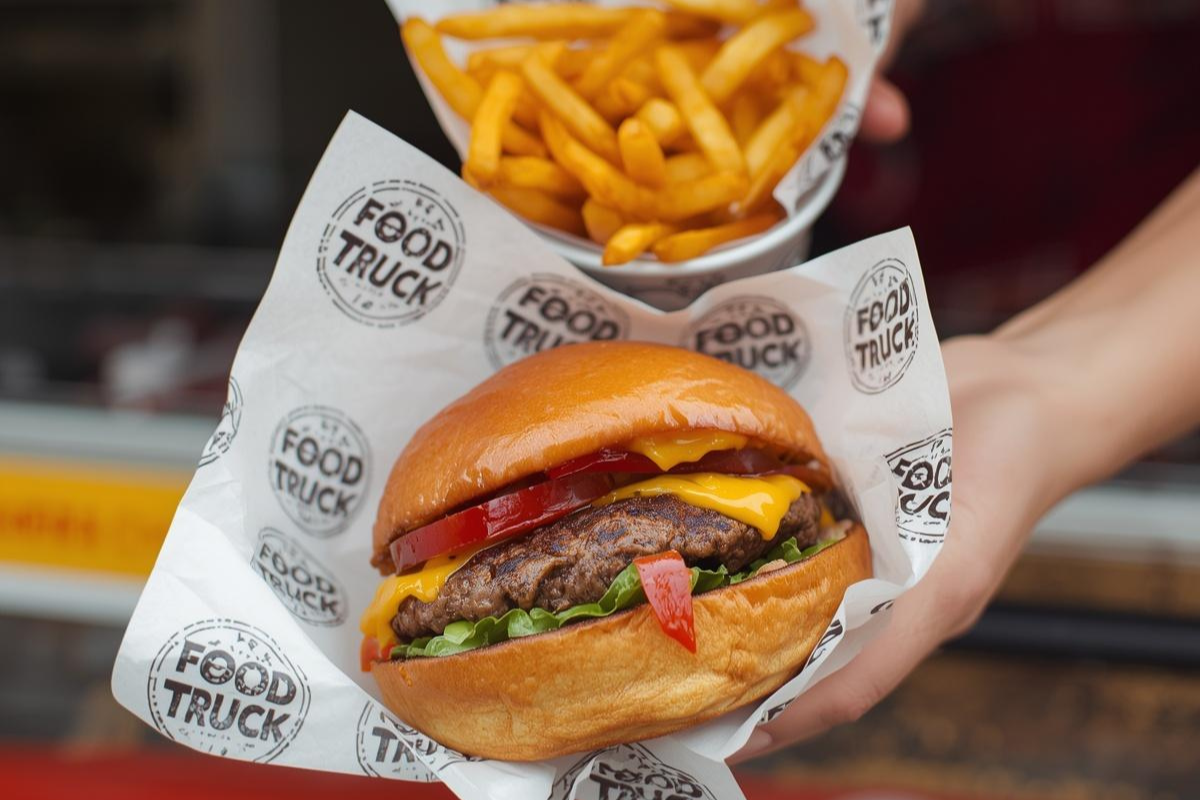
Many food businesses are leaning into straightforward solutions— custom packaging upgrades such as stickers, food paper and stamps —applied to otherwise simple products. It’s flexible, scalable, and easy to maintain across busy service periods.
What matters isn’t complexity. It’s clarity.
When people can quickly connect what they see to where it came from, the impact lasts longer than the moment itself.
Momentum Often Starts Before the Event
By the time someone walks up to a food truck, there’s a good chance they’ve already seen it somewhere else.
Social media has become part of how people navigate local food scenes. A quick scroll through Instagram or TikTok can shape what someone is looking for before they even arrive. Certain items become familiar. Certain names stick.
That familiarity changes behaviour.
Instead of choosing from scratch, people begin with a shortlist in mind. They recognize a name, a look, or a product they’ve seen before, and they move toward it more confidently.
In that sense, visibility isn’t limited to the event itself. It builds in advance.
And just like in person, consistency matters. The trucks that are easiest to recognize online are often the easiest to find in a crowd. The same visual identity, the same presentation, the same overall feel—it all connects.
The result is a kind of momentum that doesn’t rely entirely on foot traffic. It carries over.
Recognition Is What Brings People Back
Over time, the most successful food trucks tend to become familiar.
Not just in name, but in presence.
People begin to recognize them from a distance. The look is consistent. The setup feels the same from one event to the next. There’s no need to reintroduce the brand every time.
That consistency builds trust. It reduces decision-making. Instead of comparing options, people go directly to what they already know.
In a busy environment, that matters.
There’s comfort in recognition, especially when choices are abundant. And the trucks that maintain that consistency—across their setup, their packaging, and their overall presentation—are often the ones that benefit most from it.
It’s not about doing something new every time. It’s about being identifiable every time.
Standing Out Is About Being Easy to Choose
Food truck season brings energy, variety, and competition.
There’s no shortage of options, and that’s part of what makes it interesting. But it also means attention is limited. People don’t evaluate every choice equally. They move quickly, relying on what feels clear, familiar, and worth their time.
The trucks that stand out aren’t always the loudest or the most elaborate.
They’re the ones that are easiest to understand at a glance. The ones that look approachable, feel organized, and show up consistently. The ones where everything—from the setup to the packaging—works together without needing explanation.
Because in the end, standing out in a crowded Mississauga summer isn’t about asking people to think harder.
It’s about making it easy for them not to.