Mississauga’s Sheridan United Church marks 200 Years!
/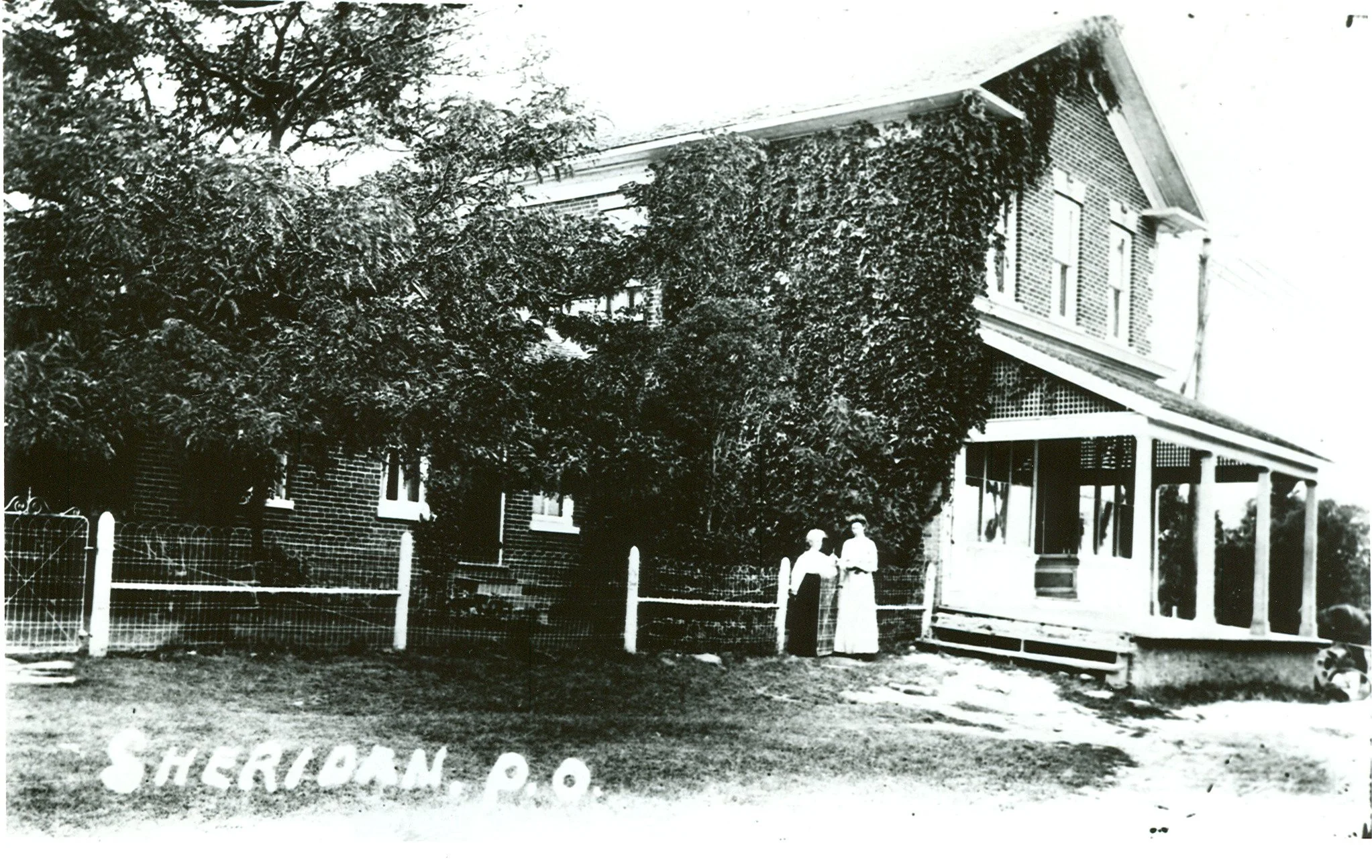
Sheridan General Store and Post Office.
I had a chance to visit the site today – ground zero for this week’s story as it were – but only 200 years after the fact. You would be forgiven if, while zooming along the QEW past Winston Churchill Boulevard today (on a good traffic flow day), you did not recognize the few physical reminders that remain on the landscape from the historic crossroads hamlet of Sheridan. A cairn and a remnant silo are all that remain … although Winston Churchill Boulevard (formerly known as the Town Line and renamed in 1958) and the Queen Elizabeth Way (which follows the route of the old Middle Road) still create a crossroads of sorts which mark the geographic location of historic Sheridan.
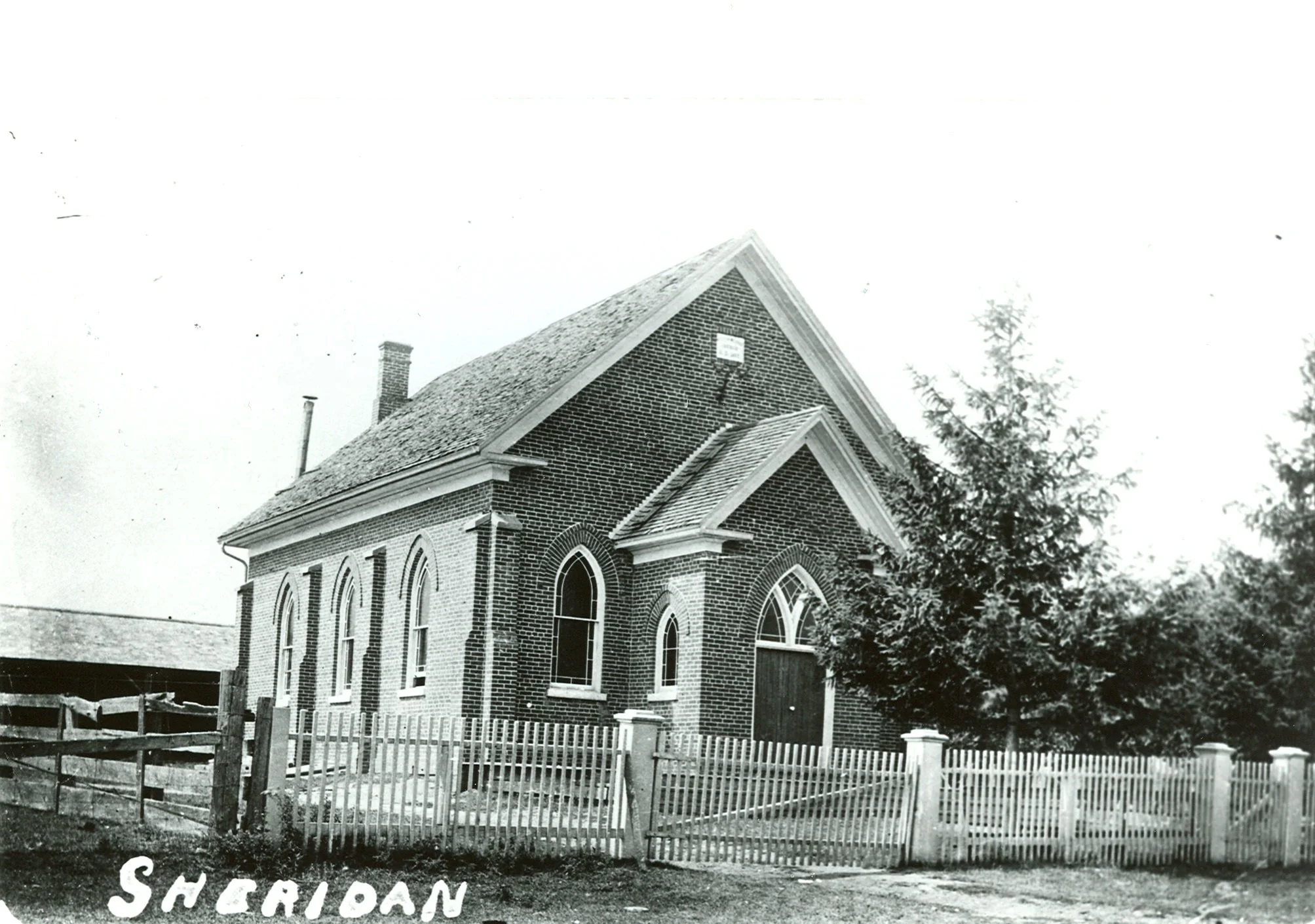
Sheridan Methodist Church, c1910, built c1869, demolished 1970s.
The crossroads hamlet was originally dubbed Hammondsville after local early settler David Hammond, who settled in this area prior to 1820. At the suggestion of Stephen Oughtred, the local blacksmith, the name was changed to Sheridan (in honour of British playwright and politician Richard Brinsley Sheridan). On March 1, 1857, the name was officially adopted, and the post office opened and functioned under the name Sheridan until 1956. But the name did not die with the closure of the post office. Sheridan, as a name, continued: Sheridan Nurseries (1913), Sheridan College (1967), Sheridan Research Park (1965), Sheridan Mall (1968), Sheridan Homelands (1964), Sheridan Park Public School (1966), and more, perpetuated the name. When it came time to name the new town in 1967, the Sheridan name was a finalist (it, of course, lost out to Mississauga). You can find Sheridan listed in the Council Chambers at the Mississauga Civic Centre, along with other founding villages of Mississauga. Sheridan as a name has not died out. You can still find it scattered across our city’s landscape and it offers a subtle nod to our history.
But let’s focus. This story is about an anniversary.
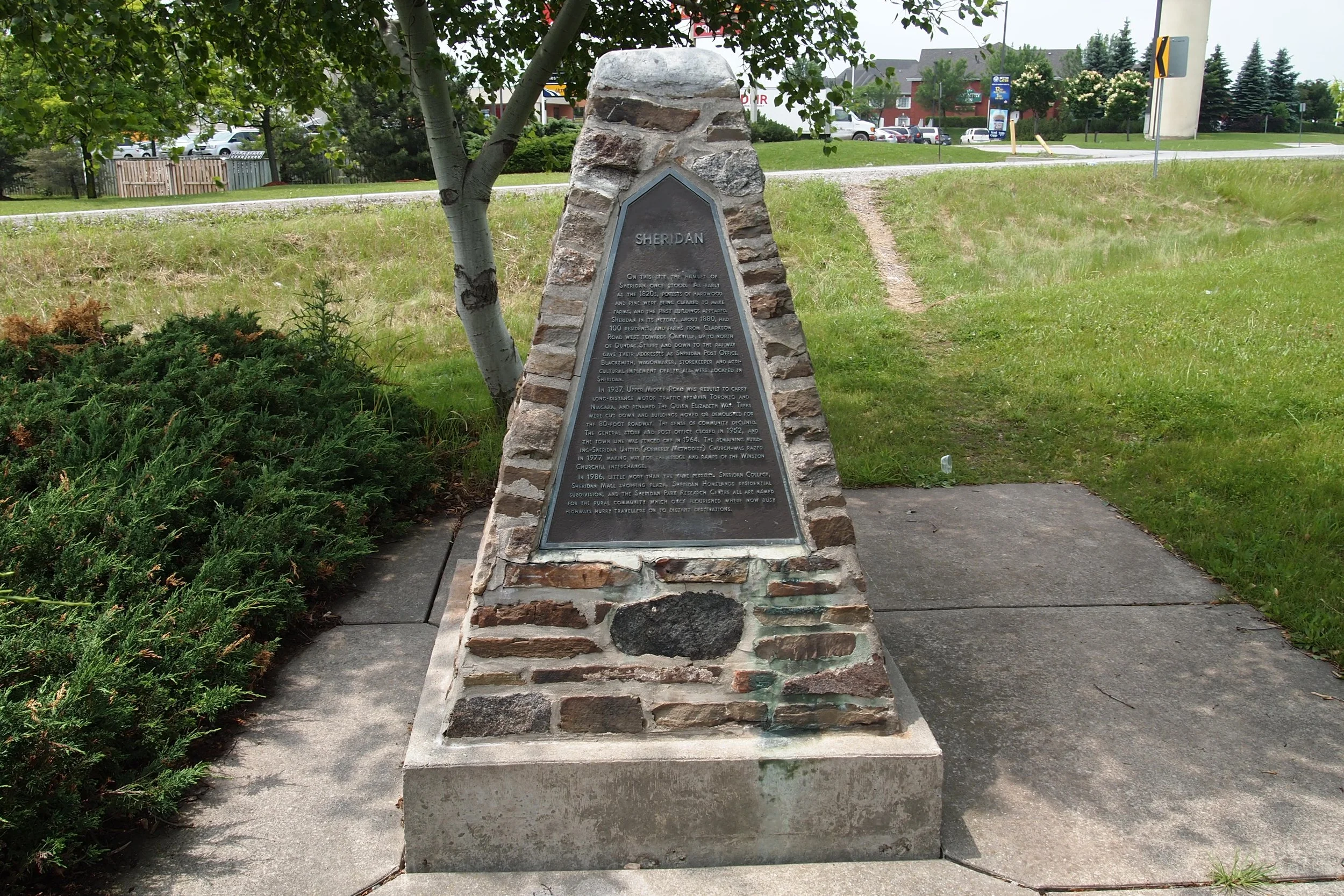
Sheridan Cairn.
Historically, Sheridan was a border village, straddling the town line between historic Toronto Township (Mississauga) and Trafalgar Township (Oakville). The first building to serve the early community was likely a log schoolhouse constructed on the Lawrence farm. The building also served as a chapel and a community hall. The Methodist congregation was formed in 1826, and its needs were served by travelling Methodist ministers. Reverend Anson Green and Reverend Peter Jones are known to have preached at Sheridan, likely amongst many others. The schoolhouse, which was officially called School Section #5 and informally known as the “Greeniaus School” served the needs of the fledgling Methodist congregation for many years. In 1868 the Lawrence family donated a half acre along the Town Line to the trustees of the congregation, and a new red brick church was built and opened in the fall of 1869. The church was located on the west side of the Town Line (Winston Churchill Boulevard) and south of the Middle Road (QEW).
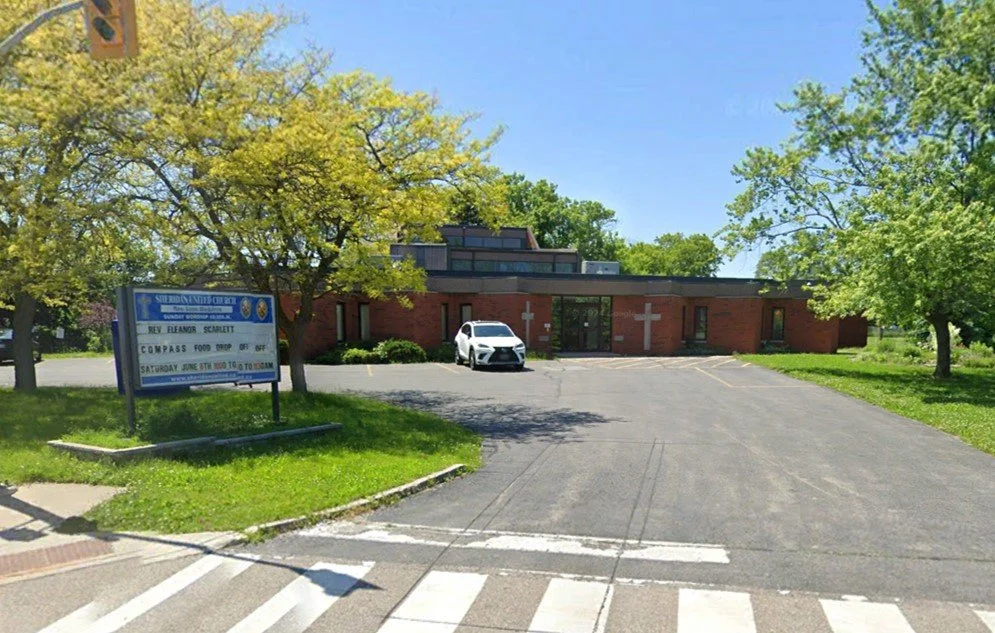
Sheridan United Church 2025.
The Sheridan Methodist Church was landmark to those who travelled along the Town Line or Middle Road for generations. In 1925, the church became the Sheridan United Church. With increasing growth and development in the surrounding area, along with the widening of the QEW, the congregation moved to a new site along nearby Truscott Drive in 1964, within the newly opened Park Royal development, joining with the Trinity Park Royal Church. The first service was held, in a white portable structure, in May of 1961. In 1964 the congregation became the Sheridan-Park Royal United Church, and the doors to the old church on the Town Line were quietly closed. A final service in the old church was held on October 17, 1976. The new permanent church building for the Sheridan United Church congregation was built on Truscott Drive and was dedicated on April 24, 1977. Located within this church today are two stained glass windows that came from the old church on the Town Line. In 2026 Sheridan United Church is marking its 200th anniversary, serving its community continuously since 1826.