Mississauga and the Poltroonery Scoundrel
/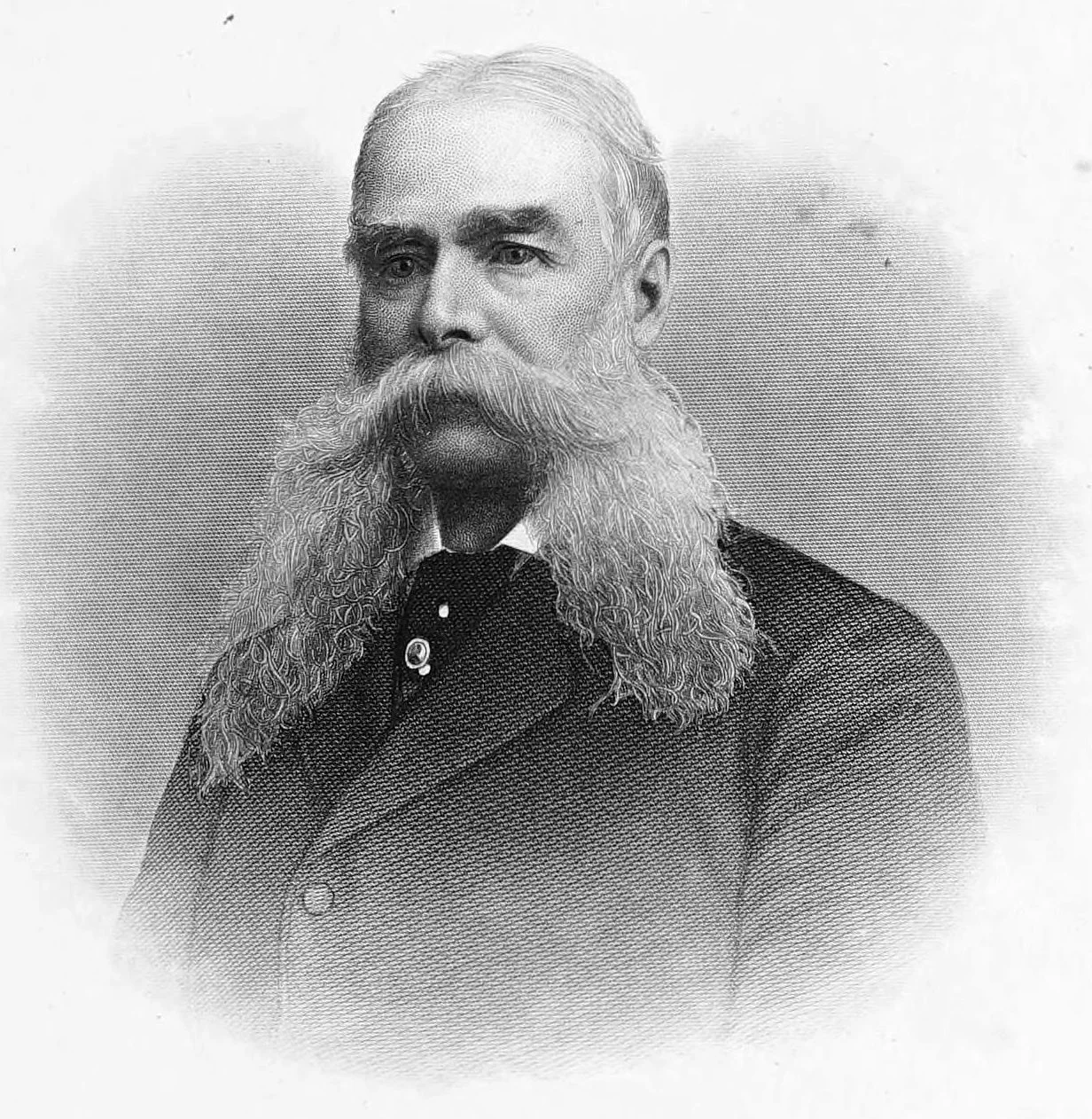
John Stoughton Dennis, from The Canadian Biographical Dictionary.
The landscape of Mississauga was shaped by many separate historic surveys and subdivisions of land. We have explored some specific surveys, and surveyors, in previous articles. Surveyors such as Samuel Street Wilmot, Richard Bristol, James Chewett, William Chewett, Robert Lynn and multiple others helped to shape many of the roads the streetscapes we know today. But one surveyor in particular found work in historic Mississauga at multiple different times: John Stoughton Dennis (1820-1885). He was a surveyor by profession, and had a lengthy career as a civil servant, although it was his own personal ambition to carve out a military legacy for himself that drew the ire of many.

Survey Plan for Port Credit extension, 1846, surveyed by John Stoughton Dennis.
In terms of our city, John Stoughton Dennis was involved with three historic surveys: the Port Credit East (or extension) survey of 1846; the Credit Indian Reserve survey of 1846; and the Malton Town Site survey of 1854-55. Many roads laid out and named under Dennis’ surveys remain part of our city’s streetscape today.
But John Stoughton Dennis himself had a colourful career, to say the least.
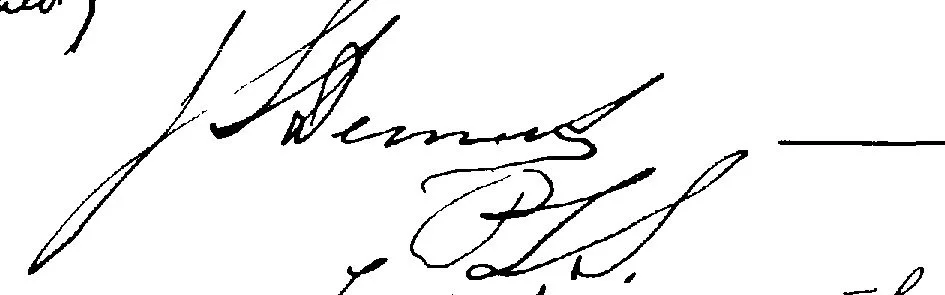
John Stoughton Dennis signature, 1846.
Described in an article from the Manitoba Historical Society and Archives, “Lieutenant and Conservator of the Peace” by Colin Reed (1982), Dennis was “stiff and formal, fussy and officious, pompous and punctilious … fully bedecked with flowing whiskers and magnificent moustaches, … leaving chaos and wreckage in his wake.”
John Stoughton Dennis was born in 1820 in Kingston, into a Loyalist family with strong military roots, with connections to both the American Revolution and the War of 1812. He grew up regaled by the military exploits of his forebearers, and seemingly persuaded himself that he also had “considerable military talent”. He began a very long and successful career as a surveyor and civil servant in 1842 – which would eventually bring him to historic Mississauga in connection with the aforementioned surveys. But as his career progressed, Dennis became more and more interested in military endeavours “where he could emulate his family traditions and satisfy his own ambitions.”
His ascent through the militia ranks was rapid. In 1855 he became Lieutenant of a Toronto troop of cavalry. In 1856 he took command of the Toronto Field Battery of Artillery. In 1862, he was attained the rank of Lieutenant-Colonel of the 5th Military District. Peace-time honours and advancements came easily. But when tested under fire, which he craved, his parade bravado quickly fell apart.
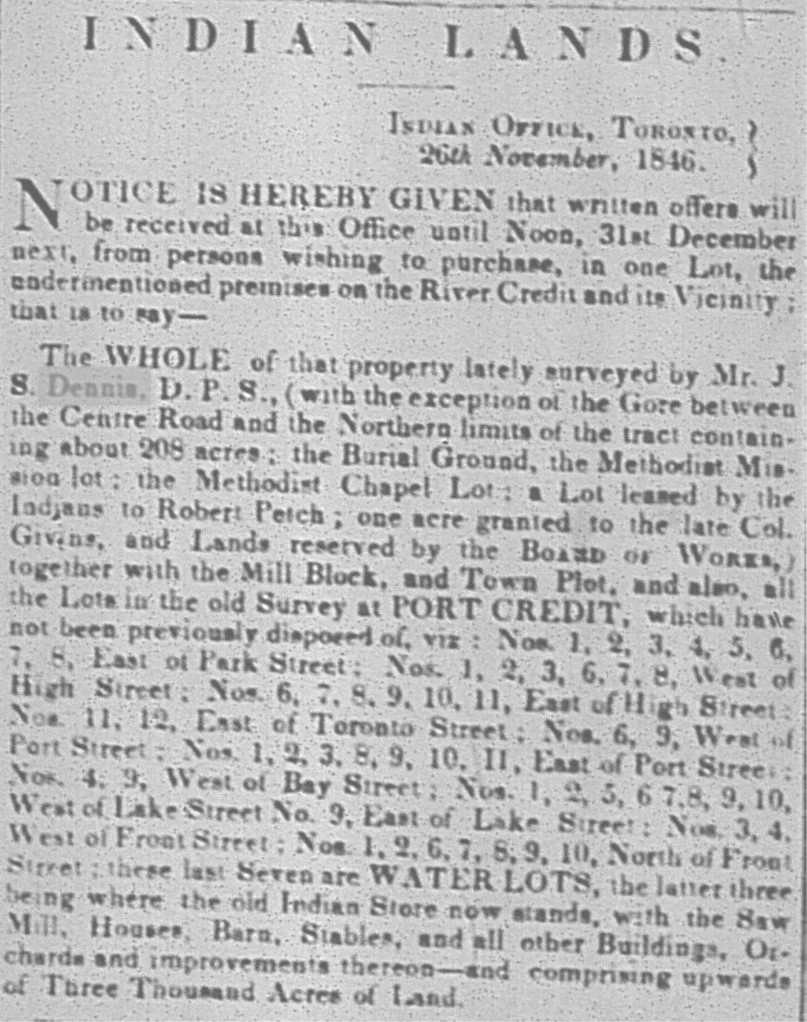
From The Globe newspaper, December 5, 1846.
With the Fenian invasion of 1866, Dennis secured command of 480 officers and militiamen of the Queen’s Own Rifles, despite having no previous association with them. On June 1, 1866, Dennis and his troops were sent to Port Colborne, where he was met by Lieutenant-Colonel Alfred Booker of the 13th Battalion from Hamilton. Booker was the senior officer, and took overall command, which Dennis resented.
Dennis, full of colonial confidence and lacking any practical information about the invading enemy, believed the Fenian army to be drunk and disorganized. He urged Booker to attack rather than follow orders and wait for the British regulars who were en route – both Booker and Dennis were desirous of personal accolades and advancement. Dennis, eager to gain his own fame, commandeered the tugboat W.T. Robb, and began patrolling the Niagara River in an attempt to stop Fenian movements across the river.
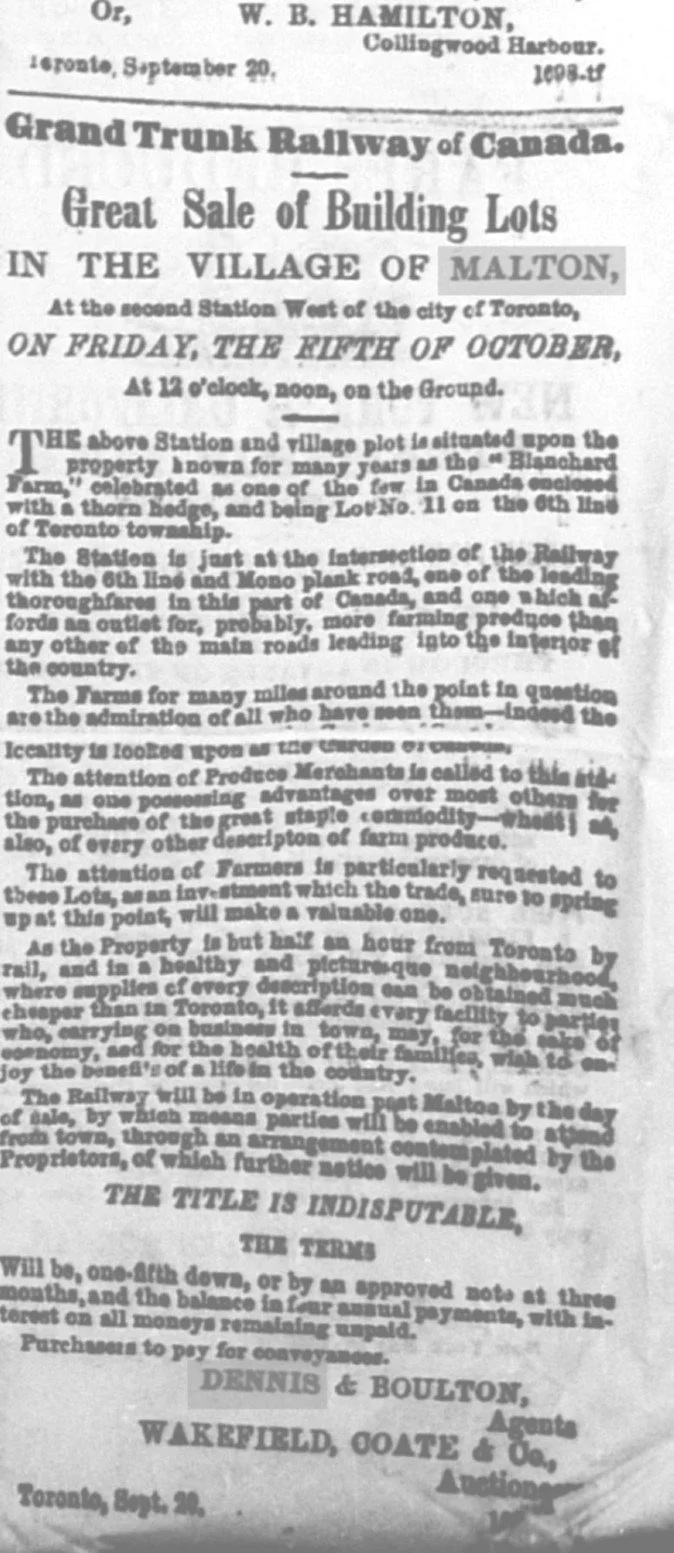
From The Globe newspaper, September 20, 1855.
On June 2, Booker’s forces were decidedly defeated by the highly organized Fenian army at the Battle of Ridgeway. Dennis, lacking intel of what had transpired at Ridgeway, landed some 70 of his men at Fort Erie. They soon encountered a small force of some 150 Fenian soldiers. Dennis, confident of victory and unaware that more Fenians were approaching, urged his men to fight – then abruptly fled the scene. The Fenians quickly overwhelmed the Canadians, and Dennis was only able to escape Fort Erie with the use of a disguise.
In the aftermath of the Fenian invasion of 1866, Dennis faced a litany of accusations from former subordinates. Captain McCallum informed the militia command that Dennis had exposed his men to unnecessary risk and that he had acted “cravenly” (cowardly), while Captain King, who had lost a leg while serving under Dennis, publicly labelled him “a coward” and a “Poltrooney scoundrel.” Dennis also faced the charge of deserting his men.
The court of inquiry exonerated him, but public opinion varied greatly: “The Fenian episode had proved him impatient of restraint, and demonstrated that he was capable of committing himself and those in his command to action without first carefully considering all the ramifications of that action … The encounter at Fort Erie suggested further that, once the measures Dennis had adopted proved ill-advised and potentially catastrophic, he was all-too inclined to turn tail and to extricate himself, giving little thought to his men.”
Dennis resumed his surveying career, and he oversaw the surveys of the Bruce Peninsula and much of Muskoka and Haliburton. In 1869 he was sent to the Red River Settlement (Manitoba) to undertake surveying. There he met with considerable resistance, particularly from the Métis under Louis Riel. Amidst the rising tensions, he fled the colony. Dennis’ initial surveys and heavy-handed colonial tactics were one of the key factors that led to the Red River Rebellion in 1869-1870.
Despite his military setbacks and his personal and political embarrassments regarding the Red River settlements, Dennis was still viewed as a “good, competent surveyor and an able, efficient administrator.” In 1871 he was appointed as Canada’s first Surveyor-General, and in 1878 became the Deputy Minister of the Interior. Dennis is remembered both as a militia officer who was “prone to leap upon his horse and ride off in all directions at once”, and also as a “prominent and able public servant and surveyor” who played a key role in opening up parts of central Ontario (and historic Mississauga) for settlement. In 1882 Lt-Colonel John Stoughton Dennis was made a Companion of the Order of St. Michael and St. George, and he died three years later and is buried in Kingston.