
How "Let’s Go Live" is Helping Teens Navigate Digital Media
/
The founders of let’s go live.
Parents are increasingly asking the same question: How do we help young people navigate a world in which so much of their social life, identity and attention exists online?
A new GTA-based program is moving the conversation beyond simply telling teens to spend less time on their phones. Rather than approaching technology as a problem belonging to young people, Let’s Go Live invites both generations into the conversation.

Janet Kosowan.
“We hear so much about what phones and social media are doing to young people, but simply telling teens to get off their phones isn't enough,” says co-founder Livia Grujich, an author, educator, and mother of three. “Adults are navigating this digital world too. We wanted to create a place where teens and adults could actually talk, listen to one another and practise the skills that help us connect in real life.”
For Grujich, the issue has become increasingly personal as her teenage daughters entered a new high school this fall.

Linda Grubic.
“Like so many parents, I’ve spent years making sure my kids had opportunities to develop confidence and connection through sports and activities outside of school,” she says. “But watching them enter a new school reminded me that making friends, starting conversations and finding a sense of belonging are skills in themselves. They need opportunities to practise them.”
Let’s Go Live was co-founded by Livia Grujich, Janet Kosowan and Linda Grubic, three educators and coaches whose work spans happiness studies, communication, relationships, youth development and personal growth.

Livia Grujich.
The program is deliberately interactive. Participants don't sit through four lectures about screen time. Through facilitated conversations, activities and reflection, teens and adults examine questions such as: Who am I becoming? What influences how I see myself? What makes me feel that I belong? How well do I actually listen? And what role do I want technology to play in my relationships and everyday life?
The goal isn't to eliminate technology.
It's to strengthen the skills that can sometimes get lost when so much connection happens through a screen: conversation, curiosity, confidence, listening, self-awareness and presence.
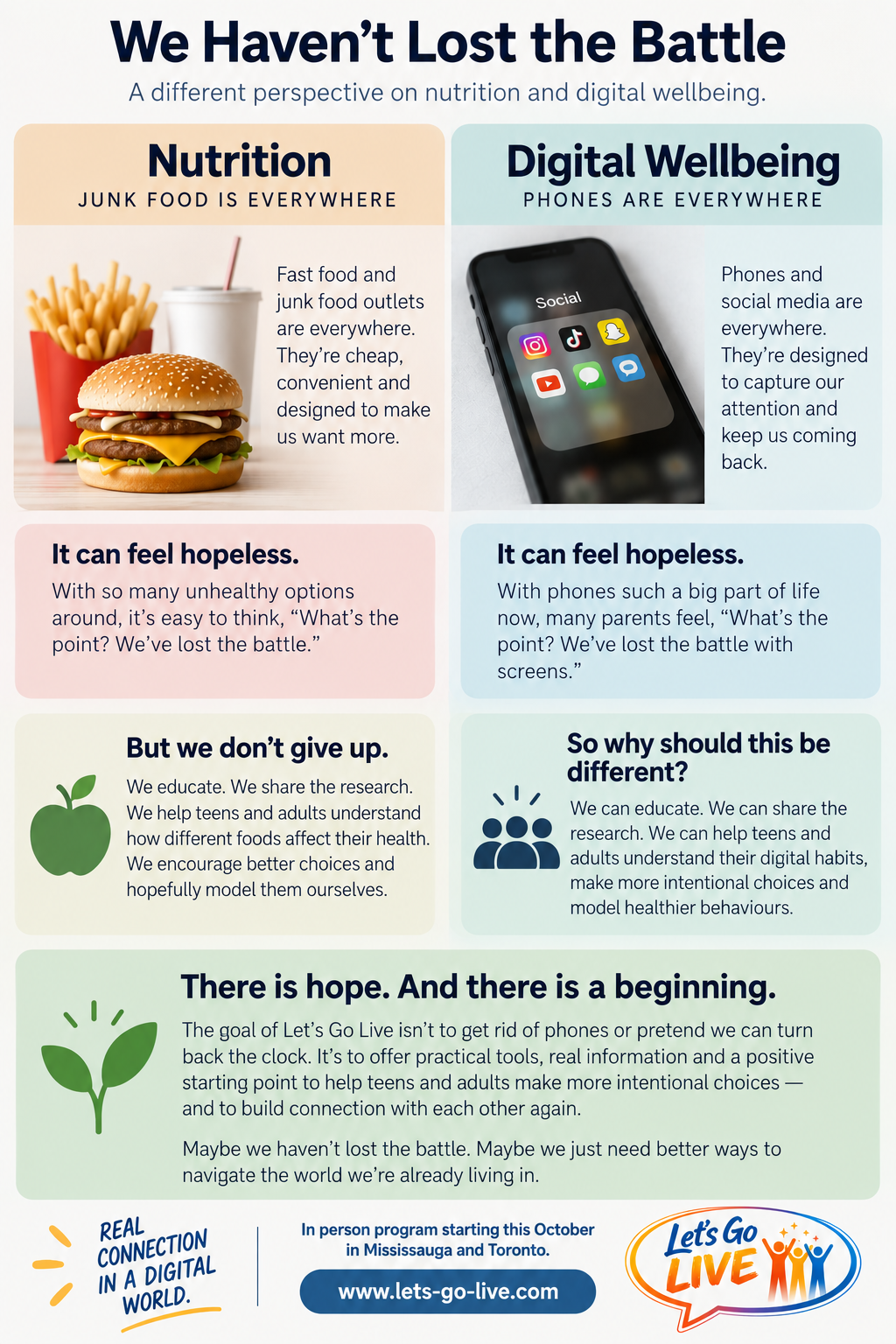
“We’re not anti-technology,” says Grujich. “Technology is part of our lives and our kids’ lives. The question is whether we're making conscious choices about how we use it, or simply letting it shape our habits, relationships and sense of self.”
Fall 2026 Sessions in Mississauga: October 6, 13, 20 and 27.
Click here to register and learn more.