Remembering Mississauga's Christmas Past - 1812
/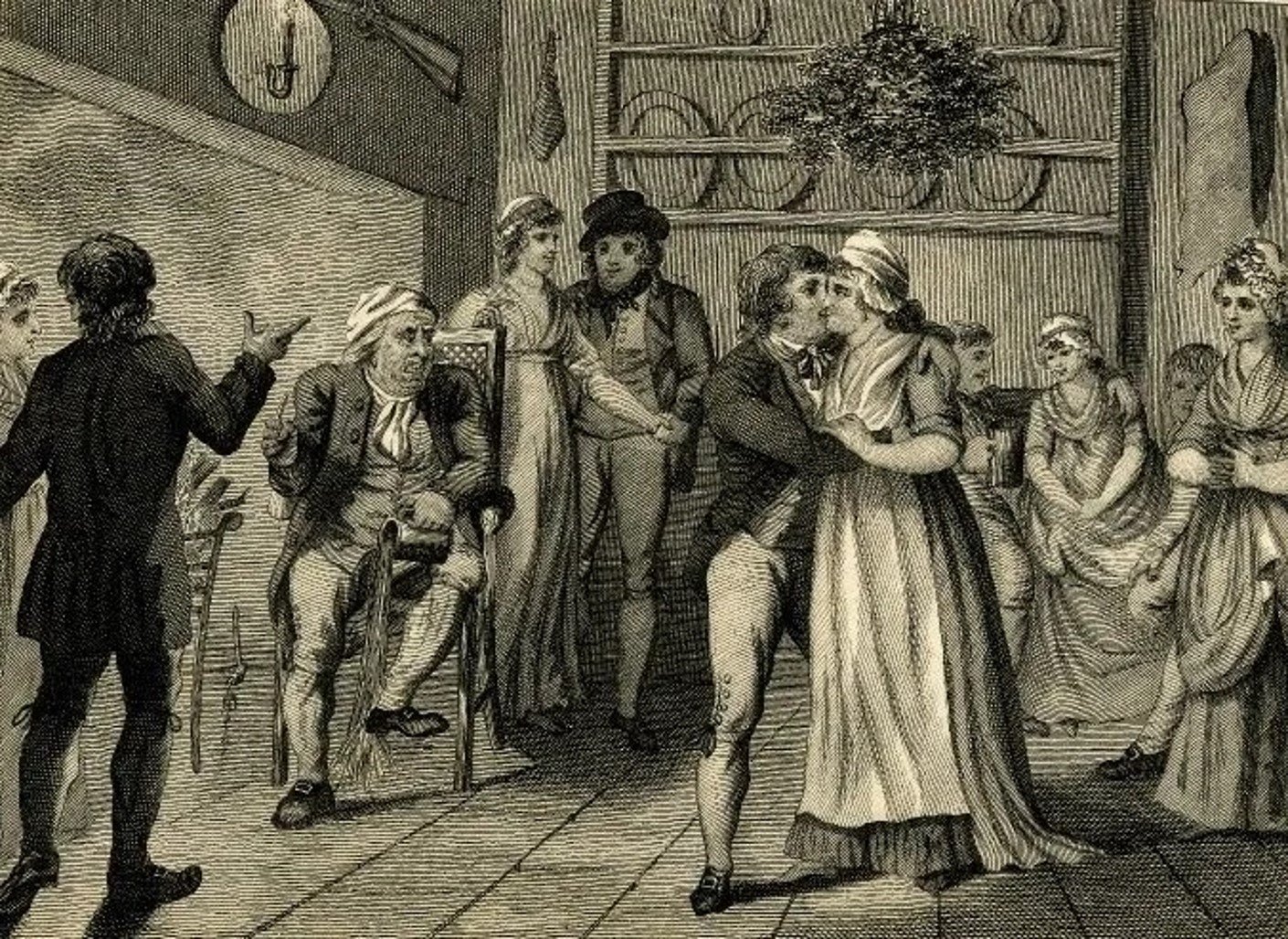
Christmas scene, c1800.
With Christmas Eve in our near future, history enthusiasts have an annual tendency to look to the distant past. This year is no different. Some of the favored traditions are viewed as timeless and immortal, after all, trees, gingerbread and the concept of gift giving are decidedly not new to the human experience. That said, being history enthusiasts, we can find ourselves wondering what place these things and others would have had in the hearts which beat centuries ago in our neck of the woods.
Over 200 years ago, during the height of the War of 1812, soldier and settler alike were involved in celebrating Christmas, though not all for the same reasons. Much like today, one’s involvement would come down to a number of factors. The most apparent was religious duty, for the predominantly Christian European and American settler populations, the birth of Jesus Christ and associated feasts eclipsed nearly every other religious celebration, though there were disagreements on how this birth should be appropriately commemorated.
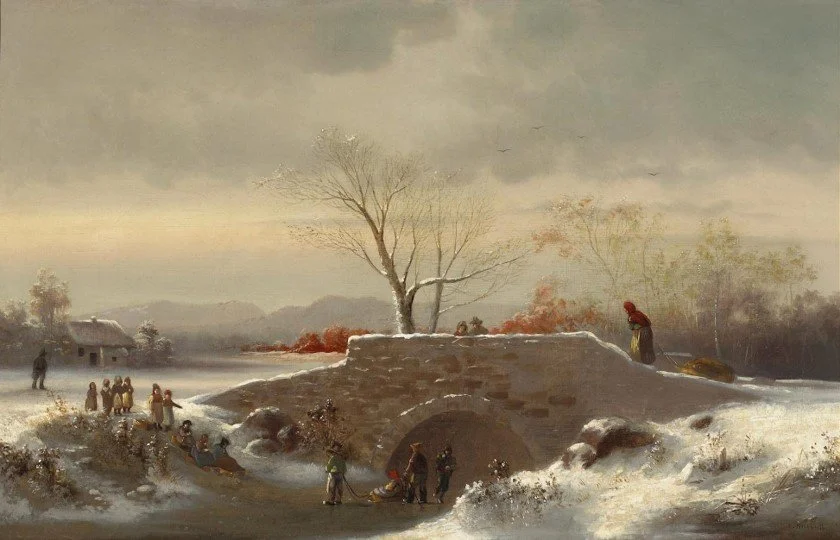
A Winters Day by Cornelius Krieghoff.
That well-regulated church communities were sometimes inconsistently accessible would not dissuade the faithful from conducting personal activities, nor would it discourage particularly committed priests and preachers from making circuit rounds from community to community to maintain religious observances, often being hosted at the homestead of a prominent local.
Indeed, dealing with the difficulties of frontier life was nothing new to the people of historic Upper Canada. Perseverance and the Canadian winter were as much part of the cultural fabric of the land as Christmas, and unfortunately there was much demand for Canadian persistence during the War of 1812.
Though there still existed a state of war between the young United States of America and the British Crown, winter was not typically a time for battles (though skirmishing and irregular warfare endured throughout). This state of being, known as Winter Quarters or Winter Barracks meant that the soldiers stationed in forts and towns had a good amount of time to be roped into regimental Christmas traditions or organizationally mandated observance of the holiday, though not all soldiers were particularly observant. Sometimes, soldiers would join their wives and children for separate observances if they were available and willing.
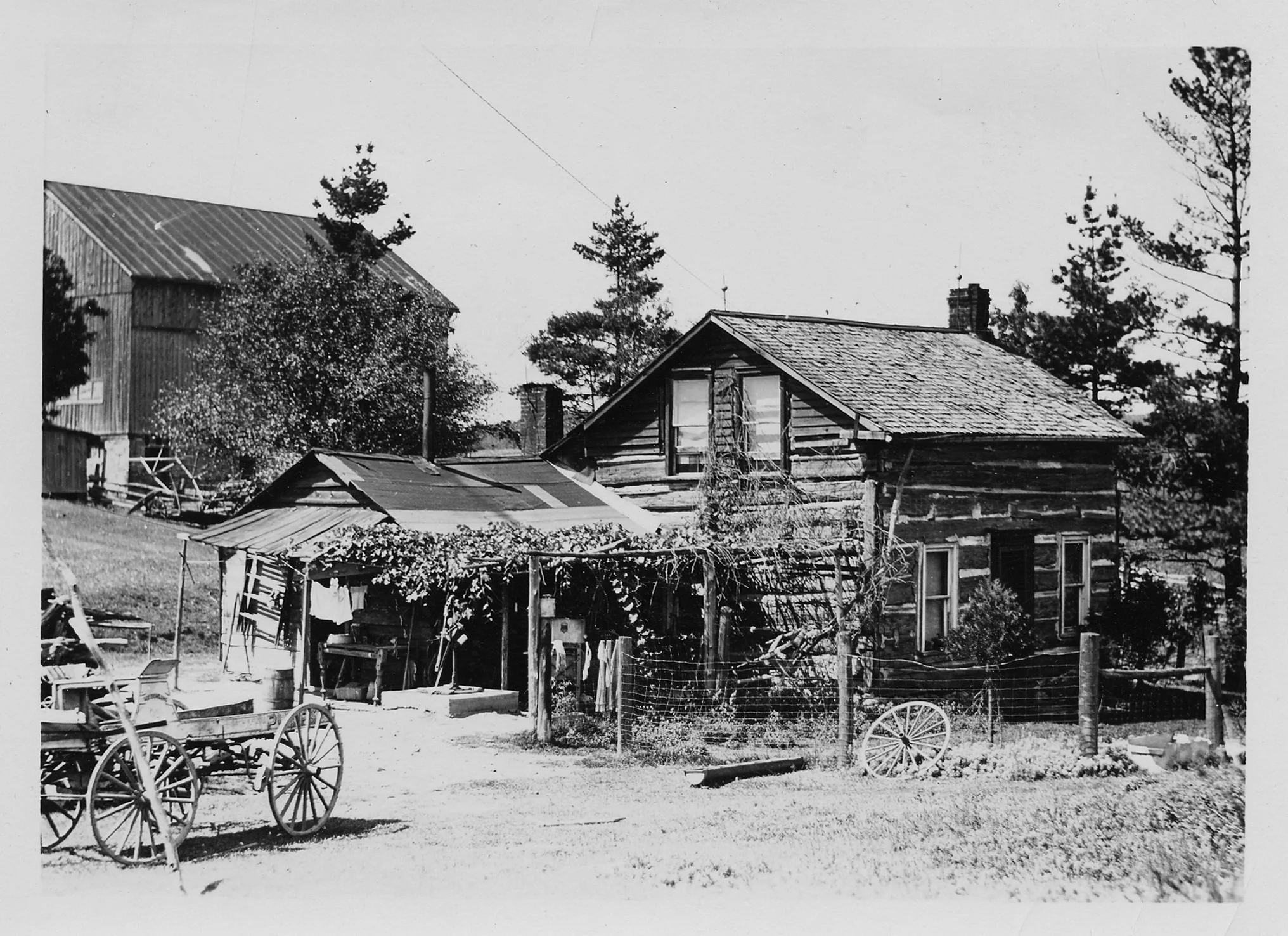
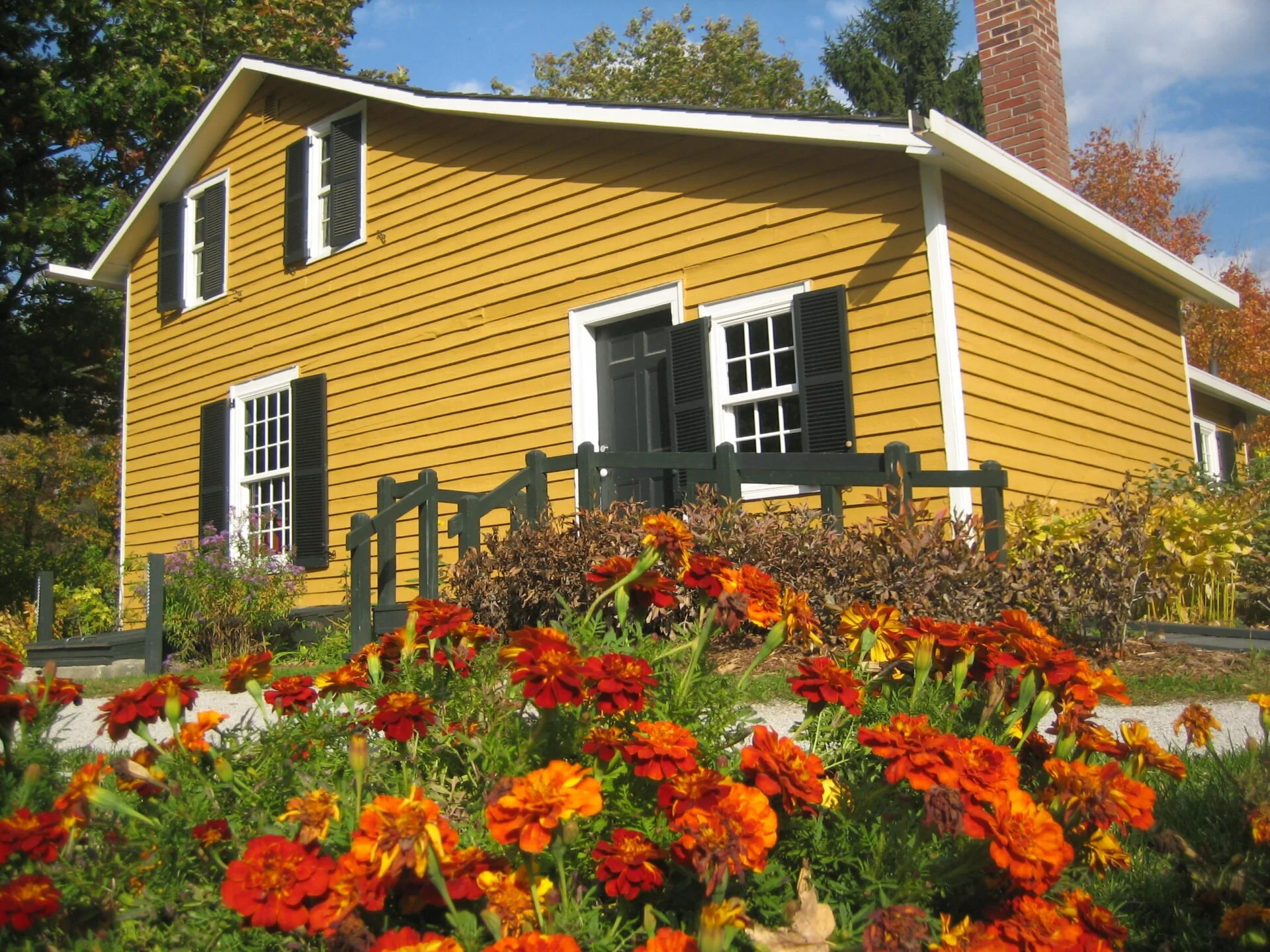
Pollard Log House, Sheridan, possible former Pollard Tavern.
The actual contents of an 1812 Christmas celebration could dramatically vary by social station, ethnic or cultural membership and economic means. Not even the military was consistent on what was exactly to be done for Christmas. Some formations treated the affair like an ordinary Sunday, others committed zealously to learning religious music for the occasion and took additional pay. In Fredericton shortly before the War, a lavish ball was hosted primarily for officers and people of condition which features so many evergreen ornaments that live birds were alleged to have made themselves a part of the decorations.
The origins of the Christmas Tree and evergreen decorations is not precisely recorded, though a more credible theory is that the European tradition was brought by Central European soldiers from the German States or serving under their banners. Though not a common Anglo-Scots tradition at the time, the German, Polish, Czech, Swiss and Baltic soldiers who found their way in foreign service would be very likely to see our Christmas Trees today and recognize their importance. Many of these being Catholics would also have placed a greater cultural emphasis on Christmas instead of New Years. This was somewhat brutally emphasized as the primarily German troops from Hesse were attacked by surprise while taking their rest after Christmas by George Washington’s forces during the American Revolution. It would not have been unreasonable for some level of watchfulness to be exercised especially by border troops or those operating near known American positions.
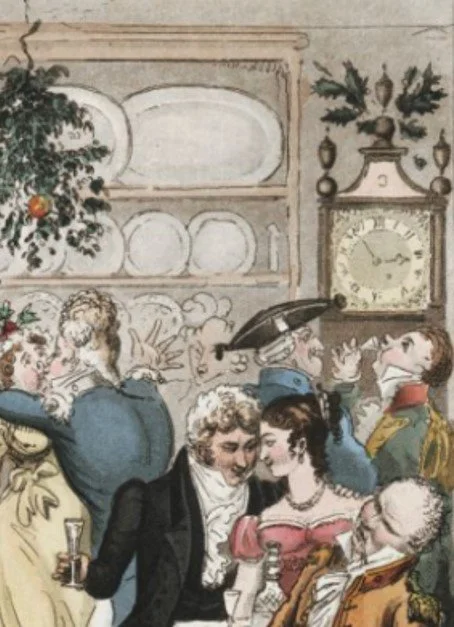
Decking the Halls, 1826.
To the Scottish settler and soldier population, Christmas took a back seat to the New Year, where the greatest of energy was expended towards celebrating the end of one year and the coming of the next. Though the now ubiquitous song of Auld Lang Syne did exist during the period, it is unclear how commonly associated with Hogmanay, the Scottish New Year’s festivities it was at the time, though it is fun to imagine it may have been.
In the case of historic Mississauga and the militia that was raised out of the area, it is highly likely that Christmas celebrations could be found at their known mustering points. Militia mustering points were well-known and accessible places, and in the cases of sites such as Pollard’s tavern, would be regularly attended at all times of the year. The tavern itself was owned by Joshua Pollard by December 28, 1811 who himself was a Private in 1st Flank Company of the 2nd Regiment of York Militia. The sort of typical civilian celebrations previously described would no doubt have replayed themselves in a public space such as this.
There is something to be said for a Tale of Two Canadas. Lower Canada (Modern day Quebec) resting on the Atlantic coast, received the first of shipments from overseas, and being the longer established territory, had a larger population and greater infrastructure. Gift giving may have been a more common practice in Lower Canada, in part due to its demographic and cultural differences and in another part due to its greater access to the commodity market.
As mentioned before, Upper Canada persevered. While not as culturally inclined towards customary gifts of toys and trinkets, it nevertheless occurred, though often with lower quantities and greater improvisation.
At the end of the day or the year or the century, Christmas to Canadians is what Canadians make of it. Road or no road, sea access or none, war or peace, Christmas has been finding a way for over 200 years.