Some Irish Connections with Mississauga Landmarks
/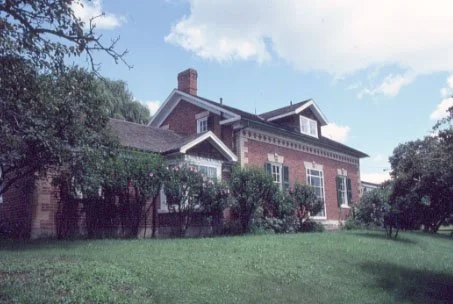
Owens-Baylay House, 1980, Mississauga Library System.
Looking ahead to St. Patrick’s Day and all things Irish, we thought we would explore three heritage landmarks here in Mississauga that have an early Irish connection.
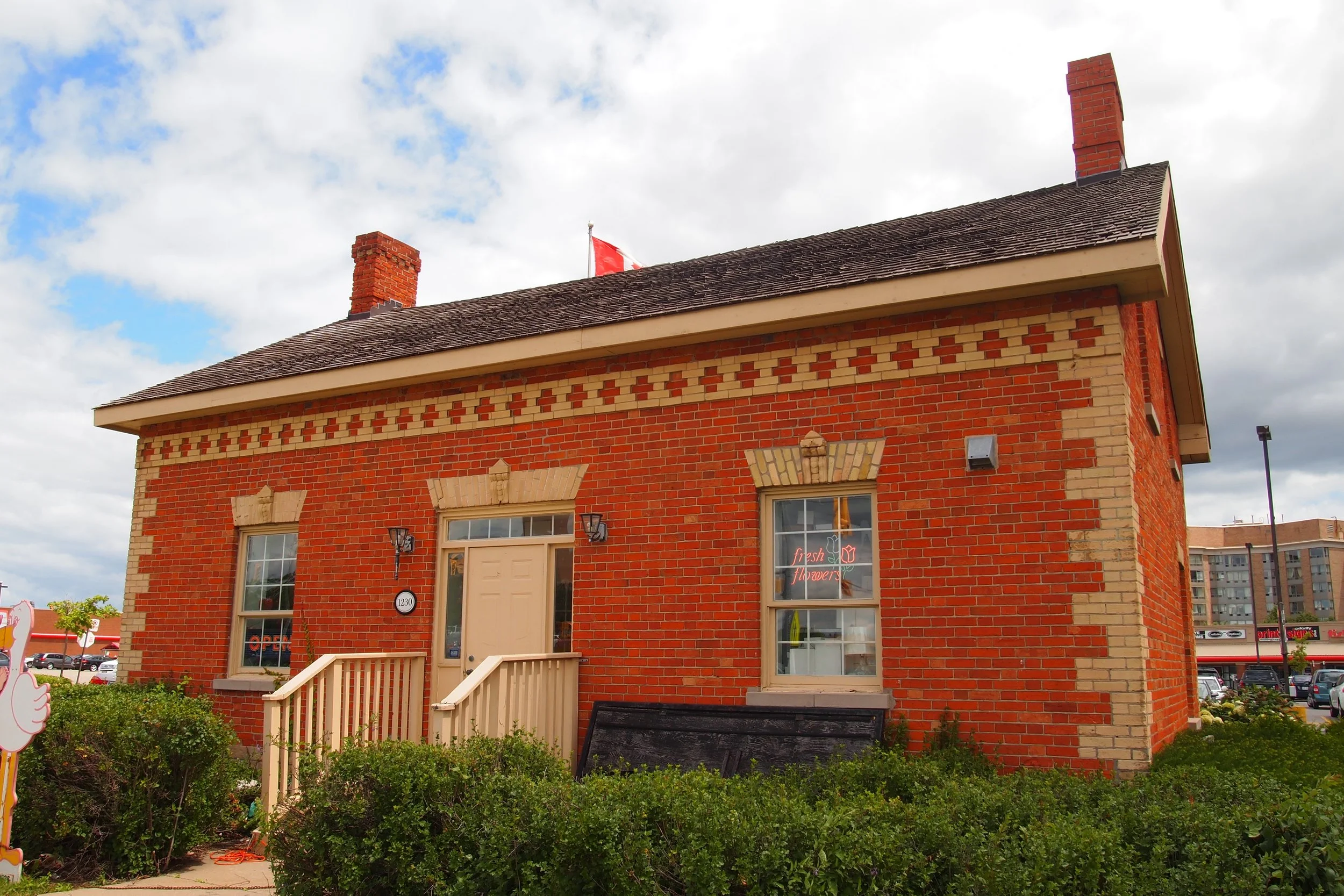
Owens-Baylay House, 2012.
The Owens-Baylay House, located at 1230 Eglinton Avenue West, is home today to a florist, Flowers Unlimited. The house itself was likely built circa 1850. As for the property history, the lot was first granted by The Crown to William McIntosh in 1836. Between 1845 and 1846, Patrick Owens (1811-1885) acquired 6 ½ acres. Patrick was a blacksmith by trade, and around 1850 he built a solid brick house and a blacksmith shop on the property. Patrick, along with his wife, Ellen McCusker (1812-1867), were born in Ireland. Patrick and Ellen had at least six children: Barnard (1848-1931), Francis (1852-1920), Mary (1858-?), Edward (1859-?), Joseph (1865-1935) and Elizabeth (?-1930). In 1886, following Patrick’s death, the property was sold. In 1935 the property was acquired by Kathleen and Frederick Baylay. This designated heritage building, which is now home to a commercial enterprise, is a fine example of vernacular mid-nineteenth century Ontario farmhouse incorporating Georgian Neo-classical and Italianate detailing. Built by Patrick Owens, an Irish immigrant, and was home to the Owens family for over 30 years.

Kee House, 2026.
The next historic landmark with Irish connections we will explore is the former Kee House, located at 4646 Heritage Hills Boulevard. The building was incorporated into a commercial plaza in the 1980s and was converted to a restaurant. Today it is home today to Indraprastha Indian Kitchen and Bar. The property was first granted by The Crown in 1810, and in 1853 100-acres in the north half of the lot was purchased by Hugh Kee (1816-1904). Hugh likely built the house between 1853 and 1860. Hugh had immigrated to historic Mississauga from Ireland in 1835 and was a farmer by profession. Hugh actively supported the reform cause during the Rebellion of 1837. In 1843 Hugh married Sarah Waite, and they would have at least seven children: Isabella (1846-1927), Margaret (1848-1920), Joseph (1850-1888), Sarah Ann (1853-1906), William (1854-1881), John (1857-1895) and James (1860-?). Hugh was also a strong supporter of education and was involved with the establishment of the Britannia school reserve. In 1902, Hugh Kee sold the property to his son-in-law John McCauley, and it remained in the Kee-McCauley family until 1934. The designated Kee House is a highly detailed vernacular farmhouse with ornamental polychromatic brickwork.
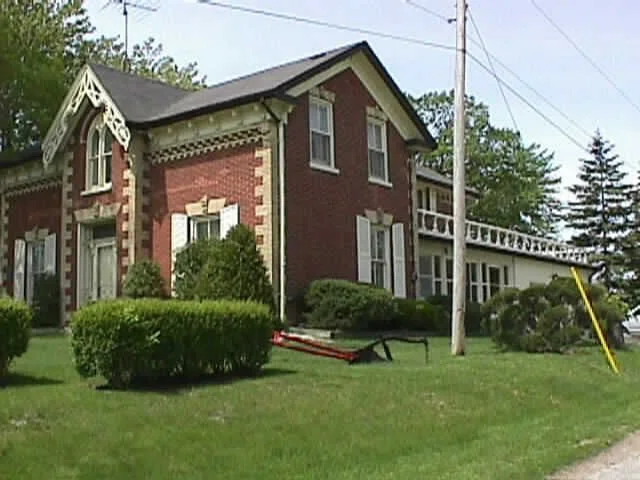
Hunter-Holmes House, Derry West.
The third property we will look at today is the Hunter-Holmes House at Derrydale Golf Course, located at 185 Derry Road West. The property was first granted by The Crown in 1822 and was purchased by James Hunter in 1868. It is believed that the surviving brick house was built circa 1871 and remained in the Hunter family until 1907. James Hunter Sr. (1800-1883) and his wife Eliza Anderson (1804-1887) had immigrated from Ireland, and over time welcomed ten children: Joseph (1832-1895), James Jr. (1834-1881), Anabella (1836-1922), Charles (1838-1911), George (1842-1931), Robert (1845-1907), Martha (1846-1912), Elizabeth (1849-1920), Jemima (1849-1908) and William (1851-1931). All the children were born in Canada, suggesting that Eliza and James immigrated prior to 1832. Their niece was Adelaide Sophia Hunter Hoodless (1857-1910), who played a pivotal role in the formation of the Women’s Institutes of Ontario. The property was purchased by the Holmes family in 1951, who would later establish the Derrydale Golf Course here. This designated heritage house is built in the Gothic Revival style and showcases Italian detailing elements.
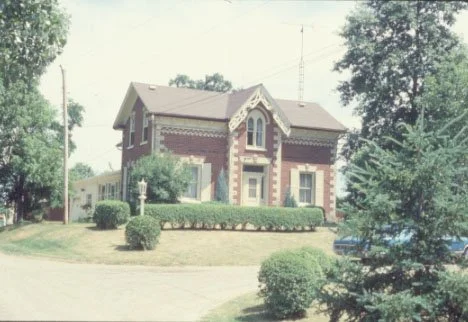
Hunter-Holmes House, Derry West, 1978, Mississauga Library System.
All three properties, along with many others in our city, help to illustrate the prominent presence and role played by Irish immigrants in the settlement era and early development of historic Mississauga. All three examples also highlight different areas of origin within Ireland, and different religious backgrounds: Patrick Owens was Roman Catholic and was likely from County Fermanagh; Hugh Kee came from County Tyrone and was Methodist in religion; and James Hunter belonged to the Church of England (Anglican) and was a native of County Monaghan.
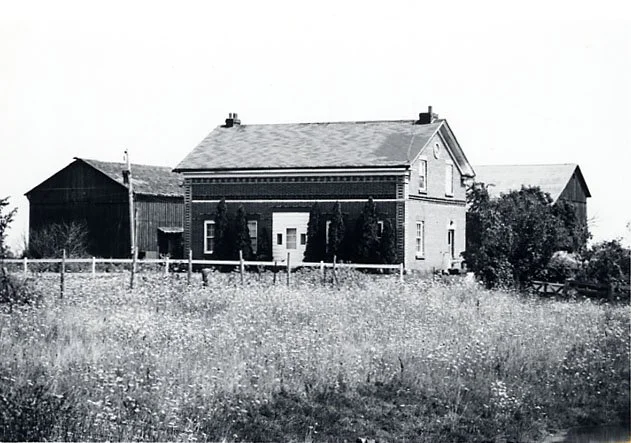
Kee Farmhouse and Farm, 1976, Mississauga Library System.