Windstorms, cyclones and tornadoes in Mississauga … oh my!
/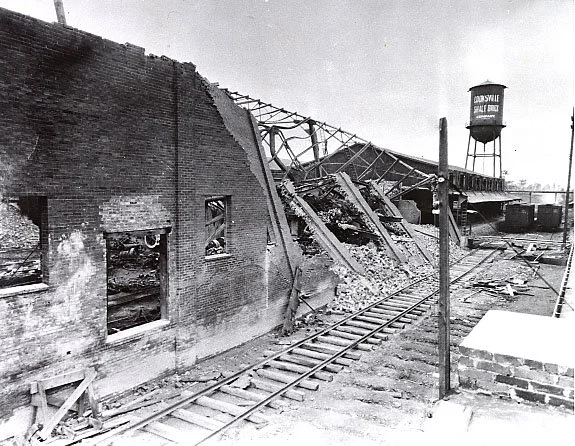
Damage at the Cooksville Brickyard after 1923 Cyclone.
Thankfully, tornadoes are infrequent here in Mississauga and our immediate surrounding area, although they have happened. We recently had an inquiry asking about a twister in 1982, which prompted the idea for this article looking back at several documented storms that have wreaked some havoc on our landscape.
The earliest documented tornado, although not directly documented at the time of occurrence, came in 1791 when a large wind/storm event carved a path of destruction and uprooted trees in the Credit River Valley. It is recorded that the Indigenous Mississaugas interpreted the event as the great water spirit, Munedoo, who departed the Credit River in fury over the encroachment of non-Indigenous settlers. When surveyor Samuel Street Wilmot came through in 1806, he recorded the path of destruction still evident on the landscape, and recorded references to a landscape stripped bare.
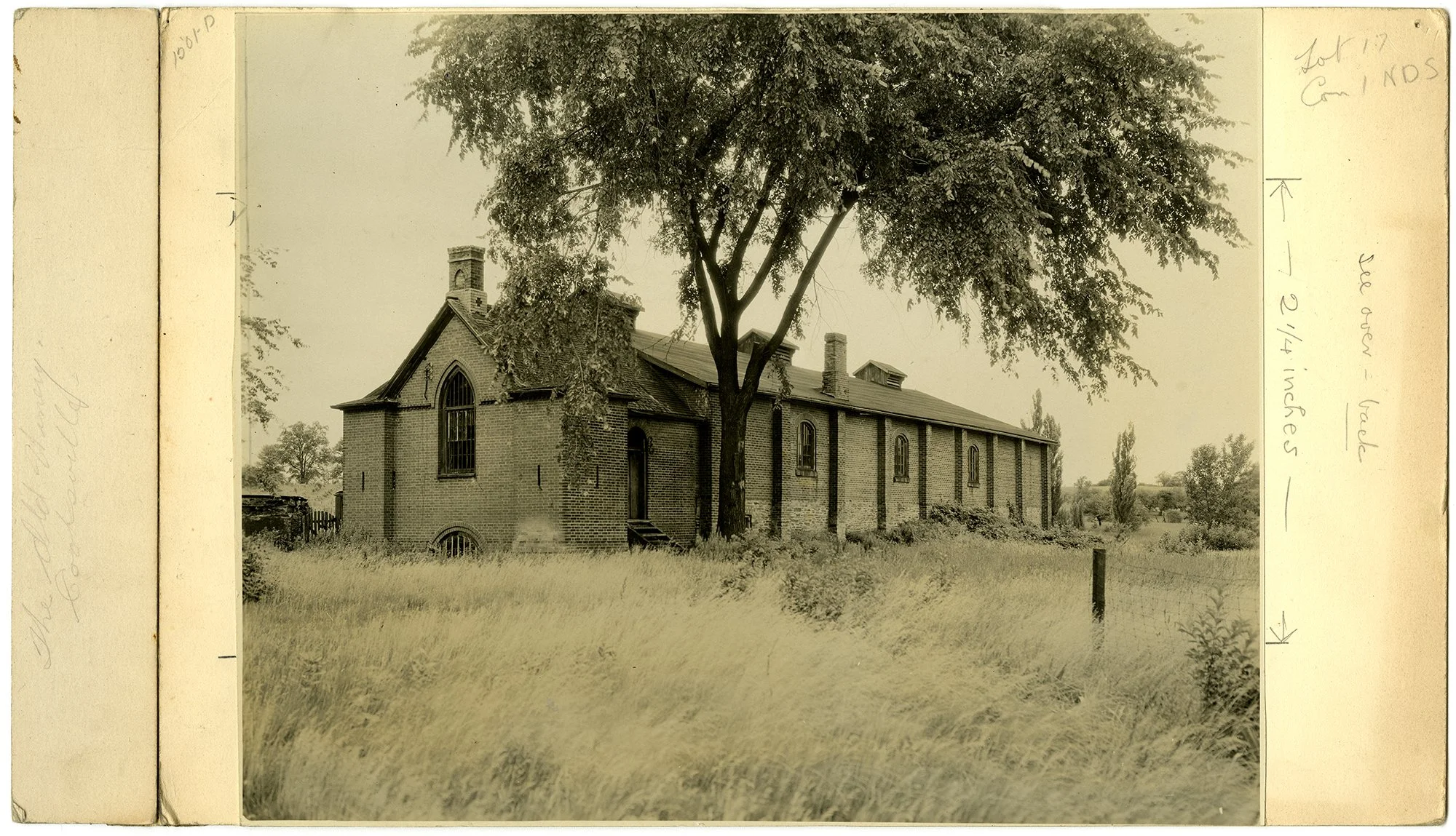
Clair House Winery Building, c1930, courtesy Region of Peel Archives.
On Monday, June 25, 1923, a tornado (then referred to as a cyclone) touched down near Guelph, and stayed on the ground for nearly 25 minutes, carving a path of destruction through Milton and Brampton, before finally dissipating southeast of Cooksville, near Port Credit, in historic Mississauga. Although the tornado apparently followed a somewhat narrow route, it did leave a path of destruction in its wake. The May family in Lisgar lost a barn, and several other barn buildings were either destroyed or damaged. Nearby Eden Wesleyan Methodist (later United) Church in Meadowvale was severely damaged and had to be partially rebuilt, and in the Cooksville area, the Cooksville brickyard and the nearby Cooksville Methodist Church was partially destroyed. The roof of the church was blown off, and land on Ellingham’s house next door, which was reportedly destroyed as a result; Charles Lawrence’s barn was moved four feet off of its foundations, and the roof of Achille and Leopold Roumegous’ wine vaults at the former Claire House vineyard in Cooksville was blown off. Two (or up to five in some accounts) deaths were attributed to the tornado, and although none were local to Mississauga that we are aware of, there were reportedly several injuries, including at the brickyard.
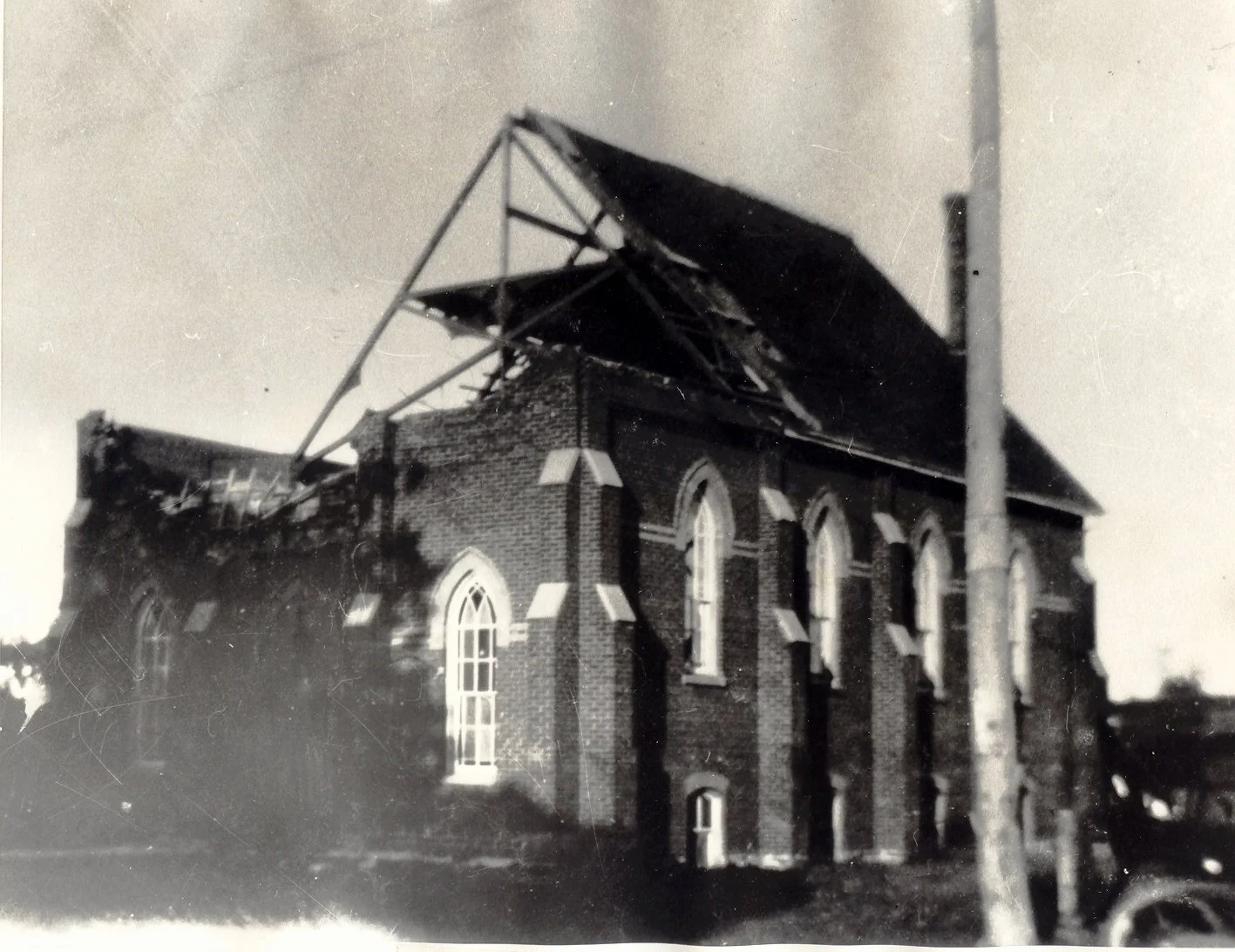
Cooksville Methodist Church after cyclone of 1923.
In more recent times, we have become accustomed to the windspeed and destructive potential of tornadoes being graded on an F grading system. The F grading system for tornadoes was created in 1971 by Dr. Ted Fujita from the University of Chicago and classified tornadoes into six damage categories, ranging from F-0 to F-5. F-0 describes the weakest tornadoes, while F-5 describes the most destructive tornadoes. The grading system or scale was replaced in the early 2000s by the Enhanced Fujita Scale (EF-Scale) that rates a tornado’s intensity and was adopted by Environment Canada’s Weather Service in 2013.
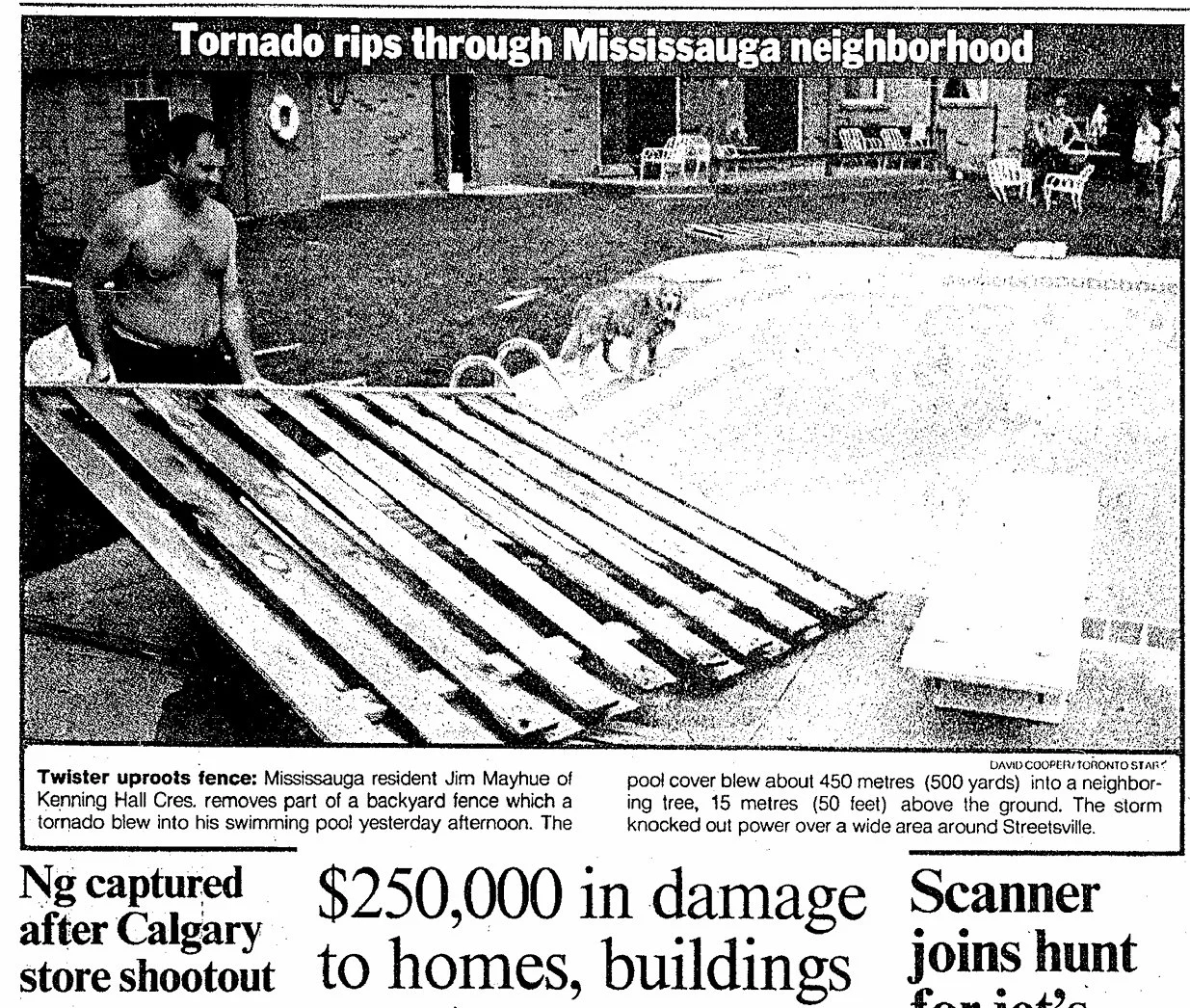
From the Sunday Star, July 7, 1985.
Another destructive wind event, although not classified as a tornado, occurred in late 1979 when a sudden windstorm tore the roof off the historic Forster house in Britannia (now Heritage House Dental, located at 820 Britannia Road West). Significant repairs had to be made to the home in early 1980, and you can still see reminders of these damaging winds on the building today. Several barns in the vicinity were also reportedly damaged.
The next tornado on our list occurred on Tuesday, June 22, 1982, around 2 pm, as a supercell approached Lake Ontario from the west-northwest. There were reports of funnel clouds, and the tornado touched down briefly near Winston Churchill Boulevard and Britannia Road, and again near Hurontario Street and Burhamthorpe Road, tracking southeast towards Cooksville. Light damage to several homes and businesses was noted, and witnesses recalled hearing a sound like a locomotive racing by at high speed, with trees “bending in half” as the wind howled by.

Wilmot Survey Map, copy, 1806, showing windfall direction in the Credit River Valley.
An F-0 tornado event happened north of Toronto on August 14, 1984, causing some significant damage around the Kennedy Road and Highway 400 area. Impacts on Mississauga were not significant, although extremely high winds were reported in Malton and at the airport.
Likely the most significant damage caused by tornadoes in Southern Ontario occurred on May 31, 1985 in a large swath from Grand Valley, Orangeville, Caledon and Tottenham to Barrie. A series of 14 tornadoes were reported across Ontario, with the most severe tornado classified as an F-4 leading to significant property damage and some 14 fatalities. Although Mississauga was spared direct impact, damaging winds and hail were reported here at home.

Forster House - Heritage House Dental - 1980 repair seen in end gable wall roof line.
Mississauga was not so lucky a few weeks later when an F-1 tornado touched down around 1:30 pm in Meadowvale on Sunday, July 7, 1985. The tornado began on the south side of Highway 401 north of modern Argentia Road. A storm spotter reported seeing vivid lightning and a very dark, fast-moving cloud. The tornado damaged trees, fences, and then ripped part of the roof off the Michele Lynn Cosmetics factory on Kitimat Road. From there it headed east into the subdivision of Meadowvale South, appearing as a dark and rapidly rotating funnel filled with debris. Many panicked residents who witnessed the fast-moving tornado rushed to safety. The tornado dissipated east of Creditview Road near the Credit River. The tornado resulted in no fatalities or injuries but did cause some $250 thousand dollars in property damage.
While tornadoes and damaging wind events are relatively rare in Mississauga, they have and do happen. Always best to be aware and heed warnings. If we have missed any historic tornadoes that have impacted Mississauga, please do let us know, and if you have pictures from any of these moments, we would love to see them!
With information from https://highwaysandhailstones.com