
Way Back Wednesday - Happy New Year, Mississauga!
/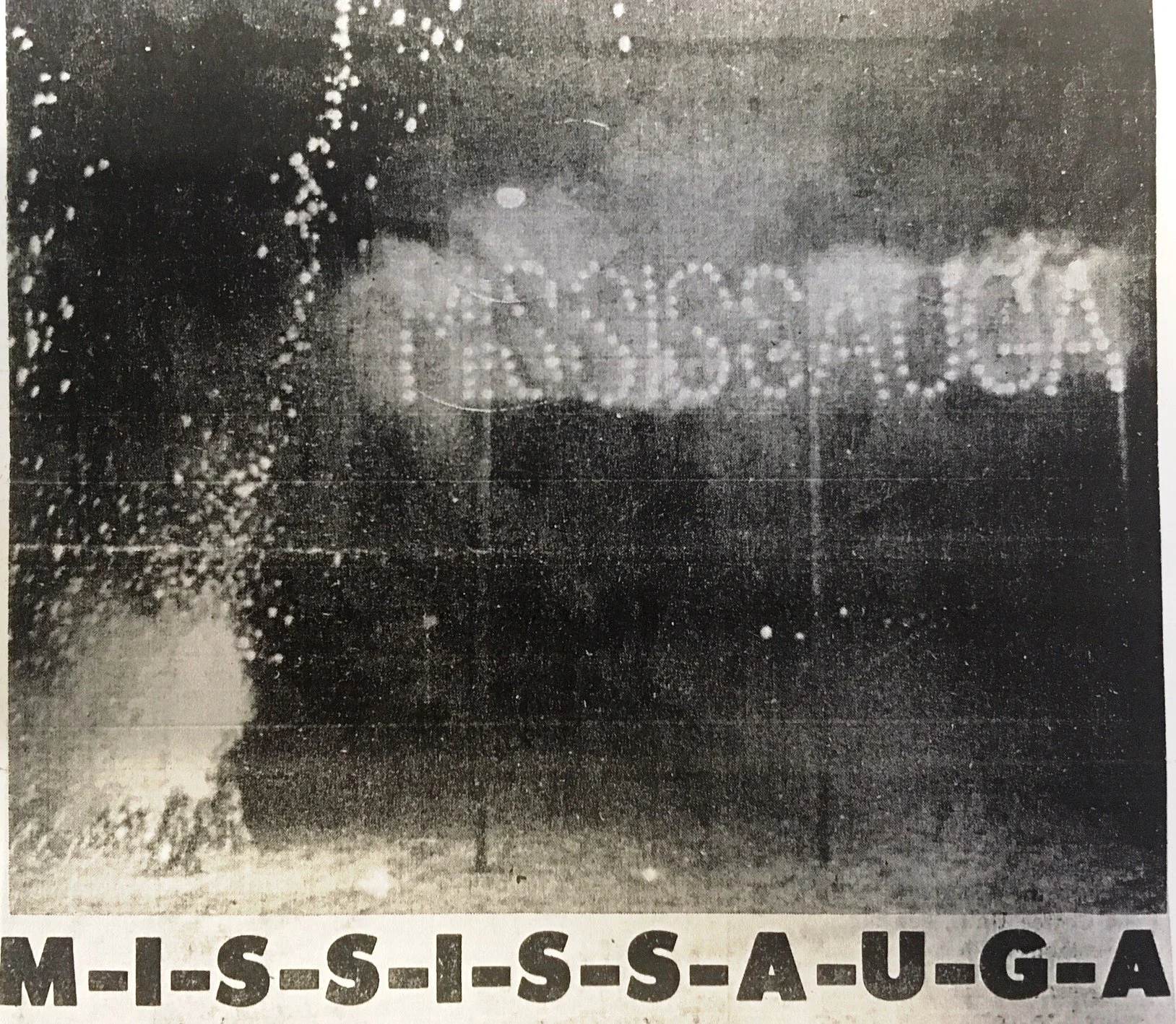
Mississauga name spelled out in lights, unveiled January 1, 1968, from the Mississauga Review, Jan 3, 1968.
Wishing all our readers a very Happy New Year, and all the very best to you and to our city through the year ahead, and we look forward to sharing even more stories from our collective history here in the Way Back Wednesday series with Modern Mississauga.
Following on the theme of New Year’s wishes, we spent a bit of time perusing old newspapers to see how the new year sentiments were shared in the past. As we explored that, we stumbled on some fascinating articles on the larger history of new years, both here in Canada and abroad.
The new year, or transition between years, has been marked and celebrated around the world for thousands of years. Many different cultures followed their own traditions, and calendars, for how and when the new year was observed. Although we largely mark the beginning of the new year today on January 1, this has not always been the case.
Some of the earliest known references to a new year come from ancient Babylon, where the new year was marked by the first new moon following the Spring equinox.
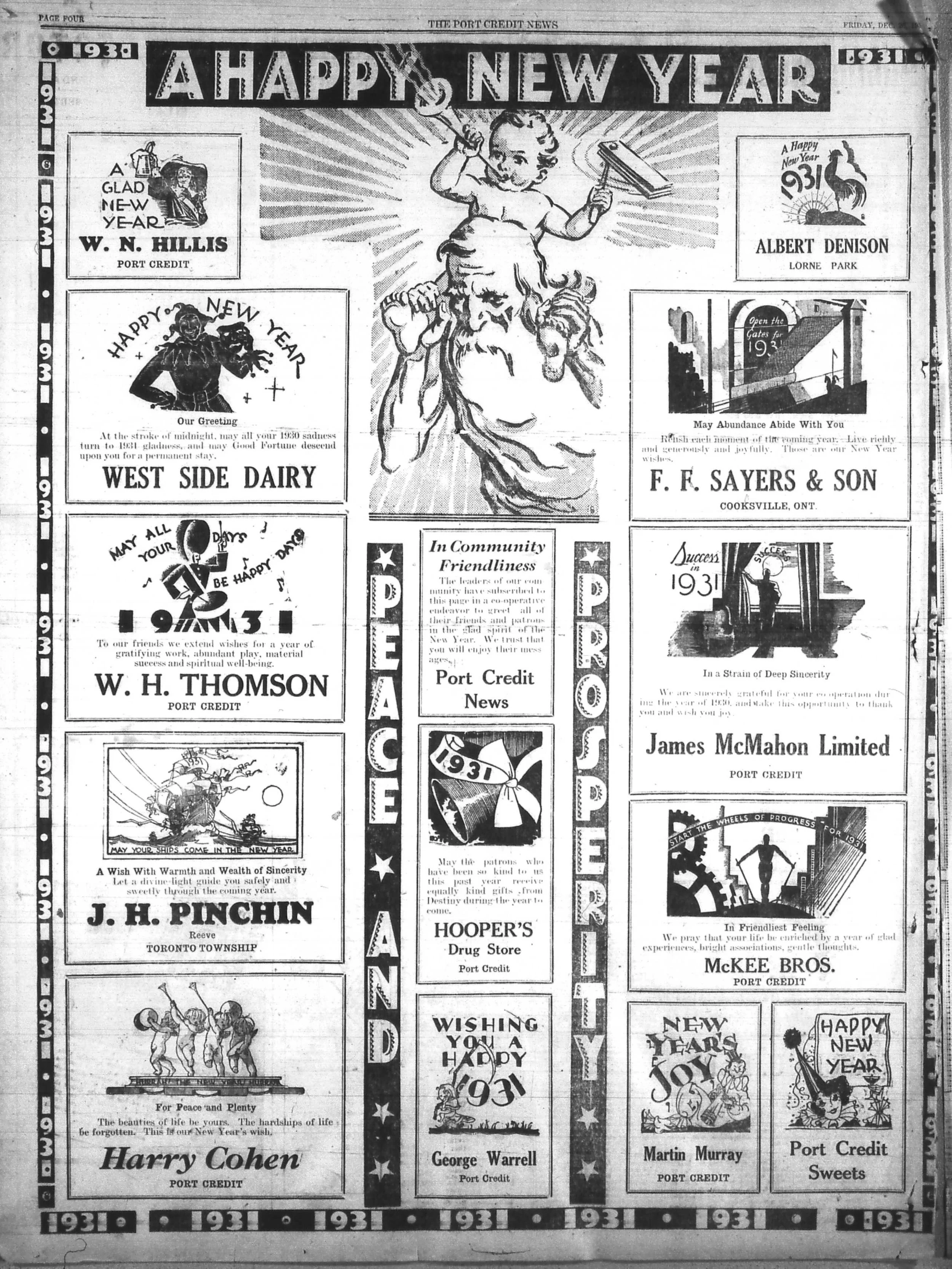
The Port Credit News, December 26, 1930.
The early Roman calendar was 10 months (304 days long), and their new year began with the winter solstice, which was typically marked in and around January 1. However, this calendar struggled to provide consistency year to year. A new Roman calendar, which borrowed heavily from Greek and Egyptian influences - the Julian calendar – was introduced in 45 BC and included 365 ¼ days, modelled on the solar year. The Julian calendar introduced leap years and placed the new year around January 14 (what we know as the Orthodox New Year today). The Julian calendar would become the dominant European calendar for over 1500 years.
In 1582, Pope Gregory XIII introduced a modified calendar, seeking to correct irregularities within the Julian calendar measurements, and the Gregorian calendar was born. The Gregorian calendar, which set the new year on January 1, became the dominant calendar in Europe, and European colonizers helped to spread this calendar system around the world, including here in Canada. Much of the world use the Gregorian calendar today, although some cultures maintain their own traditions around marking the new year.
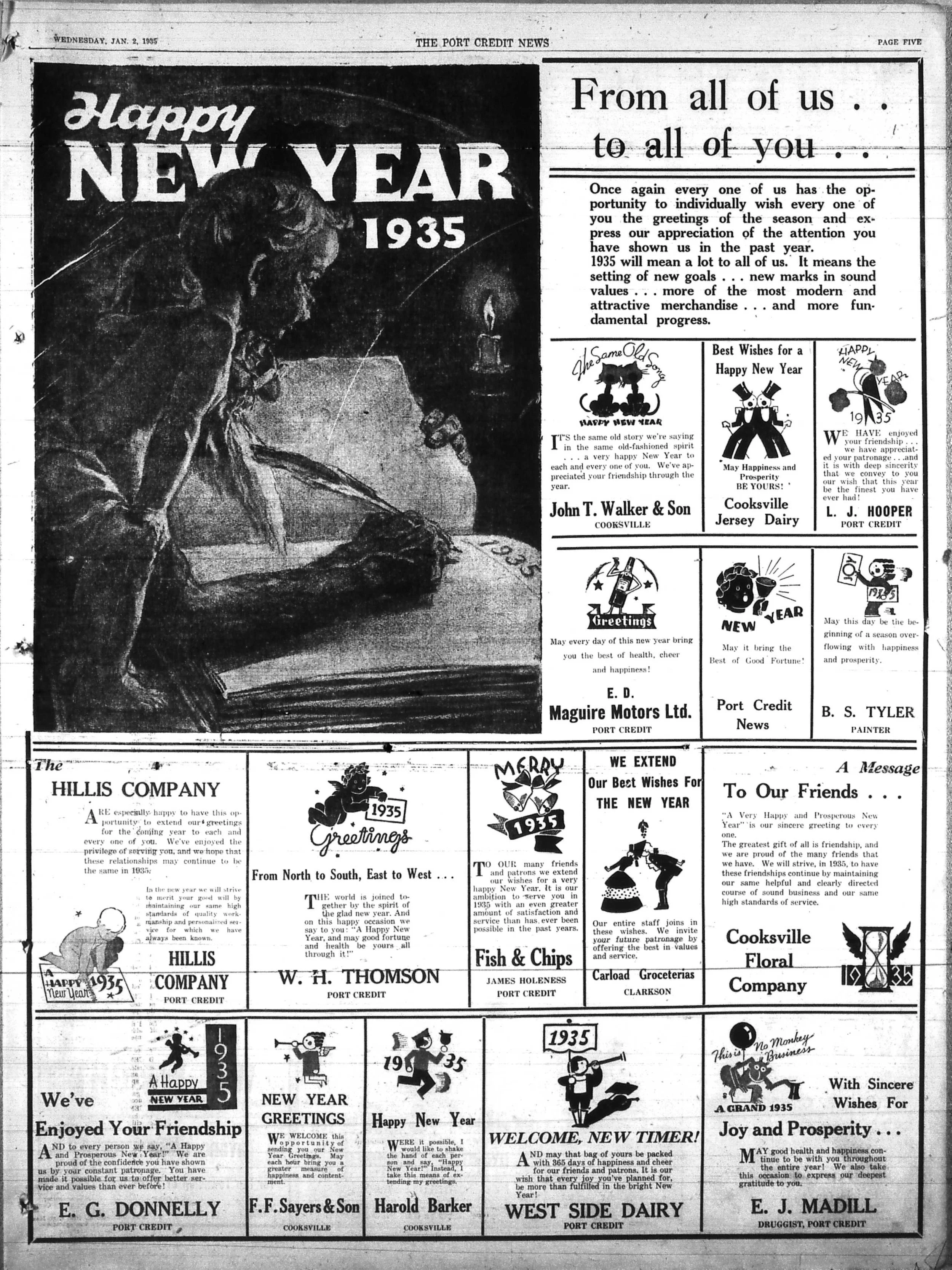
The Port Credit News, January 2, 1935.
Many Asian cultures celebrate the Lunar New Year in late January or early February, coinciding with the first new moon on the lunar calendar. The Jewish New Year, Rosh Hashanah, falls on the first day of the seventh month of the Hebrew calendar (usually in September or October). Nowruz, the traditional Persian New Year, coincides with the Spring Equinox in March. The Islamic New Year, Muharram, is celebrated on the first day of the month and is usually observed in July or August.
In North America, before colonial settlement, Indigenous peoples informally recognized the “new year” based on natural cycles, such as the spring thaw, seasonal harvests, or the first full moon of a season, and marked renewal through ceremonies, feasts, and storytelling, tied to natural cycles rather than a fixed calendar date.
Early colonists in New France brought European customs (and calendars) with them, following new year observances on January 1, and heavily influenced by Catholic traditions of church services, family gatherings, and communal feasts. With the arrival of the British in the 1750s, January 1 officially became New Year’s Day, aligning Canada with most of Western Europe, and making the new year both a civil and legal fixed date, not just a religious one. The day was often marked with both civic and military functions.
In the 19th and early 20th centuries, we see the transition of new years observances becoming more focused on well-wishes, open houses, hospitality and an emphasis on renewal and new beginnings. We also see a large amount of advertising in local newspapers where commercial entities extend new years well-wishes to their community.
January 1 – New Year’s Day – has a special place in the story of Mississauga. Streetsville was incorporated as a village on January 1, 1858, and as a town on January 1, 1962, and the Town of Mississauga and the City of Mississauga officially came to be on January 1 of 1968 and 1974, respectively. The name “Mississauga”, newly chosen for the new town, was officially unveiled (or illuminated) on January 1, 1968.
As the 20th century progressed, the focus shifted from New Year’s Day to New Year’s Eve, with public countdowns, parties and fireworks. And while January 1 marks the beginning of the new year officially, in a reflection of the remarkable mosaic of cultures that make up Canada (and Mississauga) today, we also continue to observe the new year according to other calendars, such as the Lunar New Year, each and every year.
Happy New Year Mississauga – 52 years young and counting!