Remembering Mississauga's Christmas Past: The First World War
/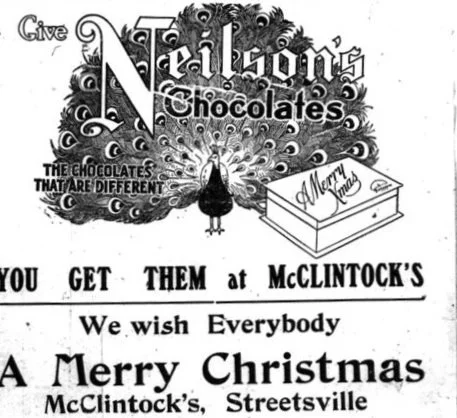
Ad from the Streetsville Review, December 23, 1915.
During times of conflict, many things we often take for granted are often muted, delayed or abandoned with the communal focus on the conflict overseas. On the home front during the war, holiday expressions were guided by frugality, cutting back, concern for those who were serving, and a collective focus (often reinforced by different levels of government, as well as civic and religious leaders) in scaling down or forgoing traditional comforts, celebrations and seasonal festivities at home in support of the war effort. The First World War marked a time when many families were separated. While many Canadian soldiers served and fought overseas, their families waited for any news from their loved ones.

Chocolate ad for soldiers from McClintock's store, Streetsville Review, Nove 18, 1915.
During the war years, aid societies and Church groups organized care packages and letter campaigns for the soldiers overseas, and this was something that reached its heights each year during the Christmas holidays. Sending Christmas cards to those serving in Europe was also a significant focus point for those on the Homefront, as were Christmas school pageants, theatre performances and fundraising dinners, all in effort to support the war effort.
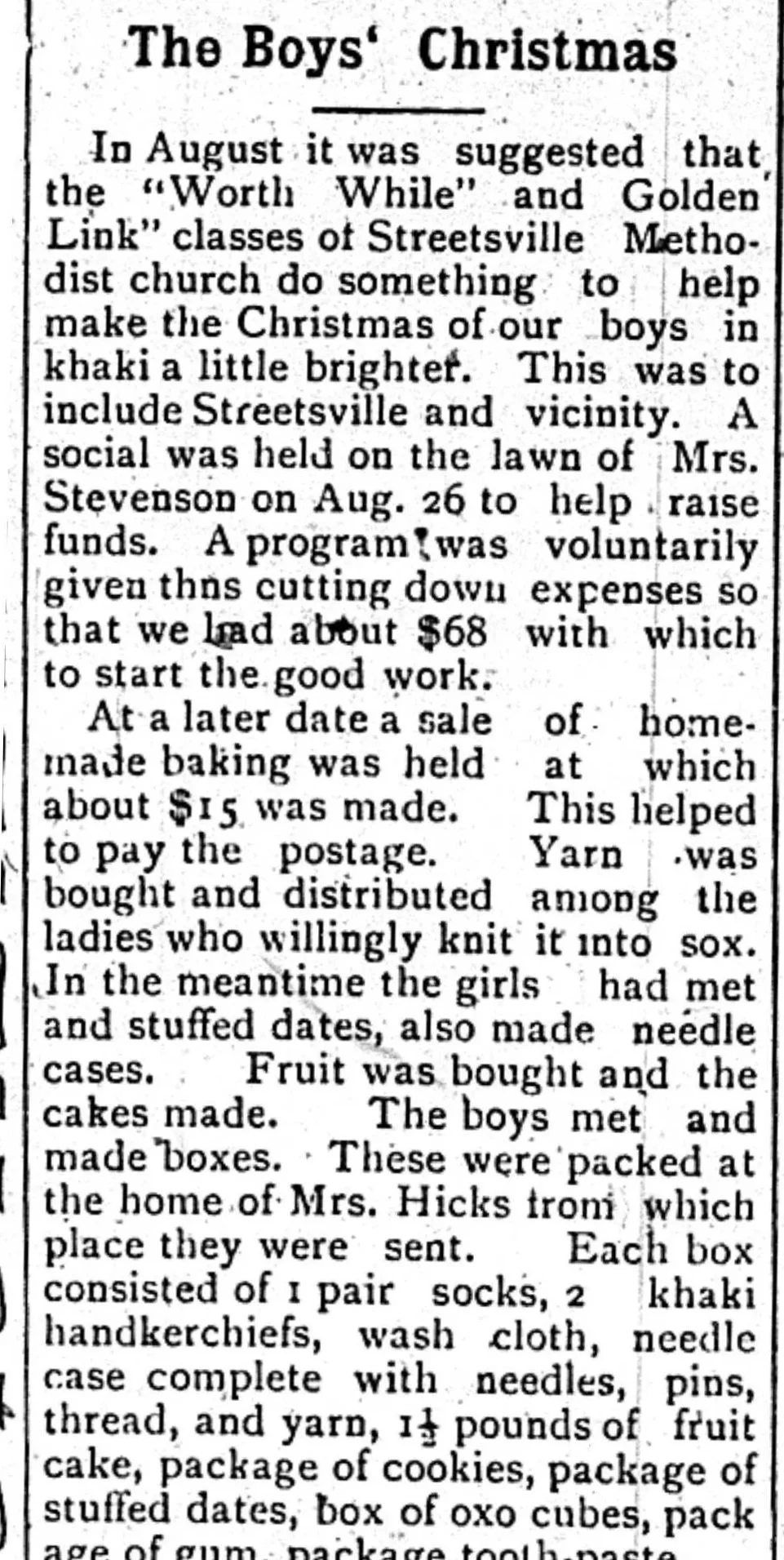
The Boys' Christmas from the Streetsville Review, January 18, 1917.
For care packages, a fascinating description was shared in the January 18, 1917 issue of the Streetsville Review. The “Worth While” and “Golden Link” classes of the Streetsville Methodist Church had resolved to create Christmas care packages for local soldiers. Socials, bake sales, and fundraising took place in the fall of 1916 to raise the necessary capital. Yarn was then purchased with which ladies in the community knitted socks, while young men made small wooden cases to serve as the care package box. Each care package included one pair of socks, two khaki handkerchiefs, a washcloth, needle case with pins, needles, thread and yarn, fruit cake, cookies, stuffed dates, oxo cubes, gum and toothpaste. These care packages were distributed to some 54 local soldiers overseas, many of whom wrote back to express their appreciation. Christmas of 1917 also saw 70 soldiers from the Port Credit area receive Christmas care boxes courtesy of the Port Credit Women’s Patriotic League and the Red Cross. The Streetsville and Harris’ Corners Branch of the Peel County War Auxiliary were also active and raised funds in support of the Canadian Red Cross in 1915.
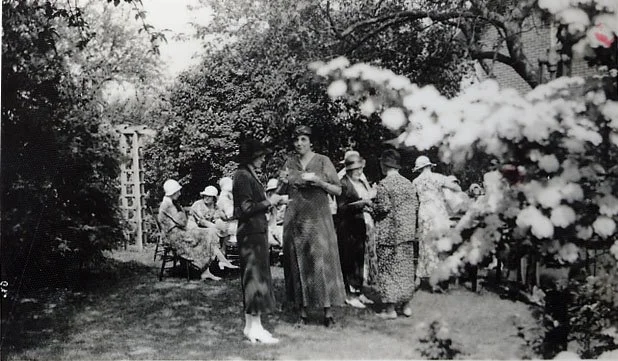
Clarkson Women's Institute - fundraising Garden Party, Clarkson, 1915.
Many other local organizations, such as the Masonic Lodges, local Women’s Institutes, Trinity Anglican Church’s women’s auxiliary, and the Port Credit chapter of the Imperial Order Daughters of the Empire just to name a few, all participated in charitable causes and promoted sending care packages to soldiers overseas. The Erindale Women’s Institute, which was formed in October of 1914 with a focused intent to aid in the war effort, became well known for their kit bags – these were monthly shipments that could include socks, scarves, pyjamas, hospital shirts, flannel shirts, and jars of jam. Their Christmas 1915 shipment included 100 pairs of socks, 12 scarves, 12 flannel shirts, 10 night shirts, 13 suits of pyjamas, and 16 hospital shirts.
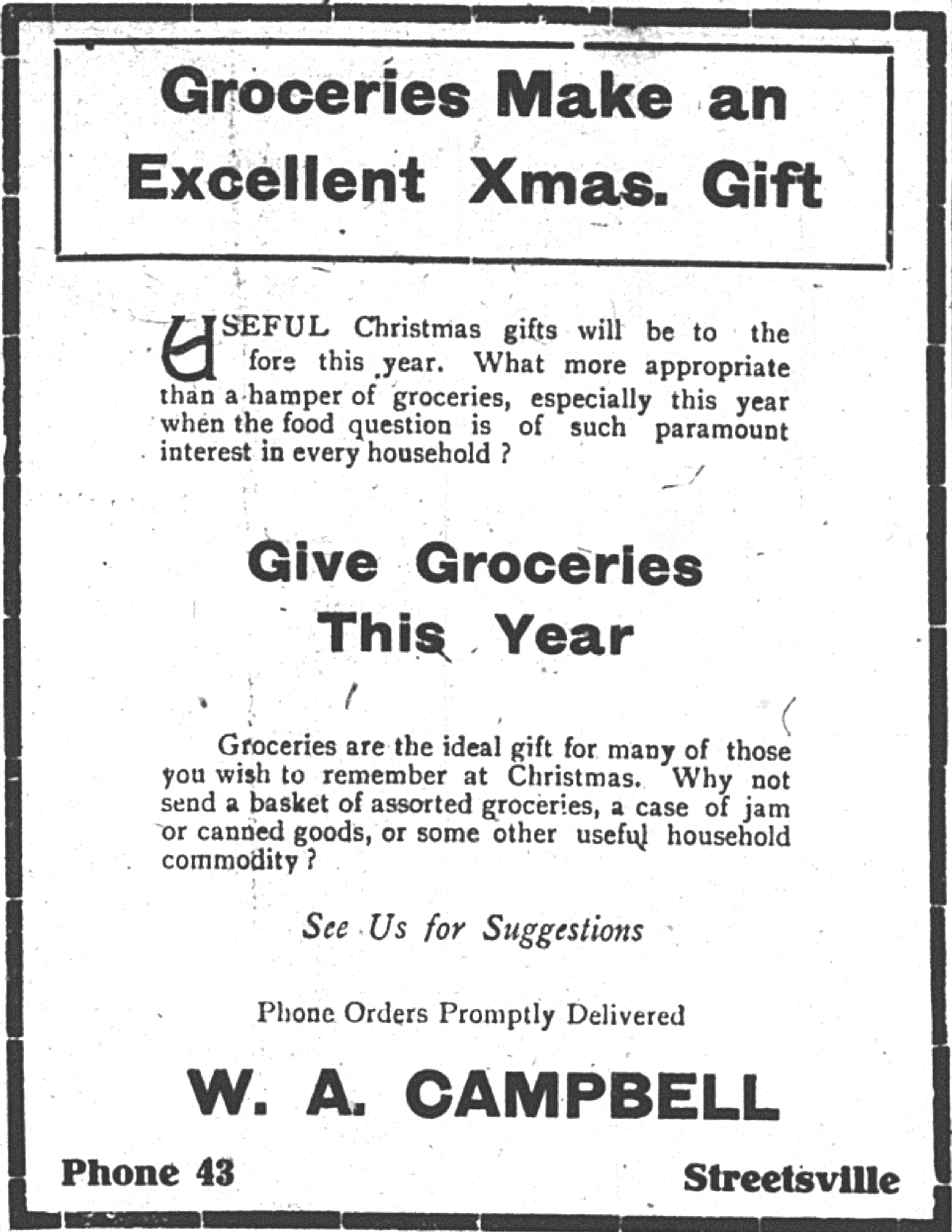
From the Streetsville Review, December 13, 1917.
The December 13, 1917 issue of The Review gave guidance to Streetsville residents on suggested Christmas presents: “a hamper of groceries will make an excellent Christmas gift and excite families who have stifled their hunger and substituted their regular diets with less popular food in order to deliver high-demand foodstuffs for troops overseas.” Also, in the era before social supports, many community groups also stepped in to support families who had a fallen or missing soldier.
Commerce at home did not, of course, cease during the war, but the Christmas advertising in newspapers indicate a level of austerity and restraint. Stores such as Norrington’s in Cooksville advertised things such as pens, stationary, cigars, fruits, nuts and Christmas pudding. McClintock’s in Streetsville boldly announced selling Neilson’s box chocolates at Christmas. Darker’s in Streetsville advertised that cigars, pipes, tobacco and shaving supplies made good gifts at home and for soldiers abroad. Falconer’s store north of Streetsville and Wright’s store in Cooksville catered to children at Christmas, advertising raisins, oranges, candied fruits and small toys for the little ones. Local newspapers also shared advice on how to make dollars stretch for Christmastime meals.
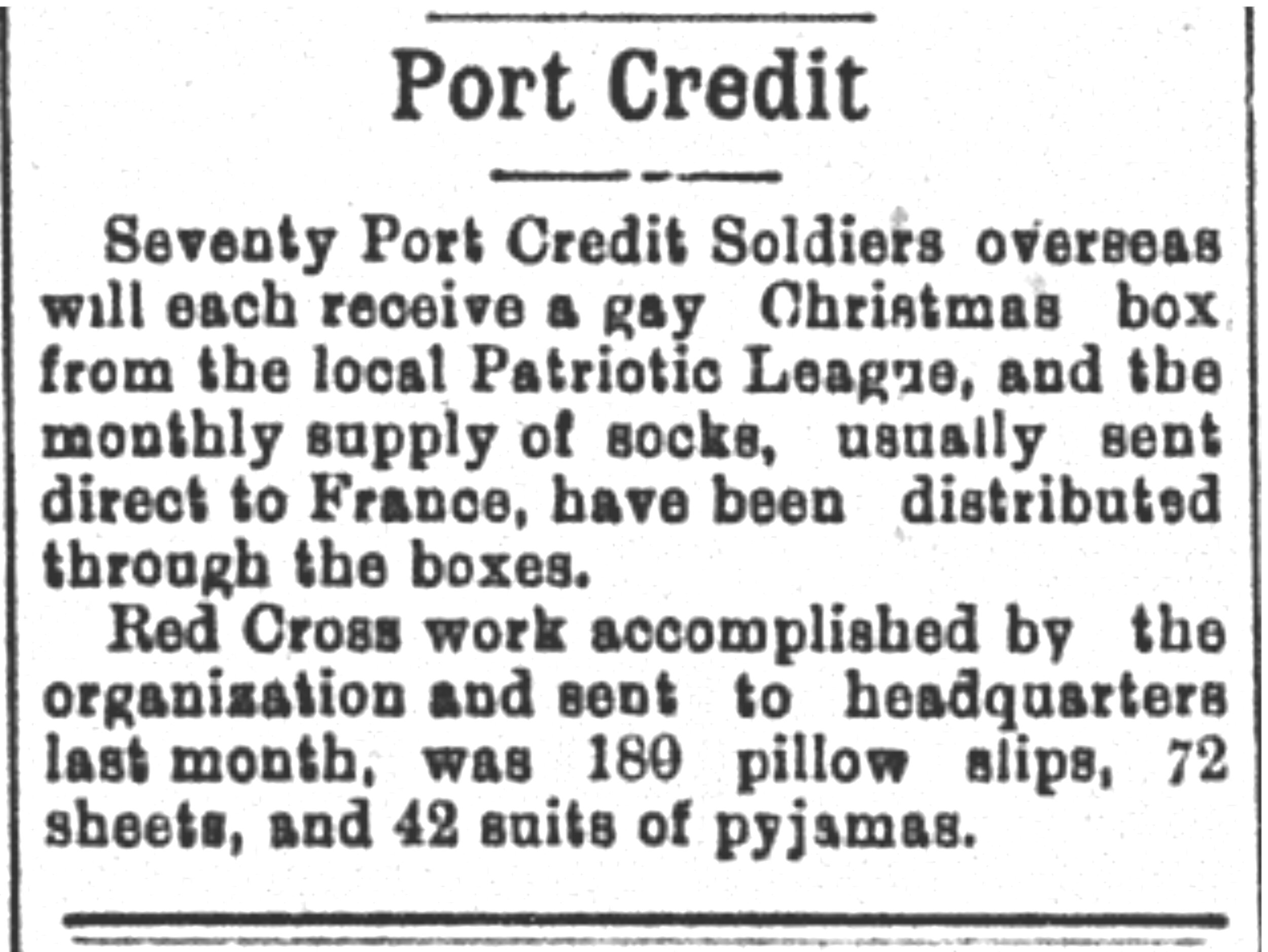
From the Streetsville Review, December 20, 1917.
But not all Christmas festivities ceased during the war years. Despite the curtailing of Christmas celebrations and the tightening of pocketbooks, the Toronto Santa Claus Parade continued to run during the First World War. From the “Decades of Revelry” by Bill Taylor in the Toronto Star (November 12, 2009): “Even World War I couldn’t stop Santa – the parade was held as usual each year. By 1917, it boasted seven floats featuring nursery rhyme characters. Mother Goose made her debut and has remained a fixture. Santa graduated from a simple wagon to an elaborate float in the shape of a giant swan.”

Clarkson Women's Institute, Strawberry Festival for First World War Soldiers, c1915.
While historic Mississauga may not have been home to an early Santa Claus Parade, the newspapers of the times illustrate that residents did their best in the midst of loss, conflict and austerity to ensure that the holiday season remained a special time for gathering, sharing, supporting each other, and observing the spirit of the season.