An 1812 Traitor and the Markles of Mississauga
/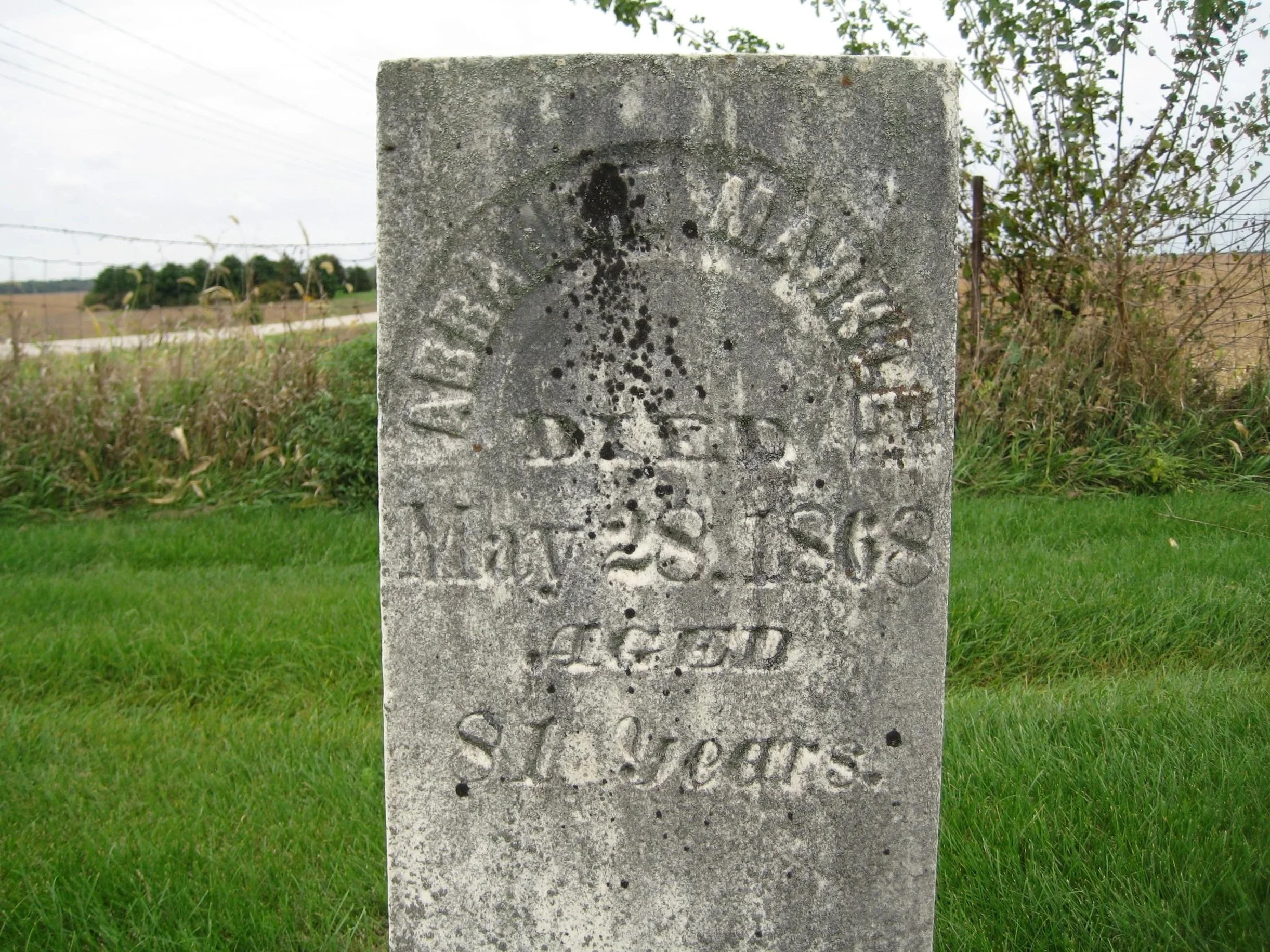
Gravestone of Abraham Markle Jr.
Families were often forced to make hard choices during the War of 1812, and not the least of which revolved around loyalties. The Markle family from the Dixie area of historic Mississauga found themselves, to no fault of their own, connected to a case of treason.
The Markle family of historic Mississauga, like many of their contemporary neightbours, had roots in the United States. The roots of the family trace to Jacobus Merckle (c.1739-1770). Jacobus and his wife, Eva Hurrle (c.1735-1771), had three children: Abraham (1758-1834), Catharina (1760-?) and Maria (1762-?). Jacobus, of Dutch ancestry, was born in Wiesenbach (Baden), Germany, and sadly died during the Atlantic crossing when the family travelled to North America in 1770. Eva died shortly after, leaving their children in the care of Jacobus’ extended family, first in New York, and later in Pennsylvania. Jacobus’ relative (possibly a cousin or uncle), Johann Merckle (1669-1735) had settled in Ulster, New York in 1721. His son, Wilhelmus (1722-1808), likely helped to care for his cousin’s orphans, Abraham, Catharina and Maria. Wilhelmus’ son was also named Abraham (1770-1826), however he is also recorded as Abram. For the purposes of clarity in this story, we will use Abram for Wilhelmus’ son to differentiate from Jacobus’ son, Abraham.
Clear as mud, right?

Gravestone of Anna Markle, wife of Abraham Markle Jr, Dixie Union Cemetery.
In 1786, Abraham Markle (the surname spelling has several variations) married Barbara Schaber in Berks County, Pennsylvania. The Schaber family also hailed from Wiesenbach (Baden), Germany. Barbara and Abraham Markle had 10 children: Abraham Jr. (1787-1868), Jacobus (1789-1841), James (1791-1862), Johan (1794-1870), Michael (1797-1847), Andrew (1799-1884), Cyrus (1801-?), Daniel (1804-1868), Robert (1806-?) and Elizabeth (1807-1884).
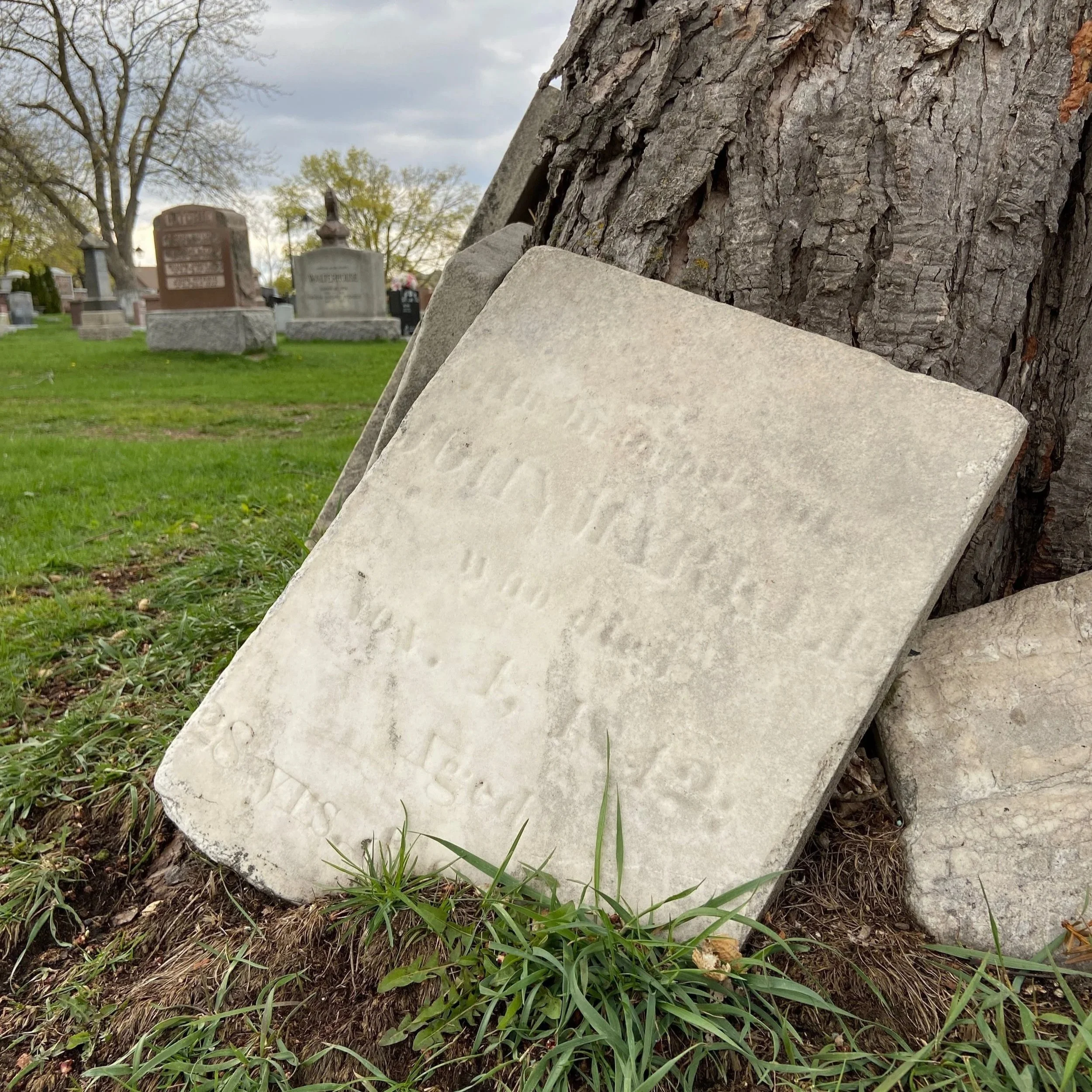
In 1798, Barbara and Abraham Markle Sr. came to Canada, first settling in the Niagara area. In 1810, Abraham received a land grant in Lot 6, Concession 1, NDS here in historic Mississauga, although they were likely living here before they formally received their land grant as their youngest children, Robert and Elizabeth, were born here in 1806 and 1807 respectively. When the War of 1812 broke out, both Abraham Markle Sr. and his sons, Abraham Jr., Jacob(us) and James all volunteered to serve in the 2nd York militia. In Dixie Union Cemetery here in Mississauga you can find the gravestones for several members of the Markle family. The family is also related, via marriage, to the famed Cody family.
Although there is likely much more to learn about the Markle family, now that we have traced the roots of the family to historic Mississauga, lets go back to Wilhelmus’ family of New York.
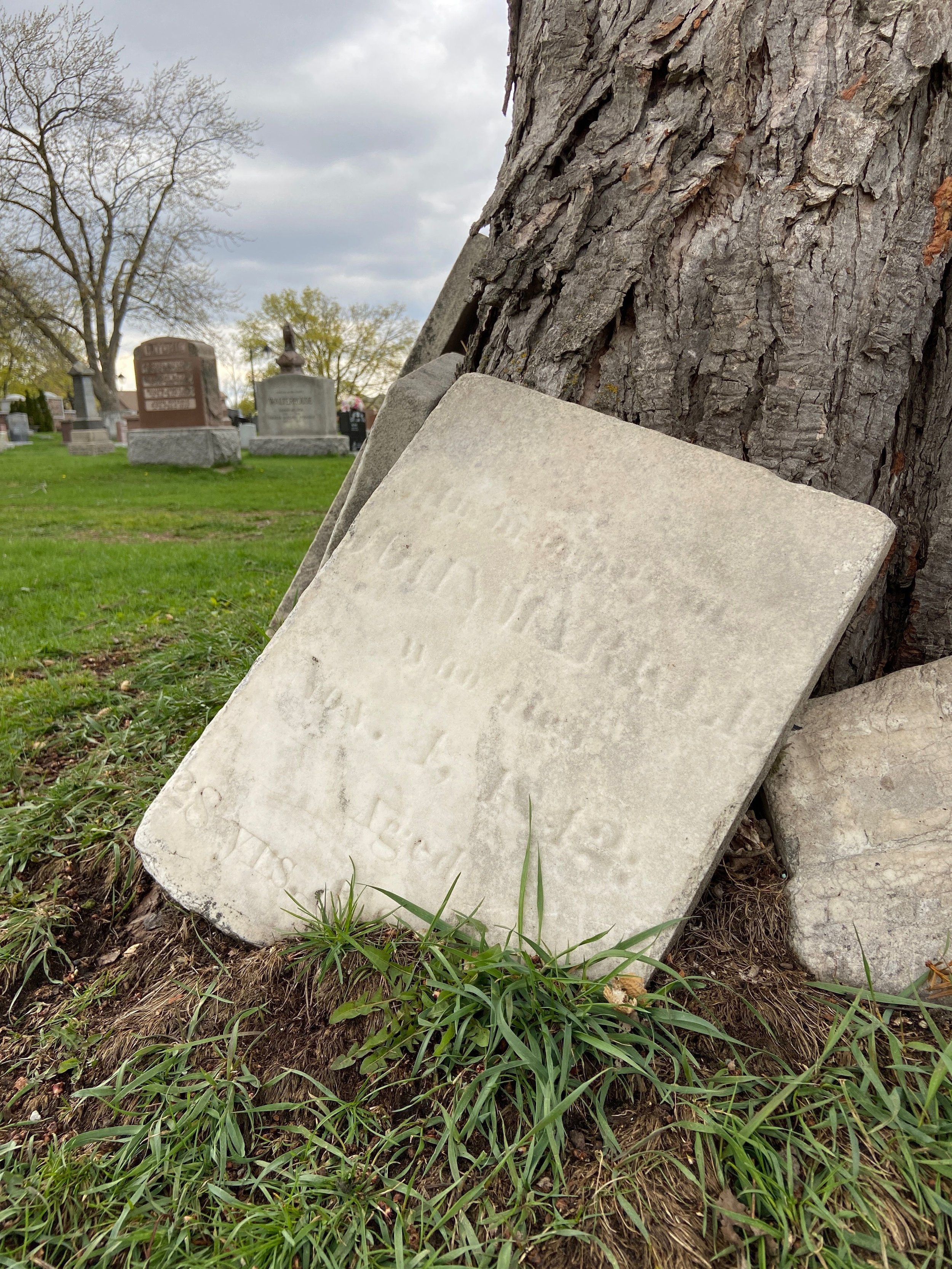
Gravestone of John Johan Markle, Dixie Union Cemetery.
Wilhelmus Merckle’s son was also named Wilhelmus, although he appears to have anglicized his name to William. William Merckle/Merkell/Markle (1754-1837) was born in Ulster, New York, and later resettled in Pennsylvania. Several members of the Markle family served with Butler’s Rangers during the American Revolution, which led to their resettlement in Canada. William’s family also came to Canada (likely with the “Mississauga Markles”) in 1798. William, and his son Benjamin, also served with the 2nd York militia during the War of 1812. So far, in our story, we have several examples of loyal service within the extended Markle family during the War of 1812.
That changes when we look at William’s older brother Abram, the cousin of the Markles of historic Mississauga.
Abram Markle was also born in Ulster, New York. He came to Newark (Niagara-on-the-Lake) around 1794, likely preceding his relatives. He went into hotel, milling and distillery businesses. In 1812, Abram was elected to the House of Assembly for Upper Canada. In politics, Abram aligned himself with Joseph Willcocks, who became viewed as the unofficial opposition. By December of 1813 Markle chose to follow Willcocks in switching sides to the American cause and joined with the Canadian Volunteers. Willcocks described Abram as “possessing a large property, and a very powerful influence.”
According to the Dictionary of Canadian Biography, Abram was active with the Canadian Volunteers “during the burning of Niagara in December 1813 and later at the British raids on Fort Schlosser (Niagara Falls), N.Y., and Lewiston. Markle was wounded severely during one of the latter engagements, but he recovered sufficiently to accompany a large American force which landed in Upper Canada at Dover (Port Dover) on May 14, 1814 and burned every building between the village and Turkey Point, including Robert Nichol’s mills.” Abram was commissioned as a major with the Canadian Volunteers in April of 1814, and assumed command after the death of Joseph Willcocks. Viewed as a traitor, after the war Abram settled in Indiana.
The reasoning behind Abram’s treason in not fully understood, and while he was not accused, charged or condemned for treason, he was vilified in Canada as a traitor. One wonders what impact that would have had on his extended family in Canada and here in historic Mississauga, particularly when we realize that Abram, as a member of the Canadian Volunteers, would have found himself across the field from the 2nd York a number of times – the regiment for which his own relatives served.
We invite you to join us at the Engagement at Bradley War of 1812 re-enactment weekend at the Bradley Museum (1620 Orr Road, Mississauga), 10 am to 5 pm, on September 19-20, 2026 and explore life and times during the War of 1812.