The Proud Canadian History of Lake Ontario
/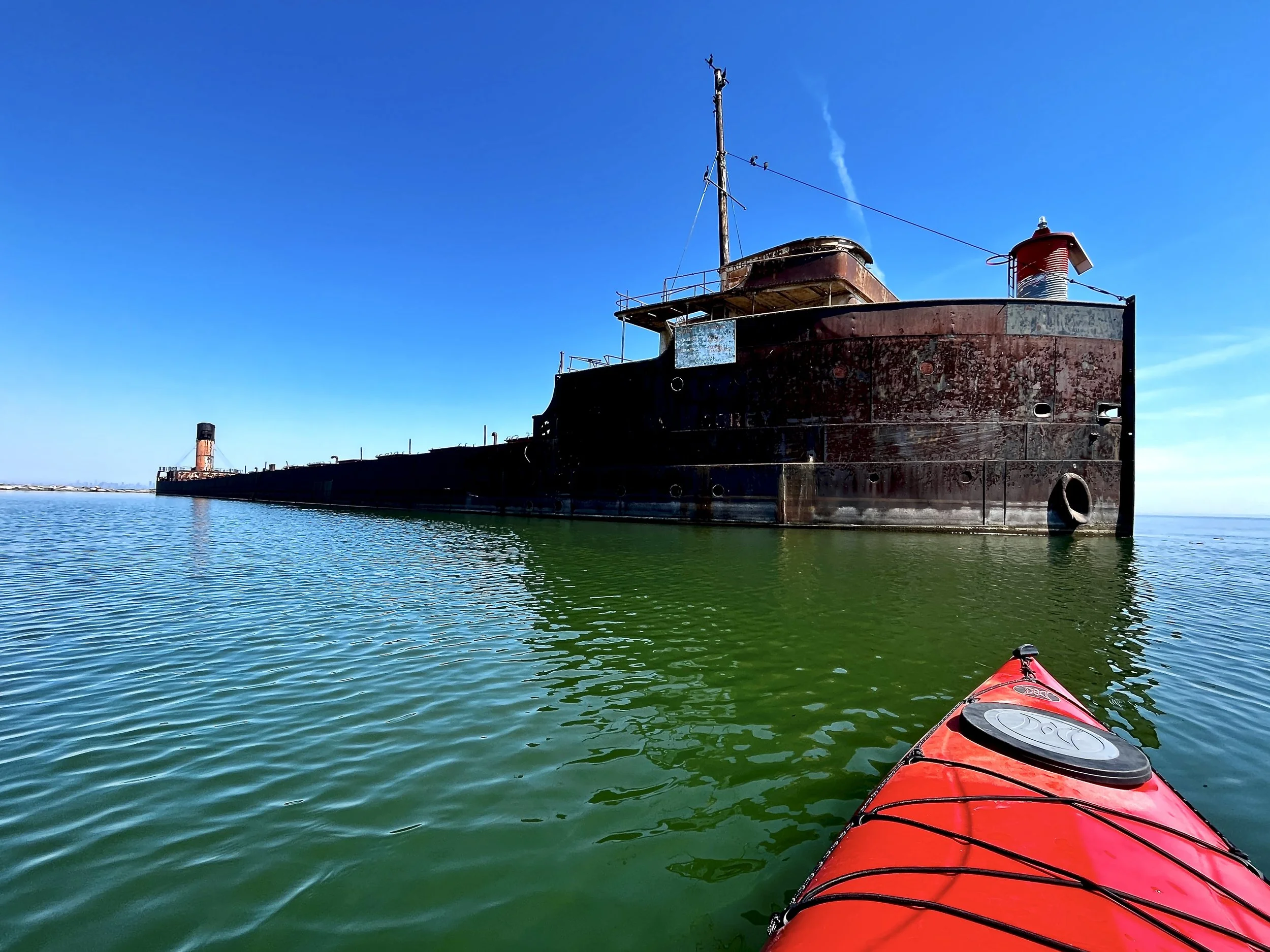
The Ridgetown in Lake Ontario. Photo by jay kana.
Over the years, we have often marked the end of the summer season with a Blue Rodeo concert at the RBC Amphitheatre in Toronto. The evening is always a summer highlight for us. This year’s concert created a special memory though, something that brought encouragement, reinforced personal resolve and created a feeling of solidarity amongst my fellow citizens and concert-goers, amidst these fractured economic and political times. Set against the backdrop of Lake Ontario, and with perspectives shaped by the news out of the United States of the “renaming” of the lake, Blue Rodeo performed their “Hasn’t Hit Me Yet” song towards the end of the evening. With the audience singing along, the song reached a crescendo when the audience, in one loud, clear, defiant voice, belted out “in the middle of Lake Ontario!” It was a spontaneous, clear and proudly Canadian moment. The name is, and will always be, for us, Lake Ontario. That moment led me to reflect on the history of the name – something that people who have lived along its shores have known and recorded for hundreds of years.
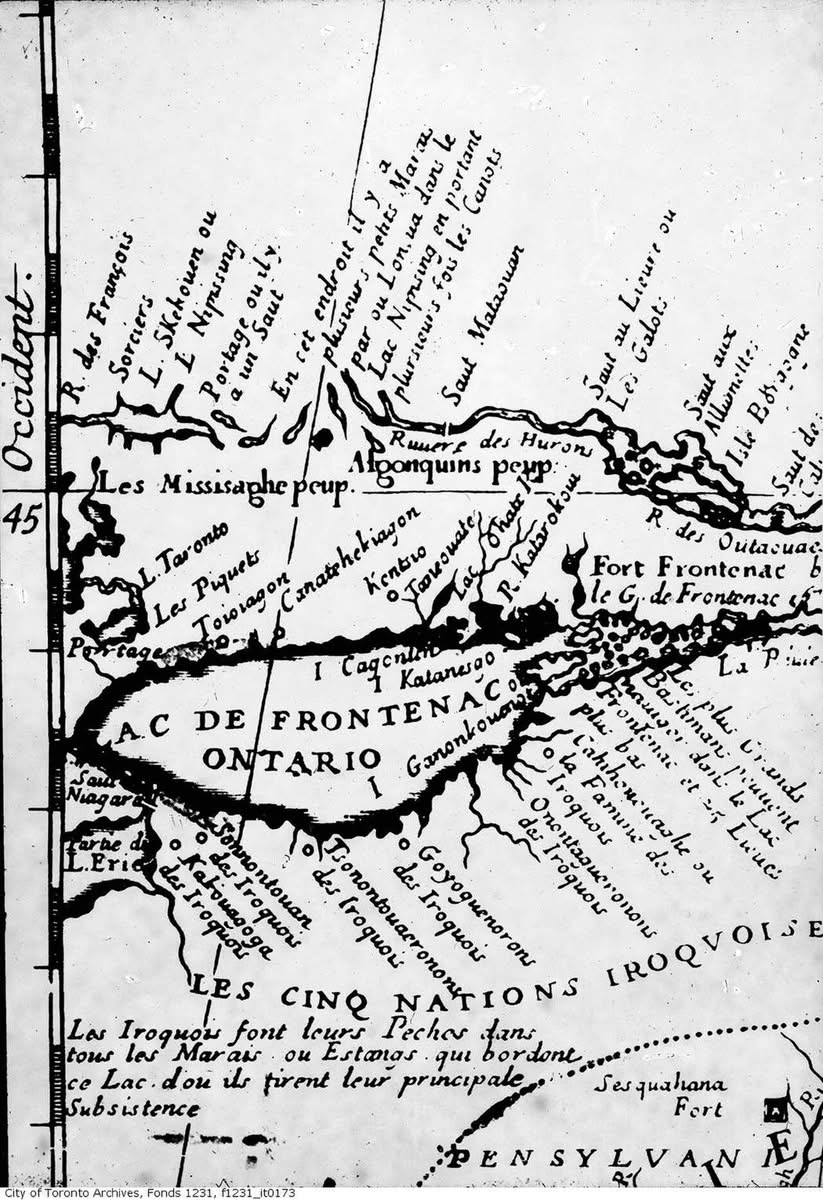
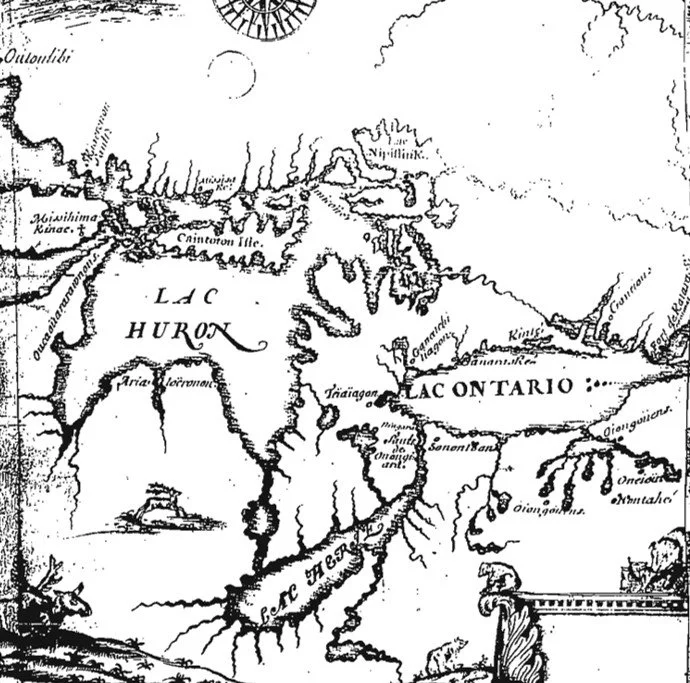
1641 Map of lake ontario.
For starters, to clarify the timeline, our province takes its name from the lake. What is now the Province of Ontario has been home to Indigenous peoples for thousands of years. In colonial terms, after 1608 the province was originally part of the Pays d’en Haut (“Upper Country”) area of New France. After the fall of New France and the Treaty of Paris in 1763, Great Britain reorganized the administration of New France as the Province (or colony) of Quebec. The Constitutional Act of 1791 split the Province of Quebec into Upper Canada (now Ontario) and Lower Canada (now Quebec). In 1841 Upper and Lower Canada were merged to create the united Province of Canada in the Act of Union (1840), with the regions being known as Canada East (now Quebec) and Canada West (now Ontario). The British North American Act of 1867 established the Dominion of Canada, and the older united Province of Canada was split into the separate Provinces of Quebec and Ontario. Thus, the Province of Ontario was born, in name, in 1867.
1656 Map of lake ontario.
The name origin for Lake Ontario is much older. The name comes from the Haudenosaunee (Iroquoian) language and is derived from the Wyandot (Wendat/Huron) words Kaniatarí:io meaning “lake of shining waters”, Ontari:io meaning “great lake”, or Skandario meaning “beautiful water” or “sparkling water”. The name has been in use for hundreds of years and countless generations of people. Thousands of years of Indigenous history have taken place along the shores and on the water of Lake Ontario.
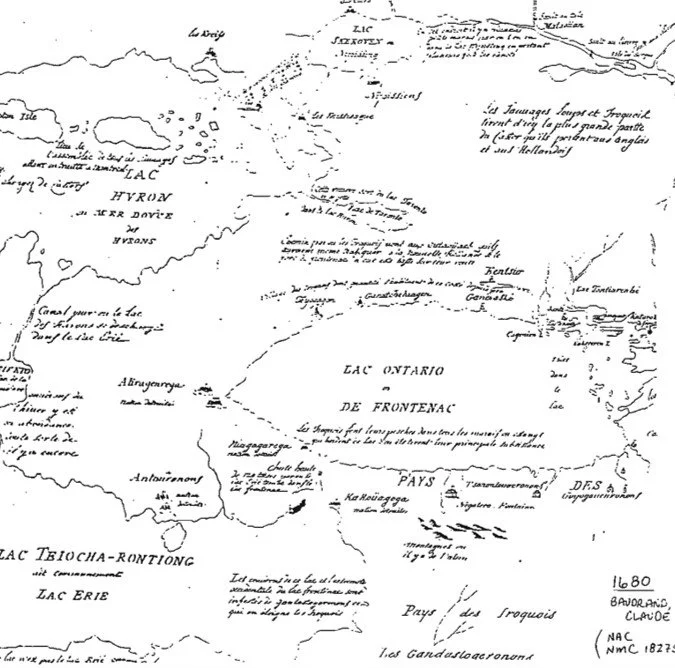
Crop of 1680 Map of the Great Lakes.
The lake was an important route for travel and trade for Indigenous peoples long before colonial settlement. The name “Lake Ontario” has been in use since 1639 as documented in early maps by French colonial traders and Jesuit missionaries. Some early maps also use the names Lac Frontenac, Cataraqui and St. Louis, but by 1641 Lake Ontario emerged as the recognized name for the lake.
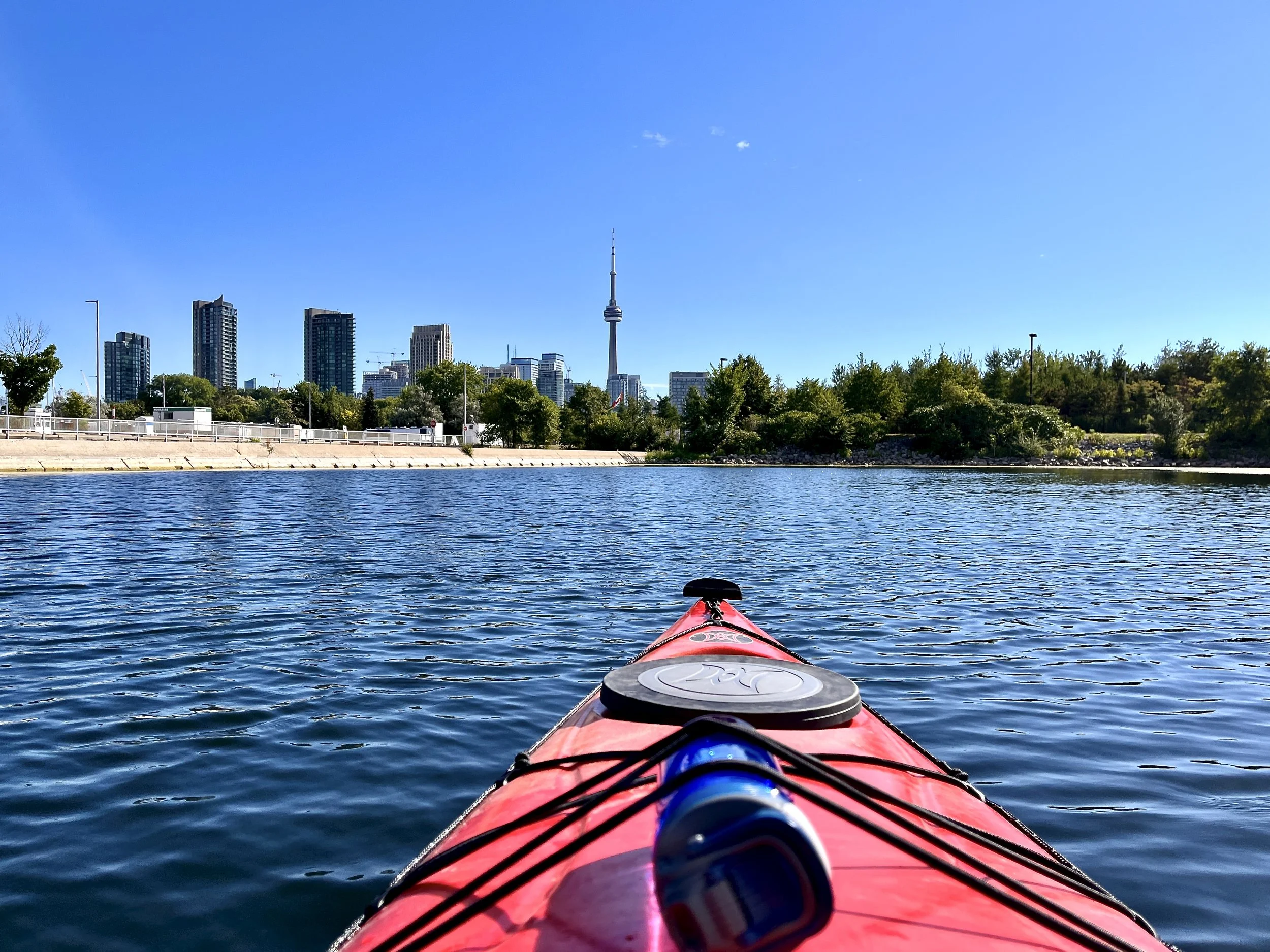
the cn tower as photographed from lake ontario. photo by jay kana.
To place that into a broader geo-political context, Lake Ontario was recognized by name long before the United States of America came to be in 1776, and before Canadian Confederation in 1867. The name was used (and the lake was contested) during the War of 1812. In terms of historic Mississauga, our earliest colonial-era settlers, including Warren Clarkson (Clarkson), Jacob Cook (Cooksville) and Timothy Street (Streetsville) all would have known Lake Ontario by name. Over several hundred years, the waters of Lake Ontario have claimed hundreds of ships and lives (estimates of the number of shipwrecks and lives lost vary considerably). Historically, dozens of sailing vessels out of Port Credit, and the sailors that sailed them, never returned home.
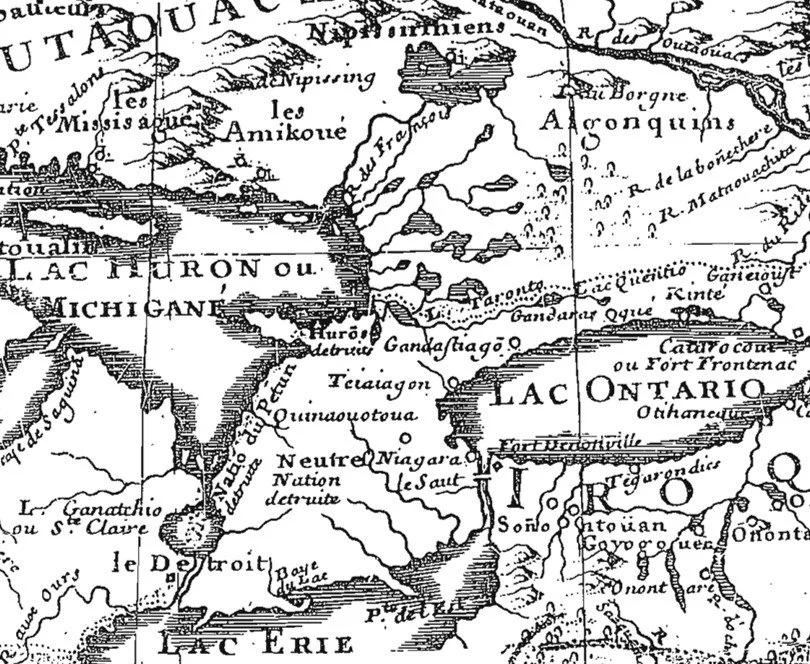
1703 map of lake ontario.
The shining waters of the lake hide the reality that the lake is also a graveyard and sanctuary. The lake is part of the cultural identity of this land (on both sides of the border). It has been part of communities, traditions, songs and legends. Regardless of what some may wish to temporarily call the lake today, these have become sacred waters over the centuries, for both Indigenous and non-Indigenous peoples alike. And like I witnessed at the Blue Rodeo concert, let’s shout the name out loud and proud: Lake Ontario!
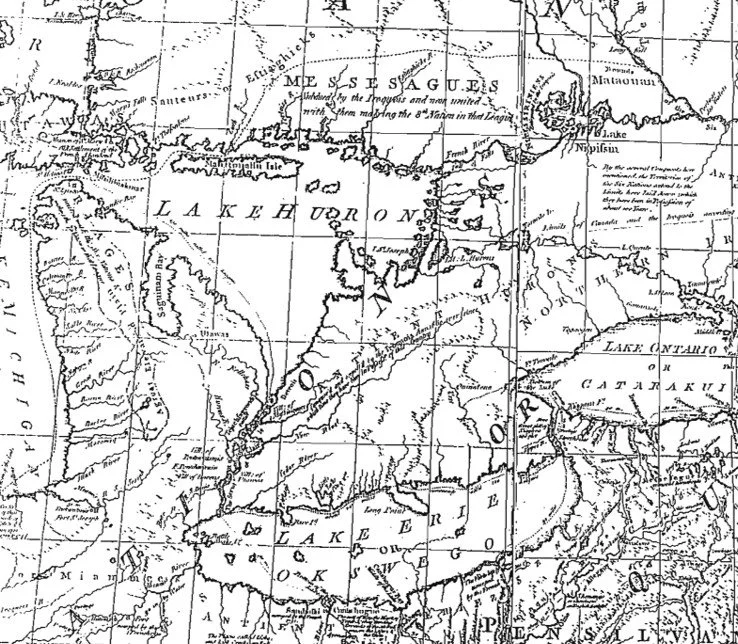
1755 map of four of the great lakes.